Electric-vehicle adoption is changing what Indian motorists need to check in a motor-insurance policy, especially for battery damage, charging equipment and roadside assistance. A 1 October 2026 report by Mid-Day highlighted the shift; the practical implication for an EV owner is that two policies with similar premium labels may not offer the same protection for the vehicle's electrical systems.
Key takeaways
- EV motor insurance still includes mandatory third-party liability, while own-damage cover and add-ons vary by insurer.
- Battery protection wording should be checked for water ingress, charging surges, accidental damage, thermal events, exclusions and deductibles.
- Home wallboxes, portable cables and other charging equipment are not automatically covered in every policy.
- EV roadside assistance may need to arrange towing to a charging station or service centre rather than provide a conventional fuel-delivery service.
- Compare IDV, depreciation, deductibles, repair networks and claim steps—not just the premium shown on the quote.
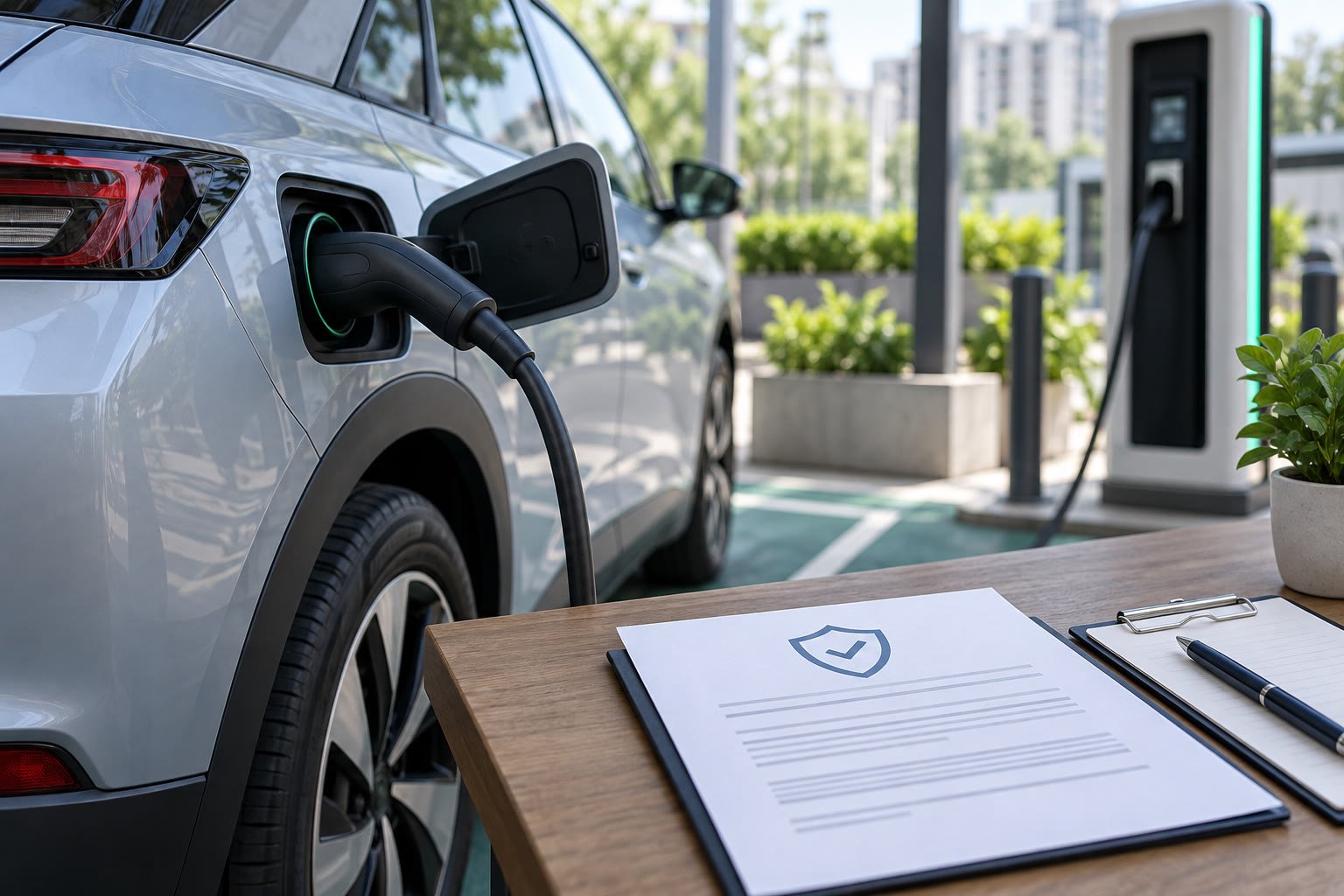
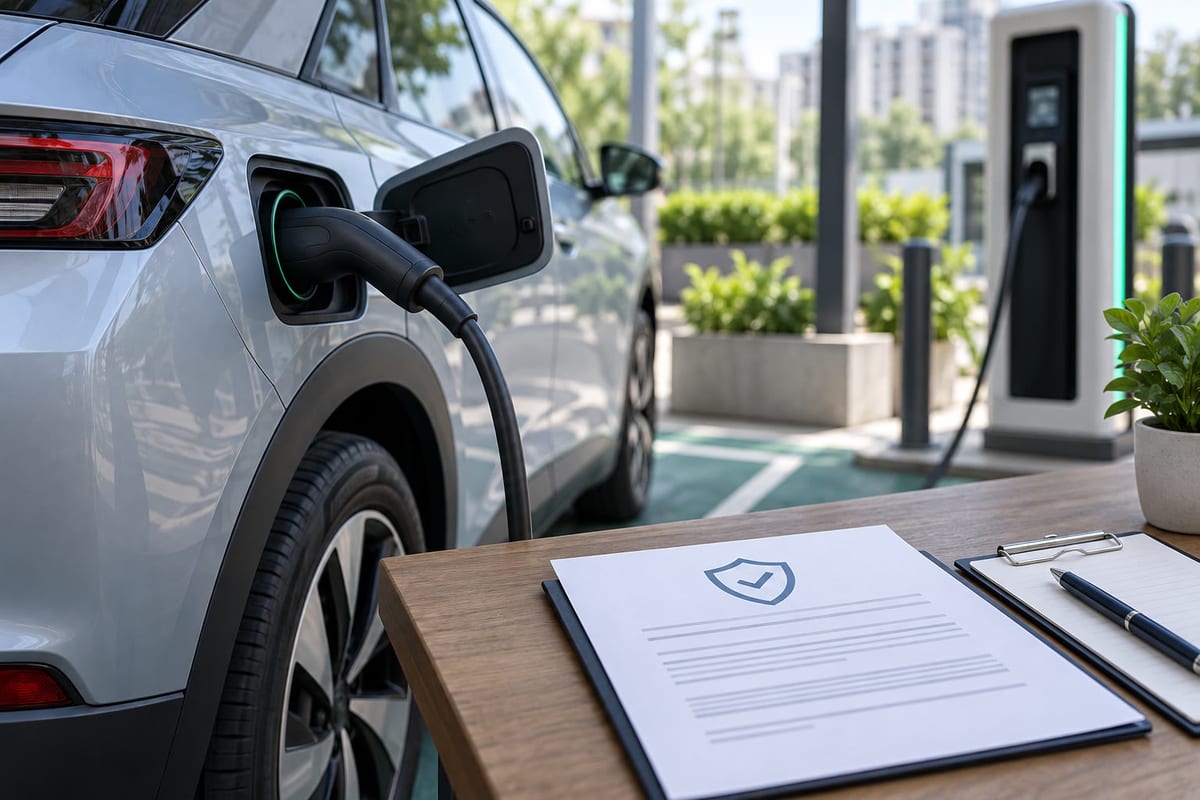 Illustrative image: an electric car charging beside motor-insurance paperwork. Generated for FuelPrice; no specific insurer or vehicle model is shown.
Why EV insurance is becoming a separate conversation
Motor insurance for an electric car sits within the same broad framework as insurance for a petrol or diesel vehicle, but the risk profile includes a battery pack, high-voltage electronics, an electric motor, charging hardware and software-linked systems. A loss involving one of those components can therefore depend heavily on the policy's definitions, exclusions and settlement method.
The current discussion is about coverage detail, not a blanket new premium rule. Financial Express reported in June 2026 that battery-protection riders were being used for risks such as water ingress, short circuits, charging-related power surges, thermal events and damage to battery systems. The report also noted that charging-equipment protection can extend to home chargers and cables, although the terms differ between products.
What the base policy does—and does not—settle
IRDAI's motor-insurance guidance says third-party liability cover is mandatory for vehicles using public roads. It also distinguishes that cover from comprehensive, package or standalone own-damage protection. Own-damage premiums are set by individual insurers, so the word “comprehensive” alone does not explain how every battery or charging-related loss will be assessed.
IRDAI also says the insured declared value, or IDV, should reflect the vehicle's current market value and that policy comparisons need to include deductibles, coverage and IDV. For an EV, that makes the schedule and add-on wording important: a lower quote may reflect a different deductible, a narrower component definition or a different settlement basis rather than a like-for-like saving.
Five renewal checks for EV owners
1. Read the battery and electrical-system wording
Look for an explicit description of what happens when the battery or related electrical systems are damaged. Check whether the cover is limited to accidental damage, and whether water ingress, charging surges, short circuits or thermal events have separate conditions. Also note exclusions for wear, gradual capacity loss, improper use, deductibles, depreciation and any claim cap. These details determine whether a battery-related claim is treated as an insured loss or as a maintenance issue.
2. Separate the vehicle from the charger
A car policy may cover the vehicle without automatically covering a home wallbox, portable charging cable or other external charging equipment. The policy schedule should say whether such equipment is included, needs an add-on or falls under a separate home or electrical cover. The value is not only in the hardware; a damaged charger can also interrupt daily commuting even when the car itself is repairable.
3. Check what roadside assistance means for an EV
For a petrol vehicle, roadside assistance may include fuel delivery. For an EV, the useful service may instead be flatbed towing to the nearest charging point, authorised workshop or dealership, and in some products a mobile charging response. Check the distance limit, out-of-charge treatment, call-out limits and whether towing is suitable for the vehicle's battery and drivetrain.
4. Compare IDV, depreciation and deductibles
IRDAI's guidance makes IDV and deductibles central to a meaningful comparison. Read the battery-related depreciation language alongside the overall vehicle IDV. A quote that looks cheaper can leave a different amount payable after a claim if the deductible or depreciation treatment is not the same.
5. Verify the repair and claim pathway
Ask how the insurer handles EV diagnostics, battery assessment and towing after an incident. Check whether the cashless repair network includes facilities that can work on the vehicle's high-voltage systems, how the claim is intimated, and which documents or inspection steps apply. This is a service and process check, not a promise that any claim will be accepted.
What this means for the premium
The 1 October 2026 report describes a shift toward EV-specific cover; it does not announce a nationwide EV premium revision. The final quote can vary with the vehicle's value, location, claim history, IDV, deductible, selected add-ons and the insurer's own-damage pricing. Third-party liability and optional own-damage protection should therefore be read as separate parts of the policy.
For an ownership-cost comparison, use the fuel-cost calculator to benchmark a comparable petrol route against the EV's energy cost; it is a running-cost tool, not an insurance quote.
For longer journeys, pair the state-wise EV charging directory with the policy's roadside-assistance limits. A charging stop may be available on a route, but that does not by itself confirm that an insurer will tow to it or provide mobile charging.
The road-trip planner can help map a journey before departure. The insurance check is the separate step: confirm what happens if the car cannot reach the next charger, and what assistance is actually included.
What to watch next
As EV ownership expands, the useful industry test will be whether policy schedules make battery, charger and roadside-assistance terms easier to compare. Owners should watch future regulator guidance and insurer wording for clearer treatment of battery degradation, charging damage and specialist repairs. Until then, the reader takeaway is simple: compare the protection for the EV system, not just the headline premium.
Frequently asked questions
Does an EV need a different type of motor insurance?
It still needs motor insurance, including mandatory third-party liability cover, but EV-specific components and assistance can make the own-damage and add-on wording different.
Does comprehensive insurance automatically cover the battery?
Do not assume that from the label alone. Coverage depends on the policy wording, the cause of damage, exclusions, depreciation and the applicable deductible.
Is a home charger covered with the car?
Not necessarily. Check whether the wallbox, cable or portable charger is listed in the policy or requires a separate extension.
Sources
- Mid-Day — How EV adoption is changing car insurance in India — 1 Oct 2026
- The Financial Express — Protect your EV with battery replacement insurance rider — 19 Jun 2026
- IRDAI — Motor Insurance: Policy Holder Guidance — accessed 2 Oct 2026
- ACKO — What Add-Ons Are Essential for Electric Vehicle Insurance — 8 Sep 2026
This article is for general information only and is not financial, insurance or legal advice.