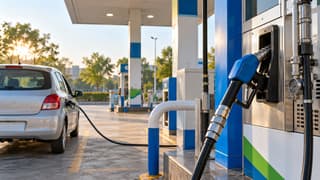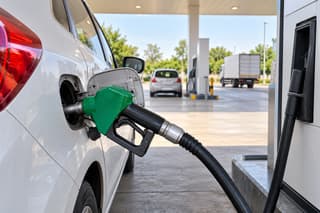
G7 leaders on 2 Oct 2026 agreed to coordinate a release of 100 million barrels of oil through the International Energy Agency (IEA) over four months, with a substantial diesel release in the first 20 days. For Indian drivers and fleet operators, this could ease global diesel tightness, but it does not automatically reduce petrol or diesel prices at Indian pumps.
Key takeaways
- The G7 says the coordinated release will begin immediately and run over four months, with diesel supplies front-loaded at the start.
- The official wording counts commitments already fulfilled, so the full 100 million barrels should not automatically be read as entirely additional to the March reserve action.
- India’s petrol and diesel prices remain decisions for oil marketing companies in a market-linked system; the announcement is not a domestic price cut.
- The next useful signals are the speed of the diesel release, the IEA’s implementation report and actual retail prices in Indian cities.
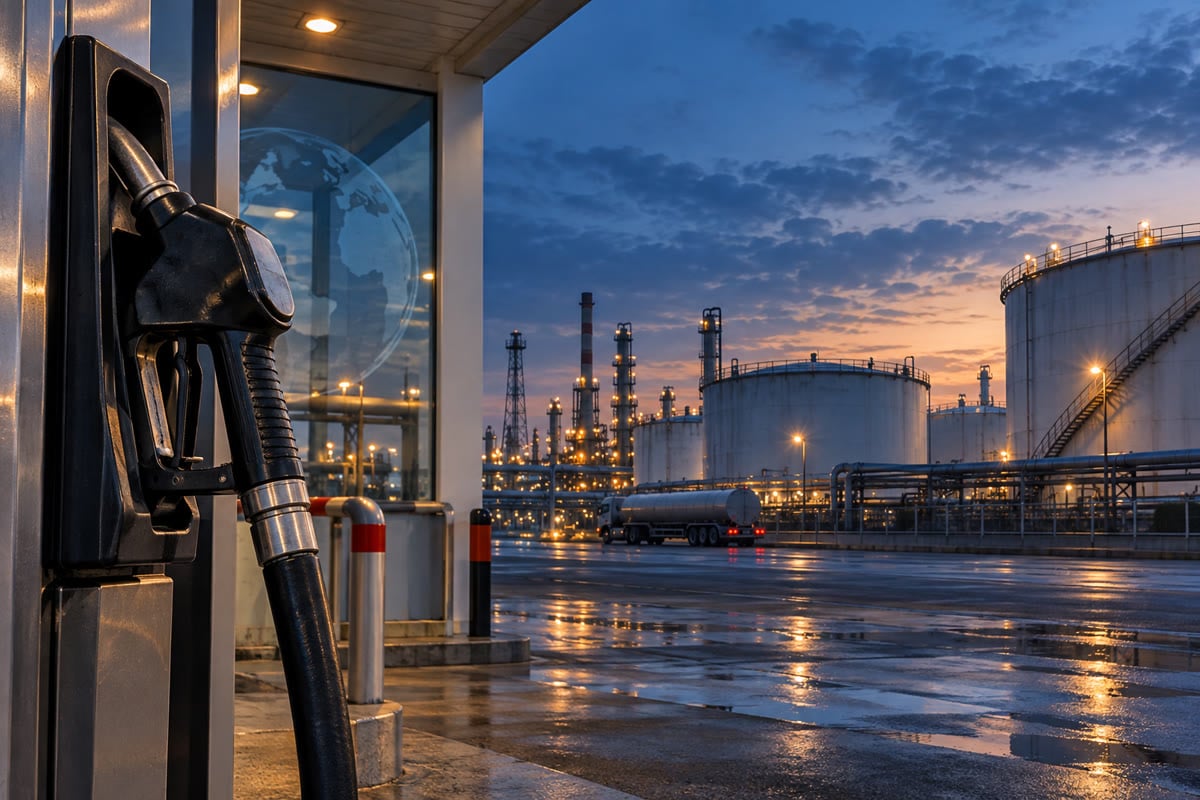
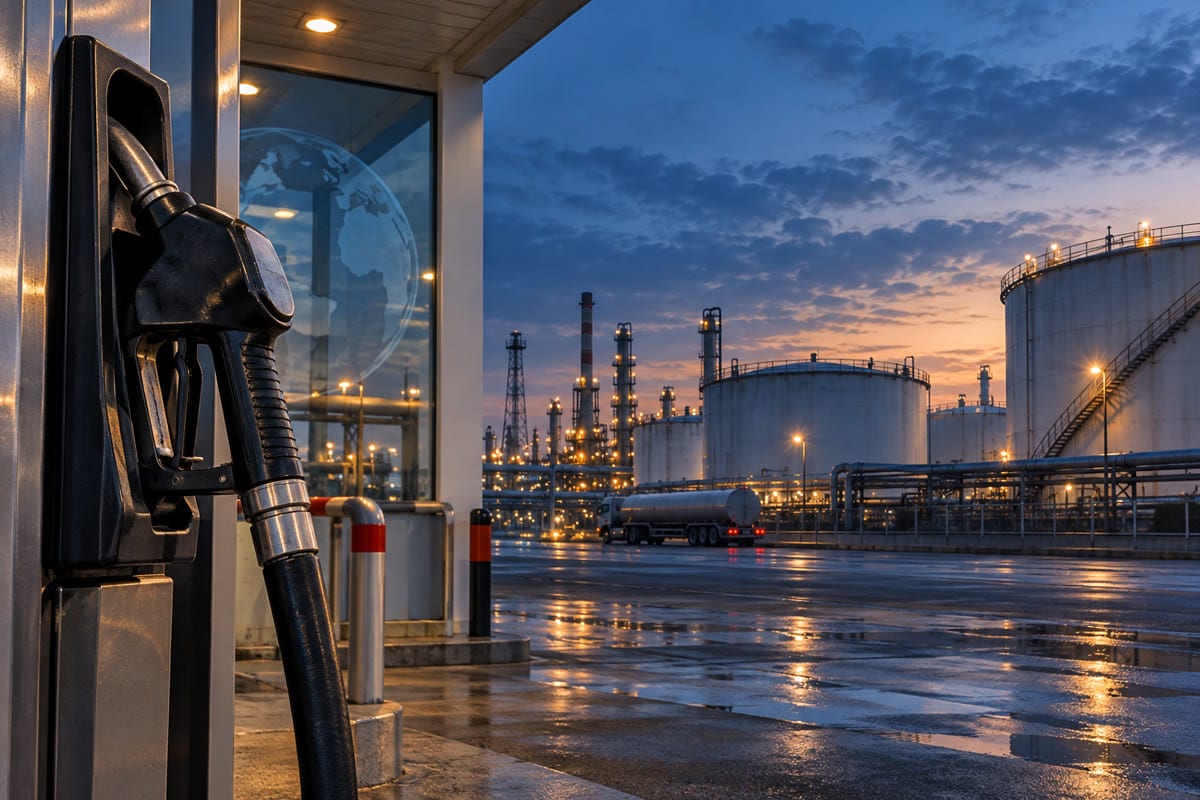 AI-generated editorial illustration of diesel supply and strategic oil reserves; representative, not a photograph of the G7 release. Credit: FuelPrice.
What the G7 agreed
The official G7 statement issued on 2 Oct 2026 says the group will implement a coordinated release through the IEA of 100 million barrels over four months. It calls for a substantial diesel release during the first 20 days and leaves open the possibility of further diesel releases if market conditions require them.
The announcement is broader than crude oil alone. The G7 also said it would coordinate refinery maintenance, encourage higher utilisation where feasible and engage countries with significant refining capacity to increase refined-product supply, particularly diesel. That matters because a barrel of crude still has to be processed, moved and placed into the market before it can ease pressure at a fuel pump.
The statement does not provide a country-by-country allocation or a detailed split between crude and refined products. It also says the release is being implemented while taking into account commitments already fulfilled. That wording matters because the IEA said on the same day that about 325 million barrels of the 400 million barrels pledged in its March 2026 collective action had already been released. The Associated Press separately noted that market participants were still seeking clarity on whether the new 100-million-barrel figure is additional to the earlier commitment or represents its remaining portion.
Why diesel is at the centre of the response
The IEA said the immediate pressure is particularly severe in diesel markets. It reported that crude exports from the Middle East had recovered significantly, while refined-product flows remained constrained, with damage to Russian refineries adding to the diesel squeeze. That helps explain why the G7 is front-loading diesel rather than waiting for a slower, broad-based supply response.
For consumers, a reserve release can improve availability and reduce short-term price pressure if the barrels reach refiners and trading markets quickly. It is not a guaranteed discount: the effect depends on the release schedule, the type of product released, refinery capacity, shipping routes and demand. Those are market outcomes to watch, not promises made to Indian motorists.
What it means for Indian fuel prices
India is exposed to international petroleum markets, but the G7 decision does not set Indian retail rates. The Ministry of Petroleum and Natural Gas says petrol and diesel have been market-determined since 26 June 2010 and 19 October 2014 respectively, with public-sector oil marketing companies taking pricing decisions. The Petroleum Planning and Analysis Cell’s pricing FAQ adds that those decisions reflect international market prices and other market conditions.
That means any Indian benefit would be indirect. If the release softens global crude or refined-product prices and Indian OMCs reflect the change, pump prices could ease; if other market conditions offset it, the effect may be delayed or limited. The announcement itself does not alter Indian taxes, retail margins or the price displayed at a local outlet.
As a dated reference point, PPAC listed Delhi petrol at ₹102.12 per litre and diesel at ₹95.20 per litre at an IOCL outlet on 1 Oct 2026. Those figures are not a forecast for the post-release market. Drivers can check the latest city rates on the live fuel prices page before a long journey.
What drivers and fleet operators should check
For a private vehicle, the useful decision is the actual pump rate on the day of travel, not the headline about reserves. For a diesel fleet, separate the fuel-price signal from the trip calculation: fuel cost is distance divided by vehicle mileage, multiplied by the price per litre. Keeping those inputs separate makes it easier to see whether a change in diesel prices is large enough to alter a route budget.
Use the fuel cost calculator to model a route with the latest price, and compare state-level diesel rates through the state-wise diesel price page when a trip crosses state borders. This is especially relevant for transporters, for whom a small per-litre movement can matter across repeated trips, but the calculation should use the rate actually available to the vehicle.
What to watch next
The first test is whether the promised diesel volumes move into the market during the opening 20-day window. The G7 has also invited the IEA to monitor implementation and deliver a follow-up report before 20 days, including recommendations on future responses and replenishing strategic stocks.
Indian readers should watch three separate signals: global diesel and crude benchmarks, announcements about the physical release and refinery availability, and the daily retail prices published by Indian OMCs. A lower international price can improve the outlook, but only the final domestic price matters for a trip, a delivery run or a monthly fuel budget.
FAQs
Will petrol and diesel become cheaper in India immediately?
No. The reserve decision may influence international markets, but it is not an order changing Indian pump prices. Indian OMC pricing decisions and wider market conditions will determine whether and when motorists see a change.
Does 100 million barrels mean 100 million barrels of diesel?
No. The G7 described a coordinated oil and product release and said diesel would be front-loaded, but it did not publish a detailed split. The IEA and G7 implementation updates should clarify what is released and when.
Sources
- Élysée — “G7 Leaders’ Statement on global energy security and market stability” (2 Oct 2026)
- International Energy Agency — “Executive Director participates in G7 Leaders’ meeting on energy security and markets” (2 Oct 2026)
- Associated Press — “G7 nations will release 100 million barrels of oil and diesel fuel after prices soar” (2 Oct 2026)
- Ministry of Petroleum and Natural Gas — “Product Pricing” (updated 29 Sep 2026)
- Petroleum Planning and Analysis Cell — “RSP of Petrol and Diesel in Delhi” (1 Oct 2026)