Haryana has scheduled 40 electric buses for Gurugram by the end of October 2026 and says the charging facility at the Sector 48 depot is established. For commuters, this is a planned public-transport expansion—not proof that all 40 buses are already operating—and route details still need to be confirmed.
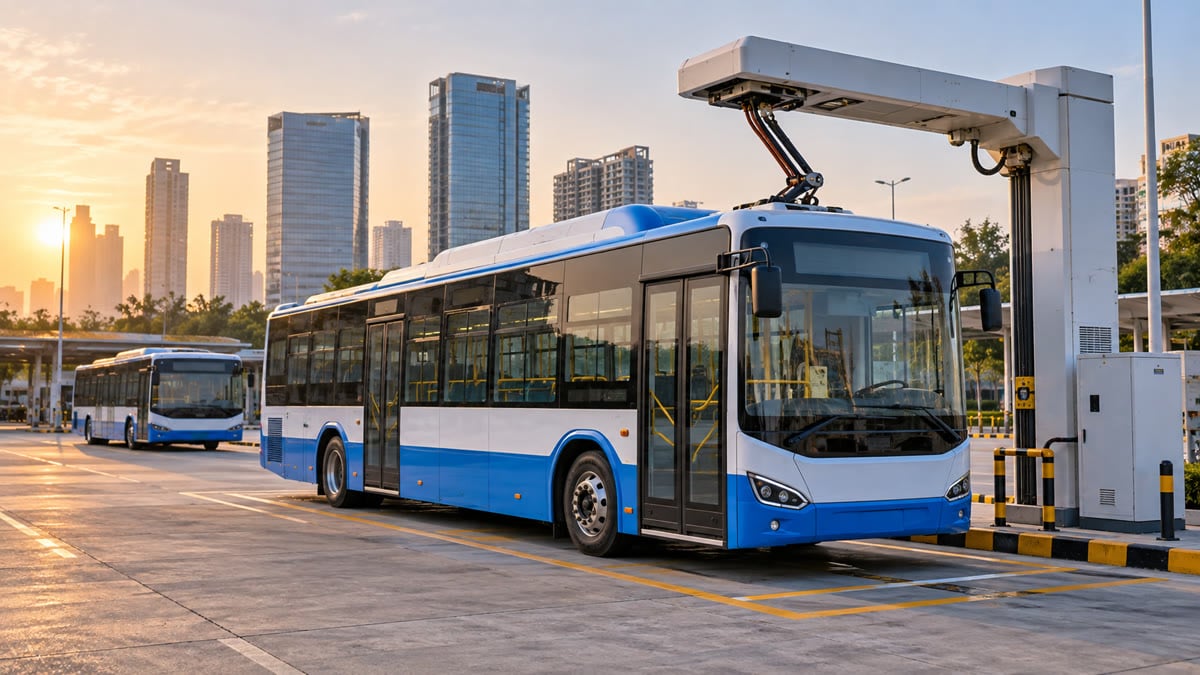
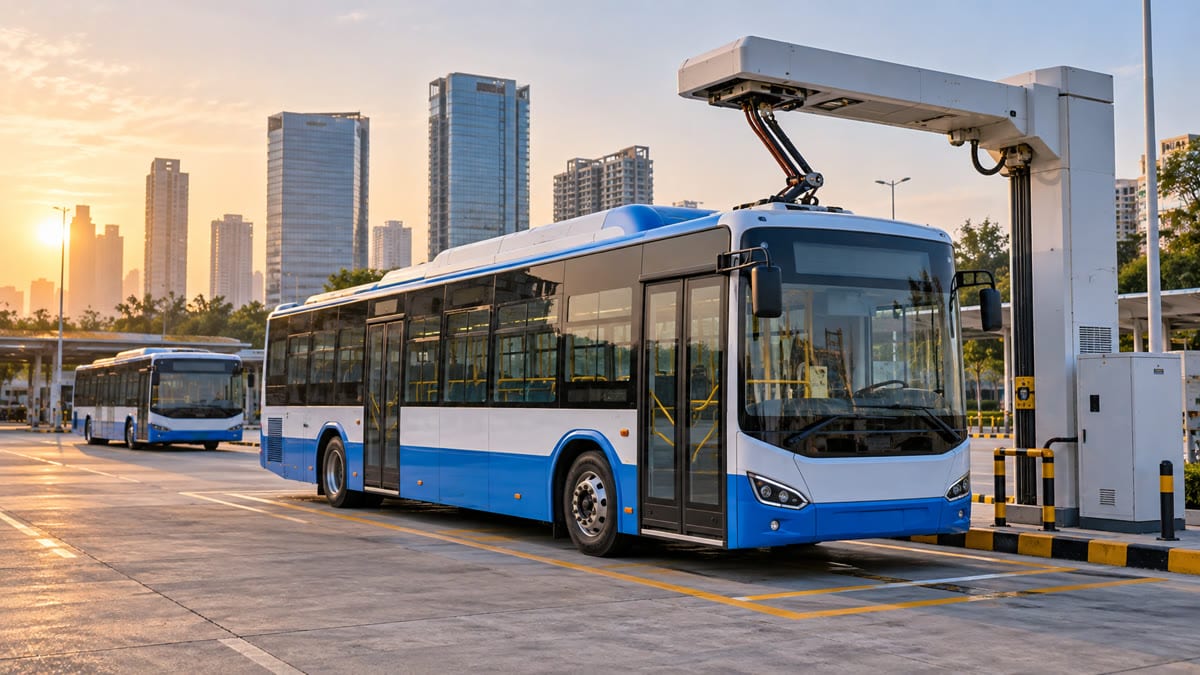 Illustrative representation of an electric city bus at a depot charger; it is not a photograph of Gurugram's buses. Credit: FuelPrice editorial illustration.
Key takeaways
- The Haryana government's 2 October 2026 review release schedules 40 electric buses for Gurugram by the end of October. The date is a target, not confirmation that the fleet is already in service.
- The same release says the charging infrastructure for the rollout has been prepared and a charging station has been established in Sector 48.
- Earlier reports from Hindustan Times and Dainik Jagran had expected the first 40 buses in the first week of October, so the latest official end-October schedule should be treated as the current update.
- Officials are reviewing routes towards industrial areas and metro and railway stations, but no final route-by-route timetable or fare was announced in the release.
What Haryana confirmed on 2 October
Chief Minister Nayab Singh Saini reviewed Gurugram's development works and city-bus service on 2 October. The Haryana government's release said officials had been asked to review the existing route map and road mapping so that public transport connects major parts of the city as well as industrial areas.
During that review, officials said 40 electric buses are scheduled to arrive by the end of October. The release also said the required operating infrastructure has been prepared and that a charging station has been established in Sector 48. Those are useful readiness signals, but they do not by themselves confirm the buses' delivery date, service launch date, route frequency or passenger fare.
Why the rollout matters to daily travellers
Gurugram's employment centres and residential sectors are spread across a large urban area. Earlier Hindustan Times reporting said the planned electric-bus network is intended to connect residential and industrial areas with metro and railway stations, including corridors around Manesar, Sohna, Farrukhnagar, Palam Vihar and the Dwarka Expressway.
That could matter most to commuters who currently combine a private vehicle, a cab and a metro ride because the last leg is difficult. A reliable bus connection can make a station useful to more neighbourhoods and may reduce the need for short car or two-wheeler trips. The eventual benefit will depend on where the buses actually stop, how often they run and whether services begin on the announced schedule.
The rollout also gives Gurugram a clearer public-transport charging story. The Sector 48 facility is described by the state as a bus charging station; the release does not say that it is a public charger for private EV owners. Private EV users should therefore verify access separately through the EV station directory before planning a journey.
The timeline needs careful reading
Hindustan Times reported on 26 September that at least 40 electric buses were expected in the first week of October. Dainik Jagran reported on 25 September that the first batch was also expected in that first week and described proposed routes linking metro stations, railway stations and residential areas.
The 2 October state release is newer and uses the wording “scheduled to arrive by the end of October”. That is the safest description for now. The earlier first-week expectation should not be read as proof that the buses have begun passenger service, and the latest release does not explain whether the fleet will arrive in one batch or in stages.
What commuters should check before changing routes
- Route map: Look for the final list of stops, interchange points and industrial-area links before replacing an existing commute.
- Start date: Confirm when passenger service begins, because an arrival at a depot is not the same as a bus running on a public route.
- Frequency and fare: Check the first and last bus, peak-hour frequency, ticketing method and fare once GMCBL or the relevant authority publishes them.
- Charging access: Do not assume the Sector 48 bus facility is open to private vehicles. Use a verified public charging listing if you are planning an EV trip.
For commuters who still need to drive until routes settle, the fuel cost calculator can estimate the cost of a regular car or two-wheeler trip using the vehicle's mileage. That gives households a practical baseline for comparing a future bus connection with the current commute, without assuming a saving before the service details are known.
What to watch next
The next useful update will be operational rather than promotional: confirmation that the buses have reached Gurugram, the public route map, service start dates, fares and the charging arrangements at Sector 48. If the rollout is phased, the order in which industrial corridors, metro links and newer residential sectors receive service will matter more than the headline fleet count.
Until those details are published, the official position is that 40 electric buses are scheduled for Gurugram by the end of October 2026. Readers should treat the plan as a forthcoming mobility change and check the route and timetable before altering a daily trip.
Sources
- Haryana Government / PRMS — “CM Takes Major Action in Gurugram Based on Feedback Received from Citizens” — 2 Oct 2026
- Hindustan Times — “Gurugram to get 40 electric buses in the first week of October” — 26 Sep 2026
- Dainik Jagran — “Gurugram to get 40 new electric buses; routes to connect areas with metro stations” — 25 Sep 2026