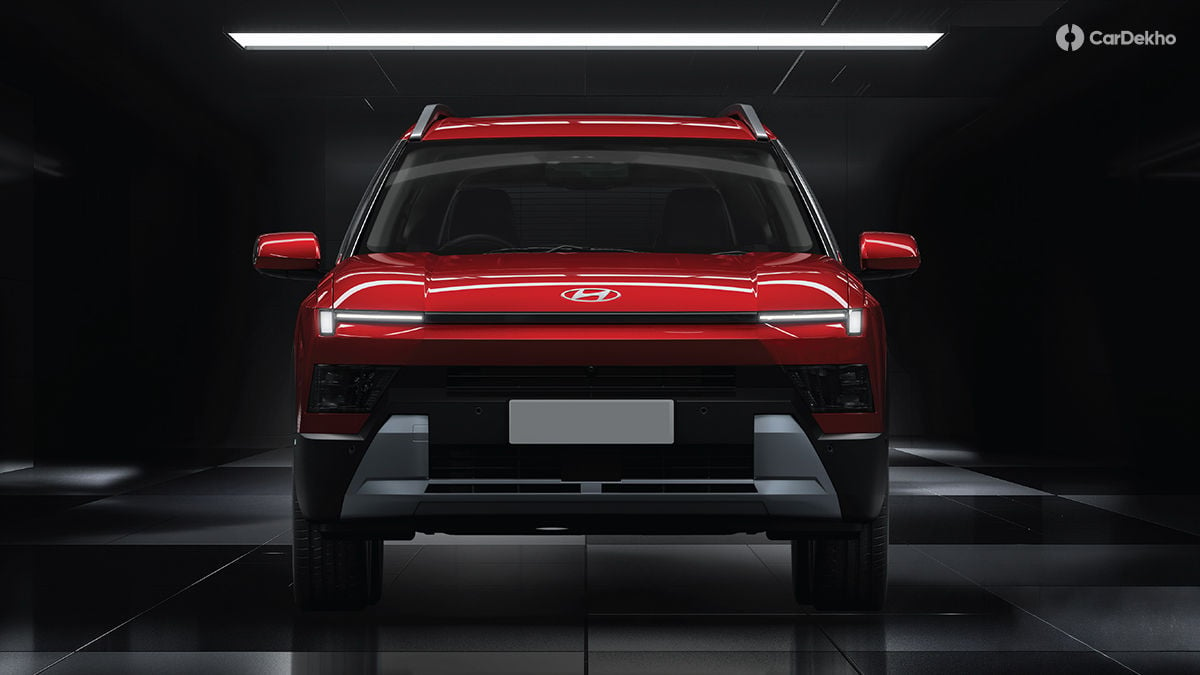
Hyundai Motor India unveiled the India-spec Bayon on 12 October 2026 and opened bookings at ₹11,000 ahead of its 26 October launch. The company has confirmed the petrol powertrain and main cabin technology, but has not announced the SUV's price or an official fuel-efficiency figure, so buyers do not yet have the numbers needed to compare its total ownership cost.
Key takeaways
- Bookings are open online and at authorised Hyundai dealerships for ₹11,000.
- The India launch is scheduled for 26 October 2026; deliveries are planned for the festive season.
- The confirmed engine is a 1.5-litre four-cylinder MPi petrol unit producing 115 PS and 144 Nm.
- Transmission choices are a 6-speed manual and Hyundai's Intelligent Variable Transmission, or IVT.
- Price, variant-wise equipment and an official fuel-efficiency figure remain to be disclosed.
What Hyundai confirmed on 12 October
Hyundai's 12 October release says the Bayon will launch in India on 26 October and that bookings are already available through the company's website and authorised dealerships. The same booking amount and launch date were reported independently by CarDekho and TOI Auto in their same-day coverage. The ₹11,000 is the booking amount announced before launch; it is not the car's ex-showroom price. Hyundai also says deliveries are scheduled to begin during the festive season, without giving a fixed delivery date.
The mechanical package is clearer than the pricing. Hyundai has confirmed a four-cylinder 1.5-litre MPi petrol engine rated at 115 PS and 144 Nm. It will be offered with a 6-speed manual transmission or an IVT automatic. CarDekho and TOI Auto report the same output and gearbox choices, giving buyers a consistent early picture of the powertrain even though the final variant mix is not yet available.
For fuel-conscious buyers, one important gap remains: the material released so far does not give an official mileage figure. The confirmed release covers a petrol powertrain, while TOI Auto also notes that Hyundai has not published a fuel-efficiency number. That means any pre-launch mileage estimate should be treated as unconfirmed until the company publishes an official figure.
Features that may shape the buying decision
The Bayon is being presented as a technology-focused SUV. Hyundai says it gets dual 12.3-inch curved displays, a generative artificial-intelligence voice assistant, vehicle-controller over-the-air updates and more than 70 connected Bluelink features. CarDekho and TOI Auto also report the dual-screen layout, the voice assistant and connected-car functions.
These features may matter differently depending on how the car is used. A driver who spends most of the week in city traffic may value the automatic transmission and connected functions more than the headline output. Someone who regularly travels between cities may give greater weight to seat comfort, navigation behaviour, service reach and the availability of a practical petrol running-cost estimate. Hyundai has not yet published the complete variant-wise equipment list, so the useful comparison will come only after the launch details are released.
What the Bayon means for Indian buyers
CarDekho describes the Bayon as Hyundai's second compact SUV and places it below the Creta, while TOI Auto positions it between the Venue and Creta. That puts the new model into a busy part of India's passenger-vehicle market, where buyers often compare not just the badge but the monthly fuel bill, automatic-transmission premium, service costs and equipment available at each price point.
The biggest missing number for a cost comparison is the official mileage figure. Once Hyundai publishes it, readers can check their likely petrol spend against current petrol prices and estimate a commute or road-trip budget with the Fuel Cost Calculator. Until then, the 1.5-litre engine output tells us about performance specification, not real-world fuel consumption.
The transmission choice deserves a separate check. A 6-speed manual and IVT can suit different driving patterns, but their actual price and availability by variant will matter more than the headline list. Buyers comparing the Bayon with another compact SUV should wait for the variant table, then check which safety, comfort and connected features are standard rather than assuming that every feature shown in launch material is available on every version.
The booking step also needs to be kept separate from the ownership decision. Before paying, a prospective buyer can check the written booking terms, cancellation or refund conditions, expected delivery communication and whether the selected dealership has a test-drive vehicle. For a festive-season road trip, the road-trip planner can help estimate distance and travel costs once the vehicle's confirmed mileage is available.
What to watch on 26 October
The 26 October launch is the next confirmed checkpoint for the Bayon. The information that will materially change the buying calculation is the ex-showroom price, the complete variant and feature breakup, the official fuel-efficiency figure, and the final delivery timeline. Hyundai has not supplied those figures in the 12 October unveiling material, so an expected price or mileage figure from an unofficial listing should not be presented as confirmed.
There is also a practical ownership question beyond the brochure. The Bayon will use a petrol engine and offer an IVT option, but the eventual monthly cost will depend on the buyer's distance, traffic, fuel price, insurance, registration and financing choices. Keeping those items separate makes it easier to compare the Bayon with other petrol SUVs after the official price sheet arrives.
Reader takeaway
The Hyundai Bayon is now a confirmed India launch, not just a teaser: bookings are open at ₹11,000, the launch date is 26 October 2026, and the 1.5-litre petrol powertrain has been specified. The decision-ready information is still incomplete because price, variant breakup and official mileage are pending. For now, the reliable buyer takeaway is the launch timeline and confirmed equipment; the rupee comparison should wait for Hyundai's full pricing and efficiency details.
Sources
- Hyundai Motor India, "Hyundai Motor India Unveils India-Spec Hyundai Bayon Redefining Intelligent Mobility Through Intelligence That Moves" — 12 Oct 2026
- CarDekho, "2026 Hyundai Bayon Revealed: Check Out Its Design, Features & Key Details Here!" — 12 Oct 2026
- TOI Auto, "India-Spec Hyundai Bayon First Exterior And Interior Images Out, India Launch On October 26" — 12 Oct 2026