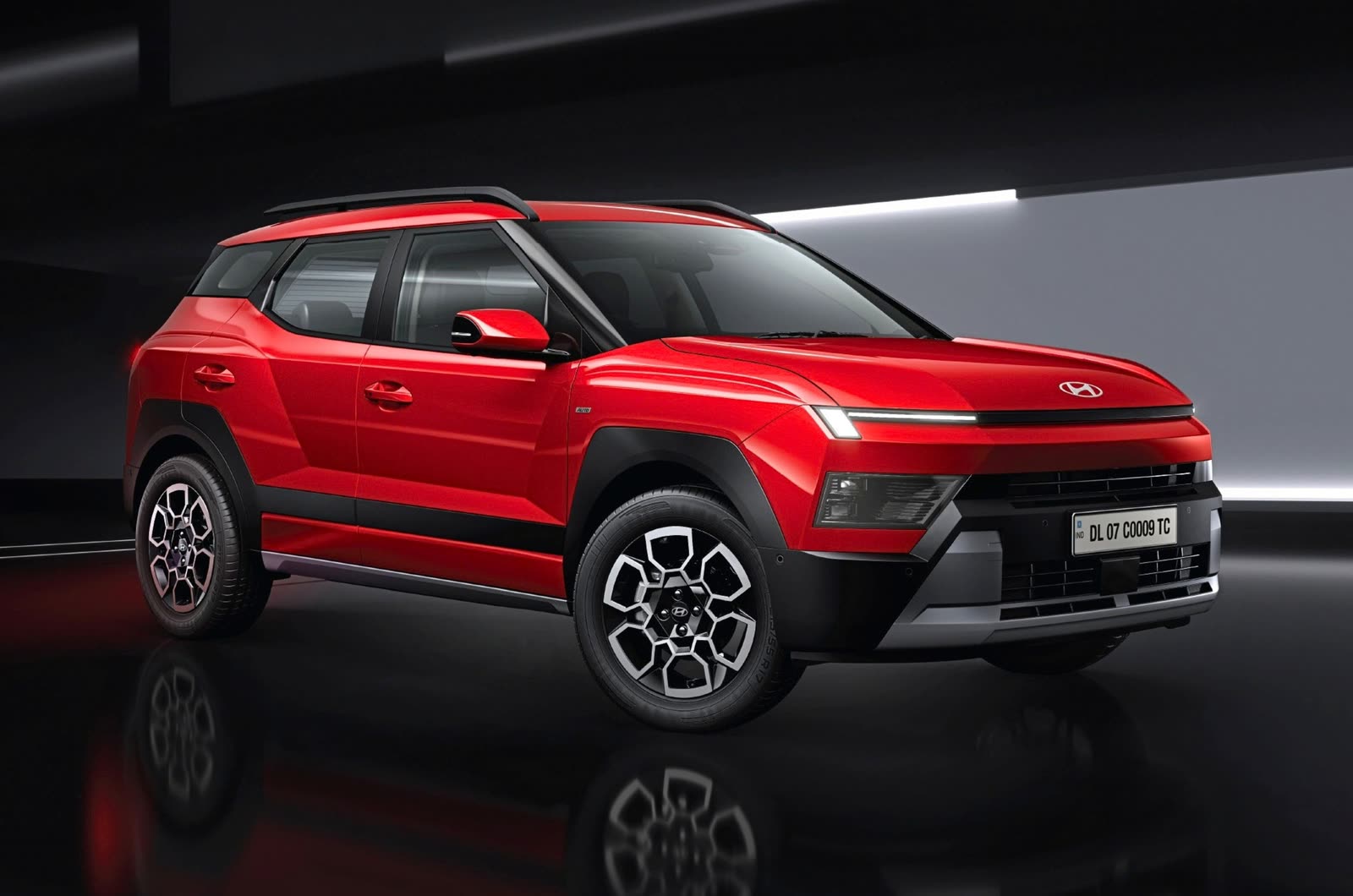
Hyundai has released the performance details for the India-spec Bayon ahead of its 26 October 2026 launch, confirming a 1.5-litre petrol engine with 115 PS and two transmission choices. For buyers comparing a new petrol SUV, the update clarifies the Bayon’s day-to-day driving hardware, but Hyundai has not yet announced its price or final variant-wise specifications.
Key takeaways
- The Hyundai Bayon is scheduled to launch in India on 26 October 2026; its price is still pending.
- It uses a four-cylinder 1.5-litre MPi petrol engine producing 84.4 kW, or 115 PS, and 143.8 Nm of torque.
- Buyers will get a six-speed manual transmission or Hyundai’s Intelligent Variable Transmission, called iVT.
- The iVT version adds Dash Boost Mode, Sporty Drive Tech, paddle shifters and Eco, Normal and Sport drive modes.
- Bookings are open for ₹11,000, while deliveries are planned for the festive season.
What Hyundai confirmed on 23 October
Hyundai Motor India’s 23 October performance update adds a new layer to the Bayon information already released ahead of launch. The company has now described the engine, gearbox choices and driver controls, while The Economic Times independently reported the same powertrain and launch details. FuelPrice’s earlier Bayon safety-feature report covered the separate announcement on airbags, stability control and ADAS; this update is about how the SUV is expected to respond on the road.
The Bayon will use Hyundai’s four-cylinder 1.5-litre MPi petrol engine. Hyundai rates it at 84.4 kW, equivalent to 115 PS, with maximum torque of 143.8 Nm. The engine figure is a claimed specification, not an independent road-test result. The company says the same 1.5-litre MPi engine has powered more than six lakh Hyundai vehicles sold in India since 2020.
Manual and iVT choices
The engine will be paired with either a six-speed manual transmission or an Intelligent Variable Transmission. The choice gives buyers two different ways to use the same petrol powertrain: a conventional manual setup for direct gear selection, or an automatic-style iVT intended to make urban driving easier.
Hyundai has not announced the Bayon’s final price, variant-wise equipment list or a certified fuel-efficiency figure in the 23 October update. That matters for a buyer’s actual comparison because the engine output alone does not establish running cost. Ex-showroom price, registration, insurance, transmission variant and real-world fuel use will determine the ownership calculation after the launch details are published.
What the iVT performance features do
Dash Boost Mode is described as a quicker-response function for situations such as overtaking. Hyundai says it provides an instant power boost when the driver needs faster acceleration, but it has not disclosed a separate power output or an independent acceleration time for the mode.
Sporty Drive Tech is Hyundai’s name for a more responsive acceleration experience in the iVT version. The Bayon will also have steering-mounted paddle shifters and three selectable modes:
- Eco: intended to prioritise fuel efficiency.
- Normal: intended to balance performance and efficiency for everyday driving.
- Sport: intended to provide a more responsive performance character.
These descriptions explain the intended driving behaviour, not a promise of a specific mileage or saving. The Economic Times and RushLane both reported the same mode and transmission details, while Hyundai’s release confirms that the features are tied to the iVT option.
What it means for petrol-SUV buyers
The Bayon’s performance announcement is useful mainly because it narrows the comparison before the price is known. A 115 PS petrol engine and a choice of manual or iVT place the focus on everyday usability rather than on a high-output or diesel-style torque story. The company is presenting the SUV as suitable for city commutes, highway cruising and overtaking, but those are manufacturer descriptions that still need to be assessed against the final price, equipment and road-test feedback.
Running cost will remain an open question until Hyundai publishes certified fuel-efficiency data and the city-specific on-road price. Drivers can track the current petrol rate on FuelPrice’s live fuel-price pages, then use the fuel-cost calculator with their expected distance and mileage. That calculation is more useful than comparing the ₹11,000 booking amount with another SUV’s price: the booking amount is only an initial reservation figure, not the vehicle’s final purchase cost.
Launch date, bookings and what is still pending
Hyundai has confirmed that the Bayon will launch in India on 26 October 2026. Bookings are open on the company’s website and through authorised Hyundai dealerships for ₹11,000. The company says deliveries are scheduled to begin during the festive season, with detailed delivery timelines to be communicated at launch.
The final announcement is therefore likely to matter more than the booking opening. Buyers will need the ex-showroom price, variant structure, standard and optional equipment, certified mileage, warranty terms and delivery schedule before making a complete comparison with other petrol SUVs. Hyundai has already disclosed safety and technology information, but the price announcement will determine where the Bayon sits against models between the Venue and Creta in the Indian market.
What to watch on 26 October
- The starting ex-showroom price and the spread between manual and iVT variants.
- Which features are standard across the range and which are limited to higher trims.
- Hyundai’s certified fuel-efficiency figure and any change in the final engine or transmission specification.
- Delivery timelines, warranty details and the final on-road cost in each city.
Reader takeaway: Hyundai has confirmed the Bayon’s 115 PS petrol engine, manual and iVT options and new driving-control features, but the most important ownership figures are still due. Until 26 October, treat the ₹11,000 booking amount as a reservation figure and wait for the final price, mileage and variant details before comparing the SUV’s trip and monthly running costs.
Sources
- Hyundai Motor India, PERFORMANCE ON with Hyundai BAYON — 23 Oct 2026
- The Economic Times, Hyundai Bayon to launch in India on October 26; check specifications, features and booking price — 23 Oct 2026
- RushLane, Hyundai Bayon Gets Dash Boost Mode, Paddle Shifters — New Details — 23 Oct 2026
- Autocar India, What to expect from Hyundai Bayon ahead of October 26 launch? — 21 Oct 2026