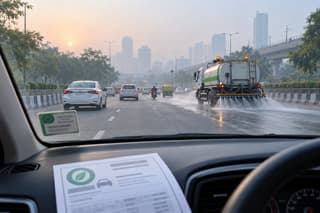
Hyundai Motor India has revealed the India-spec Bayon’s safety package ahead of its 26 October 2026 launch. The compact SUV will bring six airbags, Level 2 driver assistance and a body structure using 69% advanced multi-grade high-strength steel, while its price is still due at launch.
Key takeaways
- Hyundai says the Bayon will have six airbags and more than 35 safety features as standard across variants.
- The SmartSense Level 2 Pro package lists 23 driver-assistance functions, supported by three radars and 12 parking sensors.
- The 1.5-litre MPi petrol engine is rated at 84.4 kW (115 PS) and 143.8 Nm, with 6-speed manual and IVT choices.
- Bookings are open at ₹11,000, but the ex-showroom price and variant-wise feature list will be announced on launch day.
What Hyundai revealed on 21 October
In its 21 October 2026 release, Hyundai Motor India said the Bayon is built on the Global K Enhanced Platform and has more than 80 advanced safety features in total. The company also said more than 35 safety features will be standard across the range, including six airbags, electronic stability control, hill-start assist, a high-line tyre-pressure monitoring system, ISOFIX mounts, rear parking sensors and three-point seatbelt reminders.
The headline structural detail is Hyundai’s claim that 69% of the body uses advanced multi-grade high-strength steel. The release says hot-stamped parts are used in areas such as the front apron, dashboard, rear floor and side reinforcements. That is a manufacturer description of the engineering package; it should not be read as an independent crash-test result.
What Level 2 ADAS means on the road
The Bayon’s SmartSense Level 2 Pro package covers forward collision warning and avoidance, including assistance for cars, pedestrians, cyclists, junction turns and direct-oncoming traffic. It also includes lane-keeping and lane-departure functions, blind-spot warnings, safe-exit warning, rear cross-traffic assistance, smart cruise control with stop-and-go and lane-following assistance.
Hyundai lists 23 functions in the package, with three radars and 12 parking sensors. TOI Auto’s 21 October report independently repeated those headline specifications and noted that the company’s “engineered for 5-Star Indian safety standards” wording is not the same as an announced independent crash-test rating. Buyers should therefore separate the confirmed equipment list from any future test result.
Level 2 assistance is still assistance, not autonomous driving. The driver remains responsible for supervising the road, keeping hands and attention ready, and understanding where a particular feature works. TOI Auto also reported that the navigation-based cruise functions depend on mapped expressways, which makes the final operating conditions and limitations worth checking during a test drive.
Engine, bookings and running-cost context
Hyundai’s 21 October release confirms a four-cylinder 1.5-litre MPi petrol engine producing 84.4 kW, or 115 PS, and 143.8 Nm. The engine will be offered with a 6-speed manual transmission or an Intelligent Variable Transmission. TOI Auto reported the same powertrain in rounded terms as 113 bhp and 144 Nm.
The company has opened bookings for ₹11,000 through its website and authorised dealerships, with the booking amount and launch date confirmed by both Hyundai and TOI Auto. Hyundai has not yet announced the Bayon’s ex-showroom price or an official mileage figure. That means a meaningful monthly fuel-cost comparison will have to wait for the price and certified efficiency details. Once those are available, a buyer can use the fuel cost calculator with their own route and driving pattern rather than relying on a generic estimate.
Because the Bayon is a petrol SUV, the eventual running-cost estimate will also depend on the city fuel rate and traffic conditions. The latest fuel prices page can be checked alongside the confirmed mileage when the launch details are published.
What buyers should check at launch
The safety reveal gives buyers a useful equipment baseline, but it does not yet answer the value question. The most important checks on 26 October will be:
- Variant-wise pricing and the exact list of features included in each trim. “More than 35 standard features” does not mean every one of the 23 ADAS functions is necessarily available in every variant.
- Whether the surround-view monitor, blind-spot view monitor and highway-assistance functions are standard or limited to higher trims.
- The certified fuel-efficiency figure for both gearbox choices and the service schedule for the ADAS sensors and cameras.
- The operating limits for lane assistance, smart cruise control, forward collision assistance and safe-exit warning in Indian traffic and weather.
- Independent crash-test information, if released after the launch, rather than treating the manufacturer’s engineering claim as a rating.
For a buyer planning frequent highway use, the eventual mileage, luggage needs, and charging or fuel-stop pattern matter as much as the feature count. Once those inputs are known, the road-trip planner can help turn the vehicle’s confirmed running-cost data into a route plan.
What to watch on 26 October
Hyundai is expected to disclose the Bayon’s ex-showroom price, variant structure and delivery timeline at launch. The company has confirmed the launch date and booking process, but not the final price. The cleanest comparison will therefore come after the official price list, variant-wise safety equipment and certified mileage are available together.
Reader takeaway
The Bayon’s 21 October reveal is a safety and technology update, not a priced launch. Six airbags, a broad Level 2 ADAS package and the claimed high-strength-steel body are confirmed by Hyundai and independently reported by TOI Auto; price, mileage, variant mapping and any independent crash-test result remain to be checked at launch.