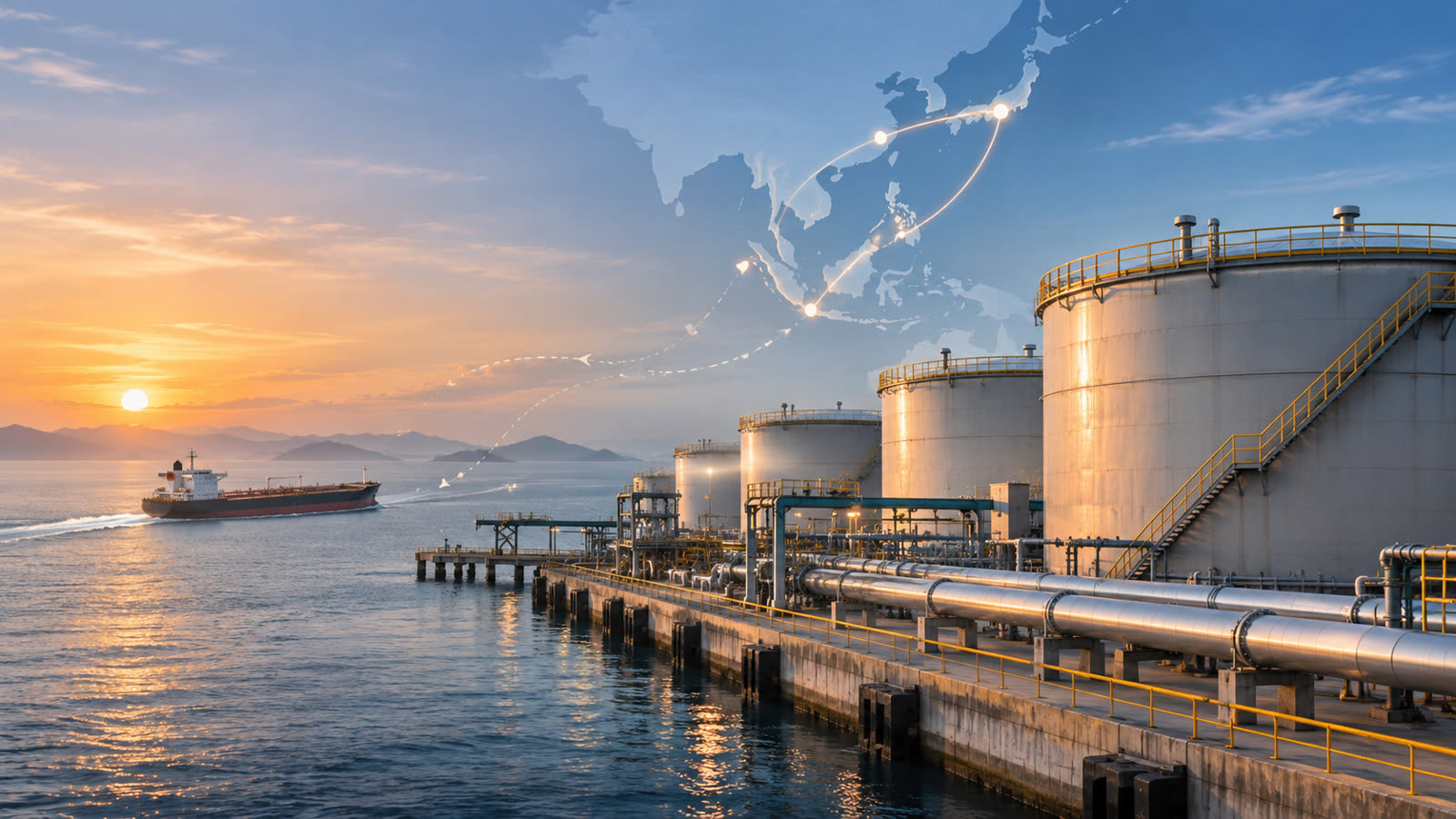
Japan and the International Energy Agency (IEA) on 17 Nov 2026 backed a plan for an IEA-Japan Oil Security Hub for Asia, alongside the establishment of an Asia Oil Security Task Force under the Asia Zero Emission Community (AZEC). The framework is designed to help Asian governments build or coordinate oil stocks and emergency responses after disruptions around the Strait of Hormuz; it is not an immediate release of fuel into the market.
Key takeaways
- The Japan-IEA hub is intended to strengthen oil security across Southeast Asia and beyond through technical support, market information and emergency-response planning.
- The Asia Oil Security Task Force will work with the IEA and the Economic Research Institute for ASEAN and East Asia (ERIA) on stockpiling data and coordinated responses.
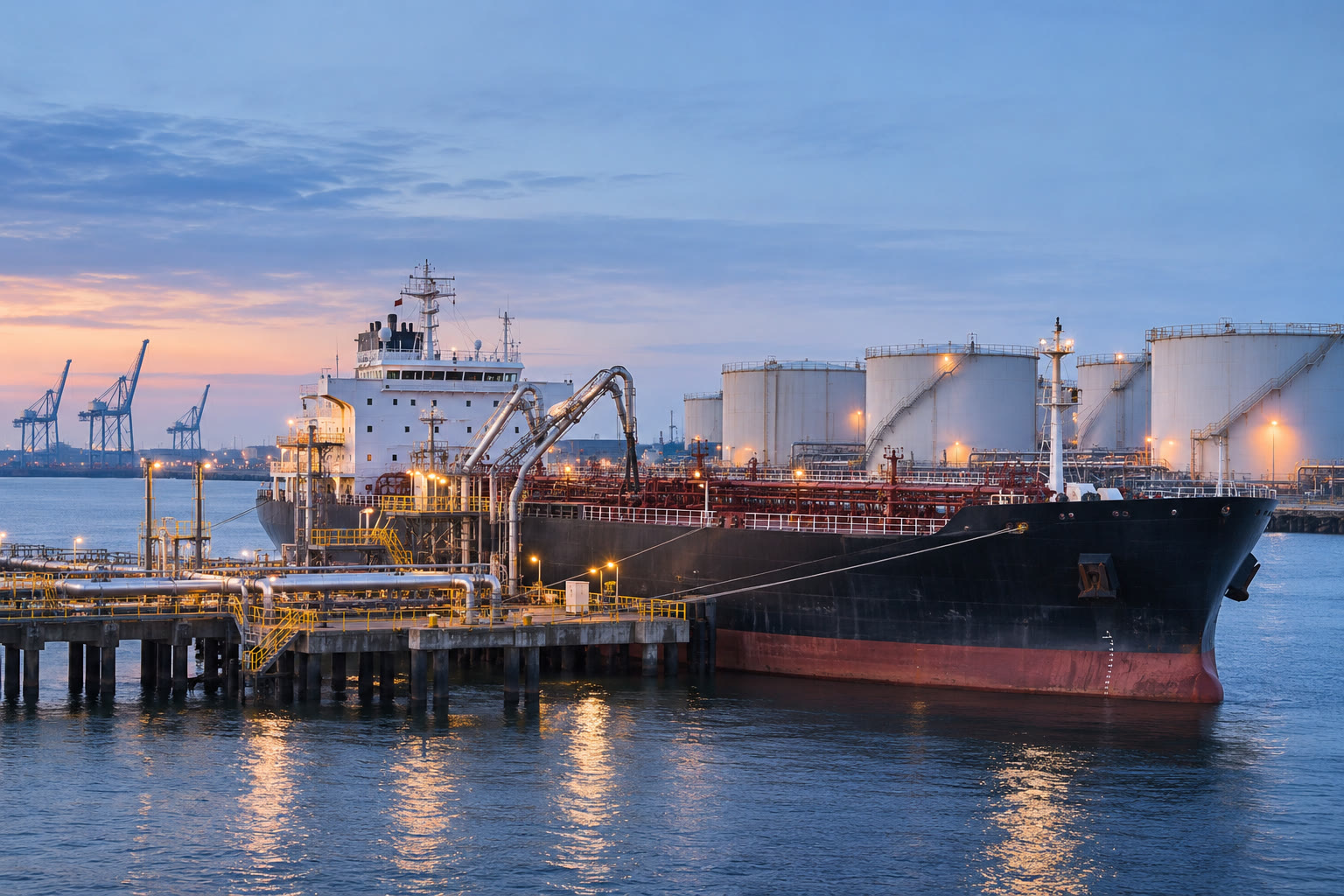
- Japan says idle storage tanks, including infrastructure at closed refineries, could potentially hold oil for Asian countries under a regional stockpiling project.
- A separate Japan-Philippines agreement sets a framework for developing the Philippines' strategic petroleum reserves, but feasibility, financing and implementation work remain.
- For drivers and freight operators, the announcement is a medium-term supply-resilience measure, not a new retail-fuel price or a scheduled reserve release.
What Japan and the IEA announced
The joint statement issued in Manila on 17 Nov 2026 says Japan and the IEA welcomed the proposal to establish the IEA-Japan Oil Security Hub for Asia and intend to work together towards its realisation. The Hub is to be hosted by the Japan Organization for Metals and Energy Security (JOGMEC) in Tokyo, drawing on the IEA Secretariat in Paris and its Regional Cooperation Centre in Singapore.
The wording matters. This is a confirmed policy framework and cooperation commitment, but the statement does not announce that a pooled Asian reserve is already operating or that oil will be released now. The immediate output is coordination, analysis and design work that could support future national or regional stockholding arrangements.
At the same AZEC leaders meeting, Japan and its partners established the Asia Oil Security Task Force. The Japanese government describes it as an expert team working with the IEA and ERIA to collect and analyse data on Asian oil stocks and consider the coordination needed during emergencies. The group will work with the proposed Hub rather than replace national reserve agencies.
How the proposed system could work
The Japan-IEA statement identifies three practical workstreams without committing to a single reserve model. The Hub is expected to help countries build oil-stockholding systems and infrastructure, improve analysis and information-sharing on oil markets and energy security, and examine how emergency cooperation and coordinated responses could be designed for Asian conditions.
A separate Japanese outline says idle tanks in Japan could potentially be used to store oil for other Asian countries. That idea would be coordinated with initiatives such as the Philippines-led ASEAN Regional Joint Stockpiling scheme and could use existing infrastructure, including facilities at closed refineries. It remains a potential cooperation project: the documents do not set a storage volume, a participating-country list or a date for physical stockpiling.
The Philippines provides an early national test case. Its Department of Energy said Japan and the Philippines signed a Memorandum of Cooperation on 16 Nov 2026 to advance strategic petroleum reserves. The agreement covers systems to build, manage and release reserves, possible storage infrastructure and feasibility studies, and possible financing arrangements. The cooperation period is three years once domestic procedures and written notifications are completed, with an option to extend by mutual consent.
Why the development matters to global fuel markets
Asia is particularly exposed to changes in Gulf oil and gas flows because many of its economies rely heavily on imports. The current Hormuz disruption has shown the difference between having fuel available in the global market and being able to move it reliably to the right country, port or refinery at the right time. Japan and the IEA say the Hub is a response to that vulnerability, while Reuters reported that Japan also wants closer ties between Asian consumers and Middle Eastern producers.
Strategic stocks can help bridge a short disruption, but only when the stored product is usable, accessible and released under rules that governments and market participants understand. A reserve system does not automatically lower crude prices, guarantee a fixed petrol price or remove shipping and refining constraints. Its value is in buying time: importers can respond while cargoes are rerouted, contracts are adjusted or infrastructure is repaired.
For transport businesses, that time can matter as much as the headline oil price. A disruption can affect diesel availability, freight schedules, refinery feedstock and the cost of chartering vessels before it shows up in a consumer price. A more transparent regional stockholding system could give buyers and policymakers an additional buffer, although its effectiveness will depend on governance, financing, product quality and the rules for requesting a release.
What it means for drivers and trip planning
There is no announced change to pump prices from this initiative. Drivers who want current local prices should use FuelPrice's live fuel-price pages, because a policy announcement about future resilience is not a substitute for a dated retail-price check.
For a particular journey, the direct consumer question is how much fuel the trip requires at the price available on the travel date. The fuel-cost calculator can help estimate that amount, while allowing for distance and vehicle efficiency. It cannot forecast the effect of a future reserve release, and actual prices can still differ by market, tax and retailer.
Long-distance travellers should also separate fuel security from route planning. A reserve may support supply at a national or regional level, but it does not guarantee that every station or corridor will be supplied evenly during a disruption. The road-trip planner can be used to review stops and distance assumptions before departure.
What to watch next
The next stage is implementation. Japan and the IEA will need to clarify the Hub's operating timetable, the countries and institutions that will participate, and how its analysis will feed into actual stockholding decisions. The Philippines and Japan will also need to move from feasibility studies to decisions on storage sites, financing and operating responsibility.
Readers should watch for an official roadmap, reserve-volume commitments, release criteria and evidence that storage infrastructure is being funded or repurposed. Those details will determine whether the initiative becomes a functioning regional buffer or remains mainly a technical-cooperation platform.
The immediate takeaway is therefore limited but useful: Japan and the IEA have put a regional oil-security mechanism on the policy track, with the task force and Philippines cooperation providing early building blocks. It is a response to supply-route risk, not a promise of cheaper fuel tomorrow.
Sources
- Government of Japan and International Energy Agency — Joint Statement on the establishment of the IEA-Japan Oil Security Hub for Asia — 17 Nov 2026
- Government of Japan — The 4th AZEC Leaders Meeting: Upgrading POWERR Asia — 17 Nov 2026
- Philippines Department of Energy — Philippines, Japan Sign Pact to develop Strategic Oil Reserves — 17 Nov 2026
- Associated Press — Japan urges creation of an Asian energy framework to counter oil crises — 17 Nov 2026
- Reuters, via Business Recorder — Japan proposes Asia oil security task force at ASEAN summit — 17 Nov 2026
This article is for general information only and is not financial, insurance or legal advice.