An industry association has said rising motor-workshop repair estimates are adding to general-insurance claim costs and could keep pressure on premiums, but it has not quantified how much they contribute. The representation comes as the Insurance Regulatory and Development Authority of India’s (IRDAI) proposed insurance-distribution reforms remain open for feedback until 31 Oct 2026, so car owners should treat this as a live policy debate—not a confirmed premium hike.
Key takeaways
- The Confederation of General Insurance Agents Associations of India (CGIAAI) wants automobile workshop repair bills to be regulated and standardised, alongside hospital tariffs.
- The association cited an incurred-claims ratio of 84% to 87% and linked higher claims costs to price inflation; these are its claims, not a regulator’s finding.
- IRDAI’s consultation proposes a phased reduction in expense-of-management limits for general insurers, but the proposal is not a final rule.
- There is no confirmed change today to a car owner’s premium, policy cover or workshop bill because of this representation.
What the motor-insurance representation says
In reporting published on 25 Oct 2026, The Indian Express said CGIAAI had submitted a representation to the Prime Minister, arguing that hospital bills and motor-garage repair estimates are putting pressure on insurers’ claim payouts. Outlook Money reported the same representation on 26 Oct 2026 and said the association claimed to represent 1.6 million general-insurance agents.
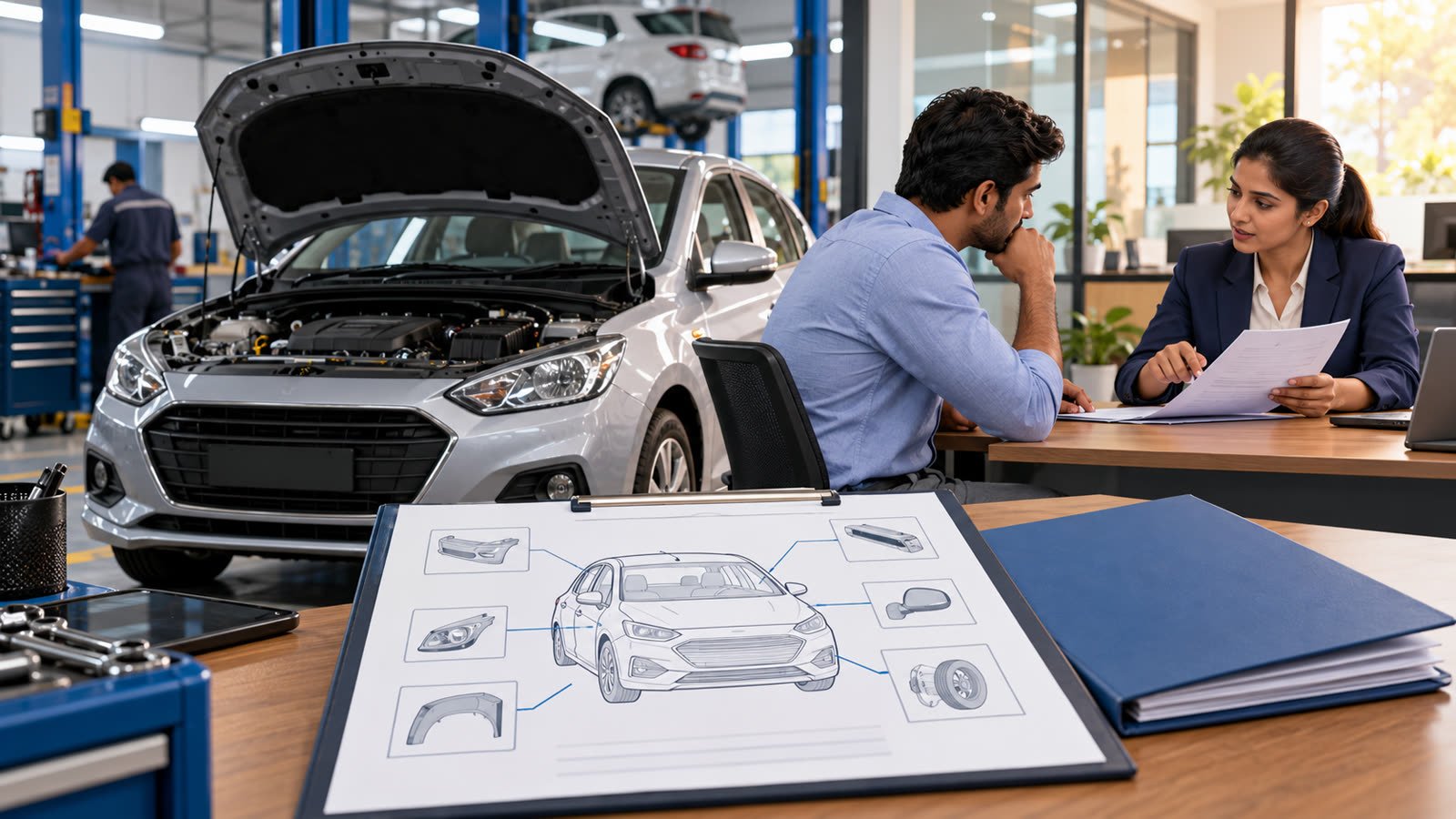
CGIAAI’s position is that a reform conversation focused mainly on commissions and distribution expenses may miss the cost of settling claims. It alleged that repair estimates can be higher when a bill is routed through insurance, and asked the government and IRDAI to examine and standardise workshop charges. The association did not provide a detailed breakdown showing how much these alleged differences add to premiums.
The 84%–87% incurred-claims ratio cited in the coverage is also an association-supplied figure. It indicates the share of premium-related income that an insurer uses for claims under the measure being discussed; it does not mean that every motor policyholder will see a premium rise of 84% or 87%.
This is a new industry submission in the wider debate covered in FuelPrice’s earlier article on the motor-insurance claims and commission discussion. It should not be read as an announcement by IRDAI or as evidence that a particular insurer has changed its renewal rates.
Why repair estimates matter to car owners
A motor claim usually moves through several cost decisions: the workshop prepares an estimate, the insurer assesses the covered damage, and the policyholder may pay a deductible or an excluded item. If the repair bill is higher, the claim payout can also be higher. Over time, claims costs are one input into how insurers assess products, but a single representation does not automatically change an individual renewal quote.
Actual motor-insurance pricing can also reflect the vehicle, location, insured declared value, cover selected, deductibles, claims history, repair network and the insurer’s underwriting approach. That is why two owners of similar cars may receive different renewal offers. Policyholders comparing a renewal can use this car-insurance renewal quote checklist to compare like-for-like cover rather than treating a headline about industry costs as a personal price forecast.
What IRDAI’s proposal changes—and what it does not
IRDAI’s two-part consultation paper, released on 23 Sep 2026, is aimed at recalibrating the economics of insurance distribution. The proposal discussed in recent reporting would move general-insurer expense-of-management limits towards 25% within two years and 20% within five years. Those figures describe proposed limits on insurer expenses; they are not a motor-premium rate or a cap on an individual repair bill.
IRDAI extended the deadline for public feedback to 31 Oct 2026. Until the consultation is reviewed and any final rules are notified with an effective date, existing policies continue under their current terms. The CGIAAI representation may influence the feedback record, but it does not itself create a tariff, premium formula or compulsory workshop price.
For readers, the practical distinction is important: a consultation paper and an industry submission are proposals or stakeholder views. They should not be presented as a confirmed renewal hike, a new claim exclusion or a direction to change insurers.
What to check at your next renewal or claim
- Compare the new premium with the previous policy schedule, checking the insured declared value, deductibles, add-ons and exclusions separately.
- Ask for an itemised repair estimate and keep the insurer’s approval, surveyor notes and final invoice together.
- Check whether a proposed repair is covered, partly excluded or subject to a deductible before authorising the work.
- Keep photographs, claim-intimation details and payment records if a repair bill is disputed.
Owners renewing after a claim can also review the NCB, IDV and post-claim cover checklist. The point is not to predict a premium from this debate, but to make sure the next quote and any claim settlement are compared against the actual cover and documents.
What to watch next
The immediate checkpoint is 31 Oct 2026, when feedback on IRDAI’s distribution-reform consultation is due. The next meaningful development would be a final regulatory decision, a specified effective date or a formal framework for repair-cost transparency. Until then, whether lower distribution expenses or standardised repair charges eventually reach policyholders remains uncertain, and any premium effect would depend on insurers’ claims experience and pricing decisions.
Frequently asked questions
Will car-insurance premiums rise immediately?
No confirmed immediate increase has been announced from this representation. The association says higher repair costs can add to claims pressure, but actual renewal prices vary by policy and customer profile.
Does the IRDAI consultation change an existing policy?
No. It is a consultation, not a final rule. Existing cover remains governed by the policy schedule and applicable regulations unless a later notification changes the position.
Are workshop repair bills capped now?
No. CGIAAI has asked for greater regulation and standardisation, but its request is not an effective workshop-price cap.
Sources
- The Indian Express — “Insurance agents flag high hospital bills, inflated motor repair costs for rising premiums” — 25 Oct 2026
- Outlook Money — “Rising Hospital Bills, Motor Repair Costs May Be Pushing Up Insurance Premiums” — 26 Oct 2026
- ETBFSI — “IRDAI extends deadline for feedback on insurance distribution reforms to October 31” — 25 Oct 2026
- Insurance Information Bureau of India — “Recalibrating Economics of Insurance Distribution” consultation portal — accessed 27 Oct 2026
- IRDAI — “Motor Insurance - Policy Holder” — accessed 27 Oct 2026
This article is for general information only and is not financial, insurance or legal advice.