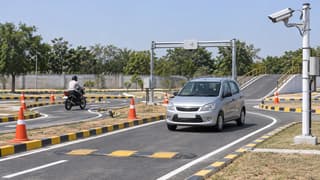
NHAI has issued a standard design for barrier-free Multi-Lane Free Flow (MLFF) toll plazas on future and under-construction four-lane-and-above National Highway projects. For drivers, the policy points to a gradual shift from stopping at booths to being identified and charged while moving through a tolling zone, although it does not set an immediate switch-over date for every existing plaza.
The Ministry of Road Transport and Highways said in its 6 Nov 2026 release that NHAI's guidelines cover the layout, lane configuration, gantries, road infrastructure, lighting, signage and support facilities needed for MLFF tolling. The policy circular listed by NHAI's industry portal is dated 30 Oct 2026.
Key takeaways
- The design standard applies to future and under-construction four-lane-and-above National Highway projects.
- Projects still at the Detailed Project Report stage must include the new layout in their documents.
- Projects already awarded or under construction can adopt the requirements through applicable contractual provisions.
- The stated aims are fewer queues, less waiting and lower fuel consumption around tolling zones; the announcement is not a new toll-rate revision.
What NHAI has standardised
Traditional toll plazas are designed around booths and queues, which means a project may need a large paved area and several lanes to handle peak traffic. MLFF changes the physical logic: equipment mounted on overhead gantries can read a vehicle's FASTag and use cameras and other systems to identify it without requiring a stop at a payment booth.
The new framework is intended to make that infrastructure consistent across highway projects. It sets out requirements for the plaza layout, the positioning of gantries, lane arrangements, road safety features, lighting, advance signs, Electronic Variable Message Signs and the supporting operations and maintenance facilities. The government says the number of lanes can be rationalised compared with a conventional barrier-based plaza because vehicles do not have to queue at a gate.
Where the policy applies
The coverage is important for understanding what changes now. NHAI says every future project and every project under construction is within the implementation framework. A corridor at the DPR stage is expected to carry the design in its project documents. If a project has already been awarded or is being built, the revised requirements are to be taken up through the relevant contractual provisions.
That does not mean every toll plaza in India will become barrier-free at once. The release does not announce a universal conversion deadline for operating plazas, and it does not state that toll fees, exemptions or FASTag pass terms have changed. The immediate change is in how new and eligible ongoing highway projects are planned, tendered and built.
How MLFF affects the driver experience
In a functioning MLFF zone, the driver should be able to maintain a steady course instead of choosing a booth, stopping, paying and accelerating again. The Indian Express, reporting on the NHAI guidelines, said the system is designed around gantry-mounted RFID readers and Automatic Number Plate Recognition cameras. It also reported that a vehicle without a valid and functional FASTag can trigger an electronic notice under the applicable toll rules.
The practical benefit is therefore a smoother passage through the tolling point, not free travel. The applicable user fee still has to be paid, and a no-stop system makes it more important that the vehicle's tag is correctly linked, active and usable. For a fleet operator, fewer stop-and-start events can also make route timing more predictable, but the actual time and fuel effect will depend on traffic, the road design and how consistently the system operates.
What drivers should check now
- Check the tag before a long trip. Confirm that the FASTag is active, linked to the correct vehicle and has enough balance. The FASTag balance and wrong-deduction guide covers the checks and records to keep.
- Expect signs before the gantry. NHAI's framework calls for advance guidance, lighting and VMS so road users can recognise the tolling zone. Follow the displayed lane and speed instructions, and do not stop under a gantry unless highway staff or an emergency requires it.
- Review the transaction after the journey. Save the date, route and tag statement if a deduction looks wrong. A barrier-free design removes the booth interaction, so the digital transaction trail becomes the main record for resolving a dispute.
- Include toll and fuel separately in trip planning. Use the toll-charge calculator for the route's fee estimate and the fuel-cost calculator for the vehicle's running cost. The NHAI announcement is about collection infrastructure; it is not a promise that a route's total cost will fall.
What to watch as projects are built
The next test is implementation. NHAI field offices have been directed to incorporate the requirements in upcoming projects and facilitate adoption in ongoing works. Drivers will want to see whether approach signs are placed early enough, whether lighting keeps cameras and readers reliable at night, and whether there is a clear process for vehicles that are misread or cannot complete a digital deduction.
The policy also matters to highway builders and transport operators because a standard gantry-led layout can reduce the need to reserve large areas for rows of booths. That may help projects use land more efficiently, but the effect on construction cost, toll-plaza location and journey time will vary by corridor. It would be premature to treat the framework as proof that every existing congestion point will disappear.
Why this is a follow-up to the earlier MLFF plan
FuelPrice previously reported NHAI's broader plan for barrier-free tolling on new highways. This latest circular is more operational: it gives project teams a common physical and safety template for making the system work. Readers can compare that earlier plan with the previous MLFF coverage while keeping in mind that rollout will still depend on each project's stage and contractual changes.
Reader takeaway
NHAI's 6 Nov announcement is a design and implementation step, not an instant nationwide change to toll charges. The main habit for drivers is simple: keep the FASTag usable, follow advance signs and check digital deductions after a trip. The visible payoff, if projects implement the framework well, should be less stopping and more consistent movement through future tolling zones.
Sources
- Press Information Bureau, “NHAI Guidelines to Standardise Design and Infrastructure for Multi-Lane Free Flow Tolling on Four-Lane and Above National Highways”, 6 Nov 2026
- NHAI Policy Circular No. 17.5.104, “Toll Plaza layout and Infrastructure for Barrier-Free Tolling on future and under-construction four-lane and above National Highways Projects”, 30 Oct 2026
- The Indian Express, “Barrier-less system to reduce toll lanes in new highways”, 30 Oct 2026