National Highways Authority of India (NHAI) has reportedly asked regional officers, project directors and highway contractors to address a broad set of road and roadside defects over the next three months. The reported programme matters to drivers because it covers potholes, faded markings, lighting, drainage, traffic-diversion safety and approaches to toll plazas - issues that can change visibility, speed and travel time on a long highway run.
This is a maintenance and road-safety push, not an announcement of a new toll fee or FASTag rule. The exact route-wise schedule is not public in the reports available so far, so drivers may see repair work begin at different times on different national highways.
Key takeaways
- The Times of India reports that NHAI has set a three-month window for a wide highway-improvement exercise.
- Reported priorities include potholes, cracked or rutted surfaces, faded road markings, damaged kerbs, barriers, signs and highway lighting.
- Drainage, waterlogging, service roads, slopes, bus bays and approaches to toll plazas are also in scope.
- Work-zone safety and traffic-diversion arrangements are part of the reported checklist, so some repairs may temporarily narrow lanes or change access.
- NHAI's separate AI dashcam programme provides the monitoring background for detecting highway defects and tracking rectification.
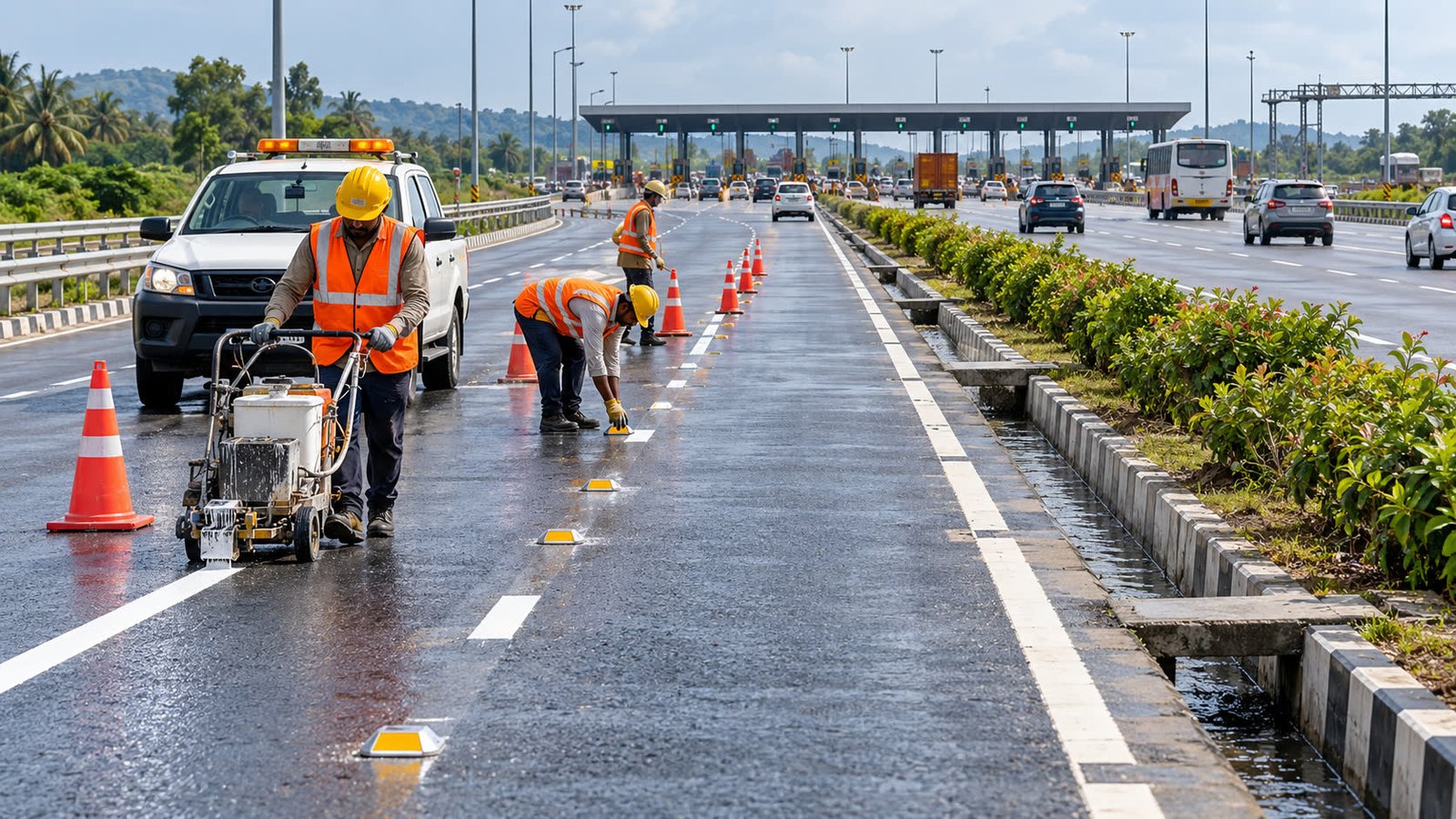
Illustrative visual: highway maintenance, inspection and road-safety work on an Indian national highway. Credit: FuelPrice editorial illustration.
What the reported NHAI drive covers
The latest report from The Times of India says NHAI has asked its regional officers, project directors and contractors to concentrate on visible defects and the quality of the overall highway experience. The list starts with the problems drivers notice first: potholes, cracked pavement, visible rutting, faded lane markings and damaged kerbs.
The reported scope goes beyond the road surface. It includes non-functional lighting, damaged road signs and overhead sign structures, broken concrete barriers, faded paintwork, uneven shoulders, overgrown vegetation and missing drain covers. Unauthorised openings in medians, signboards, hoardings and encroachments are also identified for attention. These are practical issues because they can create sudden lane changes, reduce night-time visibility or allow water to remain on the carriageway.
For road users, the distinction between a cosmetic improvement and a functional one is important. Fresh lane lines can make a diversion easier to follow, but only if temporary signs, cones and barriers are placed consistently. Clearing a drain can reduce water ponding, but the benefit will depend on whether the surrounding shoulder and slope also allow water to leave the road. The reported checklist recognises both sides of that problem.
Why toll-plaza approaches are part of the story
NHAI has also identified toll-plaza approaches, service roads and approaches to structures for improvement, according to the report. The focus includes better signage and road markings, landscaping near plazas, smoother riding surfaces and preventing water from collecting at entry or exit points.
These areas matter even when the toll amount does not change. A rough approach, unclear lane line or flooded exit can slow traffic and cause last-minute merging, particularly when cars, buses and goods vehicles use the same access. During works, drivers may instead face a short-term lane shift or a slower approach while the defect is being corrected.
The reported programme is separate from FuelPrice's earlier coverage of NHAI toll-plaza amenities guidelines. The earlier item dealt with facilities and feedback arrangements; this newer report is wider, covering the road, roadside assets and safety conditions on highway stretches as well as near toll plazas.
How defect monitoring fits in
NHAI's primary release dated 20 March 2026 said the authority would deploy AI-powered Dashcam Analytics Services on around 40,000 km of the National Highway network and expressways. It said dashboard cameras mounted on route-patrol vehicles would conduct weekly surveys and use trained models to identify road and roadside defects. Hindustan Times independently reported the planned rollout the following day.
The release lists potholes, rutting, severe cracking, faded lane markings, damaged crash barriers, non-functional streetlights, illegal median openings, unauthorised signs, water stagnation, missing drainage covers, vegetation growth and bus-bay conditions among the issues the system can help monitor. That gives context to the current repair drive: the aim is not only to repair what a traveller reports after the fact, but also to make regular condition checks part of highway operations.
Monitoring does not by itself guarantee that every defect will be fixed within the same period. The quality of the result will depend on how quickly a contractor acts, whether the defect requires larger civil work and whether the work is checked after completion. For drivers, visible signs of progress should therefore include safer work zones, clearer markings and fewer recurring defects, not just a new round of inspections.
What drivers can check before a highway trip
- Plan the route and leave a time buffer. The road-trip planner can help organise a long drive before entering a corridor where resurfacing or drainage work may be under way.
- Estimate the toll portion separately. Use the toll-charge calculator to review the route cost, then check signs at the plaza because temporary traffic arrangements can change how vehicles approach the lanes.
- If a diversion adds distance, compare the fuel effect with the fuel-cost calculator. This is a planning estimate, not a prediction of the exact fuel used in traffic or a work zone.
At a repair site, the immediate priority is to follow the temporary signs, reduce speed and merge only where the lane arrangement permits it. Avoid stopping in a live lane to photograph damage. If the road surface, lighting or drainage remains unsafe after work, note the exact location and use the official highway grievance channel available for that route.
What is confirmed, and what remains open
The three-month repair target is reported by The Times of India and Business Standard, with the latter also describing a wider technology-led compliance framework for highway developers. Neither report provides a public list of every affected stretch or a single completion date that applies to all roads. That means the announcement should be read as an operational direction for field teams and contractors, not as a guarantee that every national-highway defect will disappear at once.
There is also no announced change here to toll rates, FASTag validity or vehicle eligibility. The immediate reader impact is more practical: expect maintenance activity on some routes, watch for temporary diversions, and check the road conditions again close to departure if the journey depends on a specific highway corridor.
Reader takeaway
NHAI's reported push is aimed at the everyday details that determine whether a highway feels safe and predictable: a visible lane line, a working light, a clear sign, an open drain and a stable toll-plaza approach. If the three-month effort is implemented consistently, drivers should see better road information and fewer avoidable hazards, but the effect will vary by route. Planning for temporary works remains sensible until NHAI publishes corridor-level progress or completion details.
Sources
- The Times of India - NHAI sets 3-month deadline to improve 'look and feel' of national highways - 27 Oct 2026
- Business Standard - NHAI seeks tech-led quality checks, builders ask for higher maintenance pay - 15 Oct 2026
- NHAI - NHAI to Introduce AI Powered Dashcam Monitoring System for National Highway Operations & Management - 20 Mar 2026
- Hindustan Times - NHAI to roll out AI-powered dashcam monitoring for road safety, maintenance - 21 Mar 2026