The Maharashtra State Road Development Corporation (MSRDC) has invited bids to prepare a detailed project report (DPR) for widening the old Mumbai–Pune National Highway 48 from four lanes to six. The proposal is still at the study and design stage, so it does not change the route, toll rate or construction status for a driver's next trip.
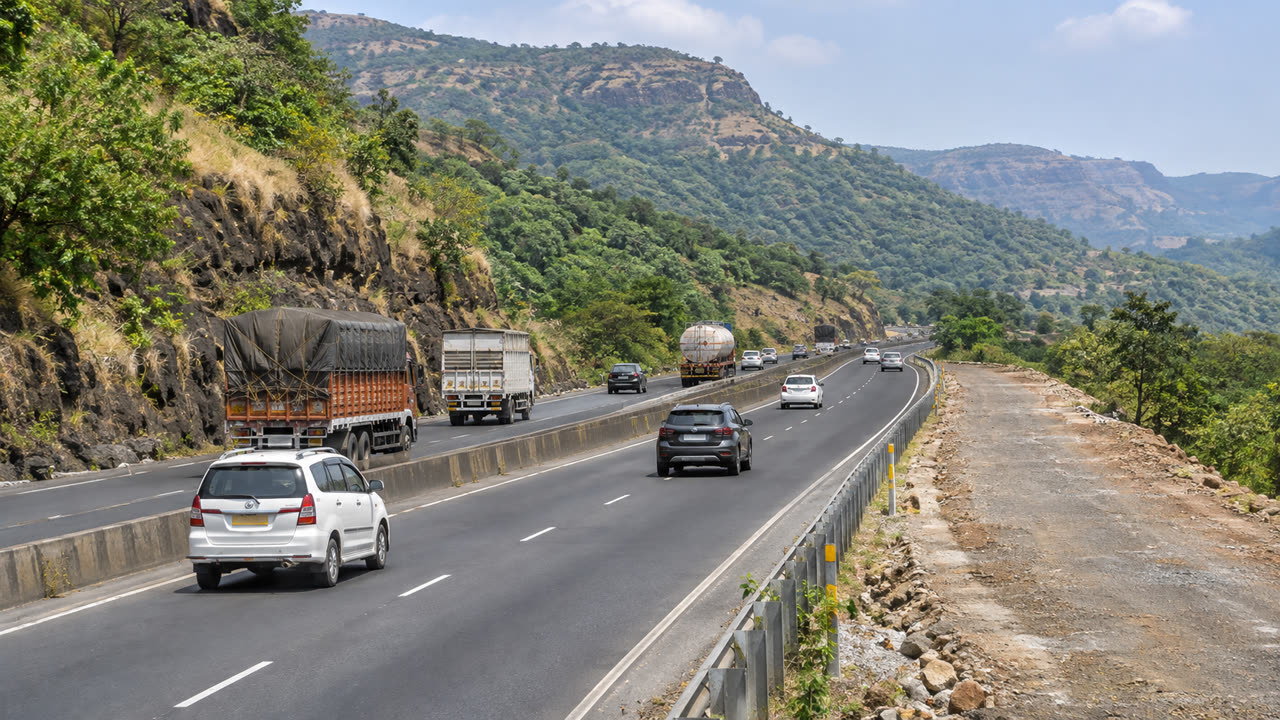
The current development matters to motorists, bus operators and freight carriers because the old highway remains an important Mumbai–Pune alternative through the Khopoli, Lonavala and Khandala belt. For the present journey, users can check the latest route charges in the toll-charge calculator and compare the old highway with the expressway in the road-trip planner.
Key takeaways
- MSRDC's tender is for a DPR consultancy, not for construction of the widened highway.
- The specific tender stretch runs from Nigdi to Shilphata and is about 110.8 km, or 111 km in media reports.
- Hindustan Times and Loksatta report an early project-cost estimate of ₹5,000 crore to ₹6,000 crore; the final amount is not fixed.
- Reports say the existing toll-collection rights, described as valid until 2035, could be extended by 10 to 15 years to recover the investment. That is a possibility, not an approved toll change.
What MSRDC has put out
The MSRDC tender listing describes the work as preparation of a DPR for improvement and upgradation to six-laning of Mumbai–Pune NH-48, formerly NH-4. Its chainages run from Nigdi at kilometre 20.400 to Shilphata at kilometre 131.200, a distance of about 110.8 km. Free Press Journal and Loksatta both reported the same stretch as approximately 111 km on 9 Nov 2026.
The wording is important: a consultant must first study the alignment, structures, land requirements, junctions, drainage, utilities and safety measures before a construction package can be defined. The tender therefore records a planning step. It does not confirm when civil work will begin, how many months it will take, or whether every part of the existing road will be widened in the same way.
There is also a scope distinction behind the different distances being reported. The current tender and the 9 Nov reports identify the 110.8-km Nigdi–Shilphata study stretch, while Hindustan Times on 10 Nov described the broader old Mumbai–Pune highway as approximately 150–156 km. Those figures should not be treated as competing measurements of the tender; the shorter number is the specific corridor named in the current DPR notice.
Why the proposal matters to route users
The old highway carries a mix of private cars, buses, industrial vehicles and long-haul freight. A six-laning study could eventually create more capacity and improve junctions or ghat-section approaches, but the road-use benefit will depend on the final alignment, land availability and the way construction is phased. A wider carriageway alone does not guarantee a shorter trip if bottlenecks remain at towns, ramps, toll points or steep sections.
For drivers choosing between the old route and the Mumbai–Pune Expressway today, the practical comparison is the full trip rather than the lane count. Check the current toll, expected travel time and fuel outlay for the vehicle and route. The fuel, toll and time route comparison guide can help frame that calculation, while the fuel-cost calculator can estimate the petrol, diesel or CNG portion separately.
Toll impact: what is reported and what is confirmed
Hindustan Times reported on 10 Nov 2026 that the project may cost between ₹5,000 crore and ₹6,000 crore, with toll collections being considered for recovery. Loksatta's 9 Nov report carried the same broad estimate and said the DPR would determine the final project shape and cost. These are early estimates, not a sanctioned budget.
The two reports also said MSRDC's toll-collection rights on the old highway are currently described as running until 2035, and that the period could be extended by 10 to 15 years if needed to recover the widening cost. This does not mean a new fee has been notified. No revised toll amount, new toll plaza, approved extension or implementation date has been announced in the tender information reviewed for this report.
That distinction is important for household and fleet budgeting. A future toll extension could affect the period for which users pay on the corridor, but its effect on a particular trip would depend on the final concession, user-fee notification and route choice. Until those documents appear, existing toll notices remain the relevant reference for a current journey.
What the DPR process will decide
Reports from Free Press Journal and Loksatta say the study is expected to examine alignment options and possible improvements around the Lonavala and Khandala ghat sections. It may also assess new road links, junction changes, drainage, rehabilitation or reconstruction of existing structures, utility shifting, land acquisition or land pooling, and possible delivery models such as public–private partnership, annuity or engineering, procurement and construction.
For commuters and transporters, the most useful documents to watch are the completed DPR, the final alignment map, any land or forest permissions, the construction tender, the traffic-management plan and the toll or concession notification. Each one will answer a different question: where work happens, when disruptions may start, what the project costs and how the user fee is recovered.
What changes now for drivers
- No immediate lane change: the road remains in its current operating configuration while the DPR is prepared.
- No confirmed toll hike: the reported extension is a funding possibility, not a current fee order.
- Route planning still matters: compare the old highway and expressway using current toll and fuel figures before a trip.
- Watch the ghat-section details: the final alignment will determine whether the proposal reduces bottlenecks or creates temporary diversions during construction.
Reader takeaway
MSRDC's move is a meaningful capacity proposal for the Mumbai–Pune corridor, but it is not yet a six-lane road project under construction. For now, the reliable takeaway is that a DPR tender has been issued for the 110.8-km Nigdi–Shilphata stretch; the cost, final design, construction schedule and any longer toll-collection period still have to be established through later official decisions.
Sources
- MSRDC — Tender listing for appointment of a consultant for the DPR for six-laning of Mumbai–Pune NH-48 (Old NH-4) (listing checked 10 Nov 2026)
- MSRDC plans to widen old Mumbai-Pune highway to six lanes; project may cost ₹6,000 crore (10 Nov 2026)
- British-Era Mumbai–Pune Highway Set For Makeover; MSRDC Plans 6-Laning Of 111-km Nigdi–Shilphata Stretch (9 Nov 2026)
- जुना मुंबई-पुणे महामार्ग लवकरच सुसाट; महामार्गाच्या सहापदरीकरणाचा एमएसआरडीसी तयार करणार आराखडा (9 Nov 2026)