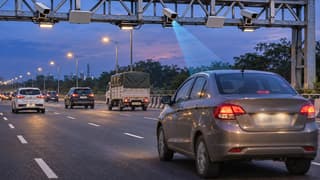
India’s barrier-free tolling system is flagging a growing number of vehicles that cannot be matched to a visible number plate and linked FASTag, according to reports published on 10 Nov 2026. On the Delhi–Jaipur section of NH-48, at least one in 10 vehicles crossing the Shahjahanpur Multi-Lane Free Flow (MLFF) plaza was classified as unidentified in the reported data, raising the risk of unrecovered tolls and tighter checks for highway users.
Key takeaways
- The reported unidentified-vehicle share was about 10% at Shahjahanpur, 2% at Mundka-Bakkarwala and 3% at Manoharpura.
- Manoharpura recorded more than 99,500 unidentified vehicles out of 31.74 lakh crossings by 21 Oct 2026, while Shahjahanpur recorded 2.60 lakh out of about 24 lakh crossings during the reported period.
- Authorities are considering a penalty higher than twice the toll and possible FIRs, but those measures are not final or in force.
- For ordinary unpaid-user-fee notices, the official rule gives a 72-hour window to pay the original toll; after that, twice the applicable user fee can apply.
The development is a follow-up to the growing MLFF rollout and the September e-notice data covered in FuelPrice’s earlier MLFF driver-check report. The key difference is that the latest concern is not only a low FASTag balance: it is whether the system can identify the vehicle and match its number plate with the tag record.
What an unidentified vehicle means
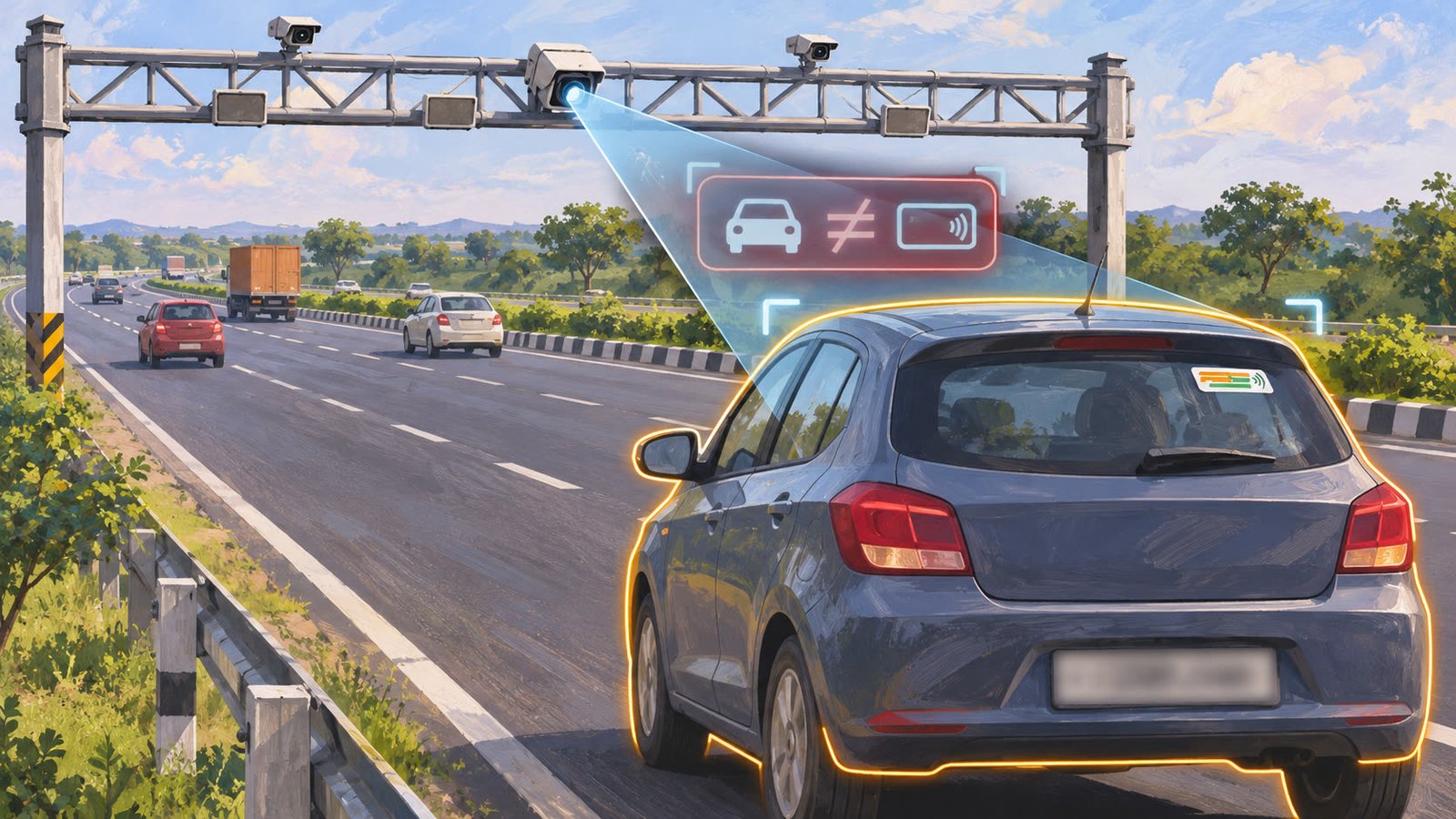
Under the reported MLFF process, a vehicle can be classified as unidentified when its number plate or FASTag cannot be seen, is covered, or appears fake or impersonated. The system is designed to match the vehicle’s plate with the FASTag linked to it. If that match fails, the toll cannot be recovered through the normal automated deduction.
This does not mean every unidentified crossing proves deliberate toll evasion. A plate may be unreadable because of obstruction, damage, poor capture or a tag problem. However, officials told The Indian Express that the pattern has also raised concerns about possible number-plate impersonation, illegal movement of goods and GST-evasion risks because e-way-bill systems are linked to FASTag data. Those are concerns under review, not findings against any individual driver.
Where the reported numbers are concentrated
| MLFF plaza | Reported position | What the figure covers |
|---|---|---|
| Shahjahanpur, NH-48 | About 10% unidentified | 2.60 lakh of around 24 lakh crossings; MLFF began on 1 Aug 2026, with data reported up to the latest period. |
| Manoharpura, NH-48 | About 3% unidentified | More than 99,500 of 31.74 lakh crossings by 21 Oct 2026; MLFF began on 1 Jul 2026. |
| Mundka-Bakkarwala, Delhi | About 2% unidentified | Share reported for the Delhi plaza; the report did not give a comparable crossing total in the same passage. |
| Paranur, NH-45 | More than 500 unidentified | First 20 days after MLFF began on 1 Oct 2026. |
The Shahjahanpur, Manoharpura and Daulatpura plazas together cover the Gurgaon–Jaipur stretch of NH-48 without conventional barriers. That means a vehicle that remains unidentified could potentially travel through the full barrier-free corridor without a toll deduction, according to the reports. NHAI’s official launch note confirms that Shahjahanpur uses ANPR together with FASTag-based electronic toll collection.
What is confirmed and what is only proposed
The confirmed part is the existing e-notice framework. NHAI’s March 2026 rules release says an unpaid user fee can generate an electronic notice linked to the vehicle record. If the original toll is paid within 72 hours, the extra charge is avoided; after that, twice the applicable user fee may be payable. The rules also provide a 72-hour window for a representation, and say that unpaid dues can be recorded in VAHAN after 15 days when no representation is pending.
The new measures are still reported as proposals. Officials are considering a penalty of more than twice the toll and registration of an FIR in cases involving unidentified vehicles, with a decision expected within a month. A dedicated internal portal and an AI-assisted process are also being developed, according to the reports. The suggested process would compare vehicle details from VAHAN with FASTag records captured at nearby boom-barrier plazas within a 10-minute matching window.
Until a formal notification is issued, drivers should not treat a proposed FIR or higher penalty as a new rule. The currently notified e-notice process remains the relevant compliance route.
What drivers and fleet operators should check
- Match the tag to the vehicle. Check with the issuing bank that the FASTag is linked to the correct registration number. A tag belonging to another vehicle can fail the MLFF match even if it has money in the wallet.
- Keep the plate and tag visible. The plate should be clean, legible and unobstructed, while the FASTag should be affixed on the windscreen as required. Do not rely on a tag kept loose inside the cabin.
- Check balance before a highway trip. The FASTag balance and deduction guide covers the basic checks for a low balance, a failed deduction and a disputed transaction.
- Watch the official notice channel. If an e-notice arrives, verify it through the designated portal and save the transaction reference. The 72-hour clock matters if the vehicle has crossed an MLFF plaza without a successful deduction.
- Budget the toll separately. Barrier-free passage removes the stop, not the user fee. Use the toll-charge calculator when comparing route costs, and treat the barrierless FASTag tolling guide as background on the wider rollout.
What to watch next
MLFF is already operational at seven fee plazas, while more contracts and bids are being processed. That expansion should reduce queueing at more locations, but it also makes reliable vehicle identification more important for both toll collection and drivers’ ability to contest a wrong notice.
The immediate takeaway is simple: a barrier-free toll plaza is not a toll-free road. A functional FASTag, a clean and readable number plate, and a correct tag-to-vehicle link are becoming part of normal highway-trip preparation. Penalties beyond the notified e-notice process should be treated as expected or proposed until NHAI or MoRTH publishes a final order.
Illustration: generated editorial visual showing barrier-free tolling and vehicle identification; it is not a photograph of a specific toll plaza.
Sources
- The Indian Express — Barrier-less toll plazas flag rise in unidentified vehicles — 10 Nov 2026
- The Financial Express — Barrier-less toll plazas flag rise in unidentified vehicles — 10 Nov 2026
- NHAI — National Highways Fee Rules, 2026 Amended to Strengthen Toll Compliance and Digital Enforcement — 18 Mar 2026
- Ministry of Road Transport and Highways — NHAI Successfully Launches MLFF at Shahjahanpur Toll Plaza — 1 Aug 2026