As of 5 Oct 2026, Paranur toll plaza on the Tambaram–Tindivanam section in Tamil Nadu is using barrier-free Multi-Lane Free Flow (MLFF) tolling. The change means vehicles can pass through the toll location without stopping at a booth, while FASTag and automatic number-plate recognition (ANPR) continue to identify the vehicle and collect the applicable user fee.
For drivers on the Chennai–southern Tamil Nadu corridor, this is a collection-system change, not a toll waiver. NHAI announced the rollout on 1 Oct, and an independent report on 3 Oct said the system had begun operating at Paranur. The practical takeaway is simple: keep the FASTag active, linked to the vehicle and funded before entering the plaza.
Key takeaways
- Paranur is the first toll plaza in Tamil Nadu where NHAI says MLFF has been rolled out.
- The system combines FASTag-based RFID detection with ANPR cameras mounted on an overhead gantry.
- Vehicles are designed to pass without stopping, which can reduce queues, idling and time lost at the toll point.
- NHAI says users need a functional FASTag with sufficient balance to avoid an electronic notice.
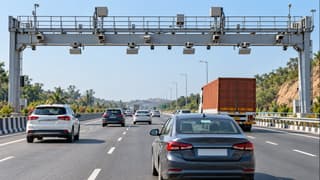
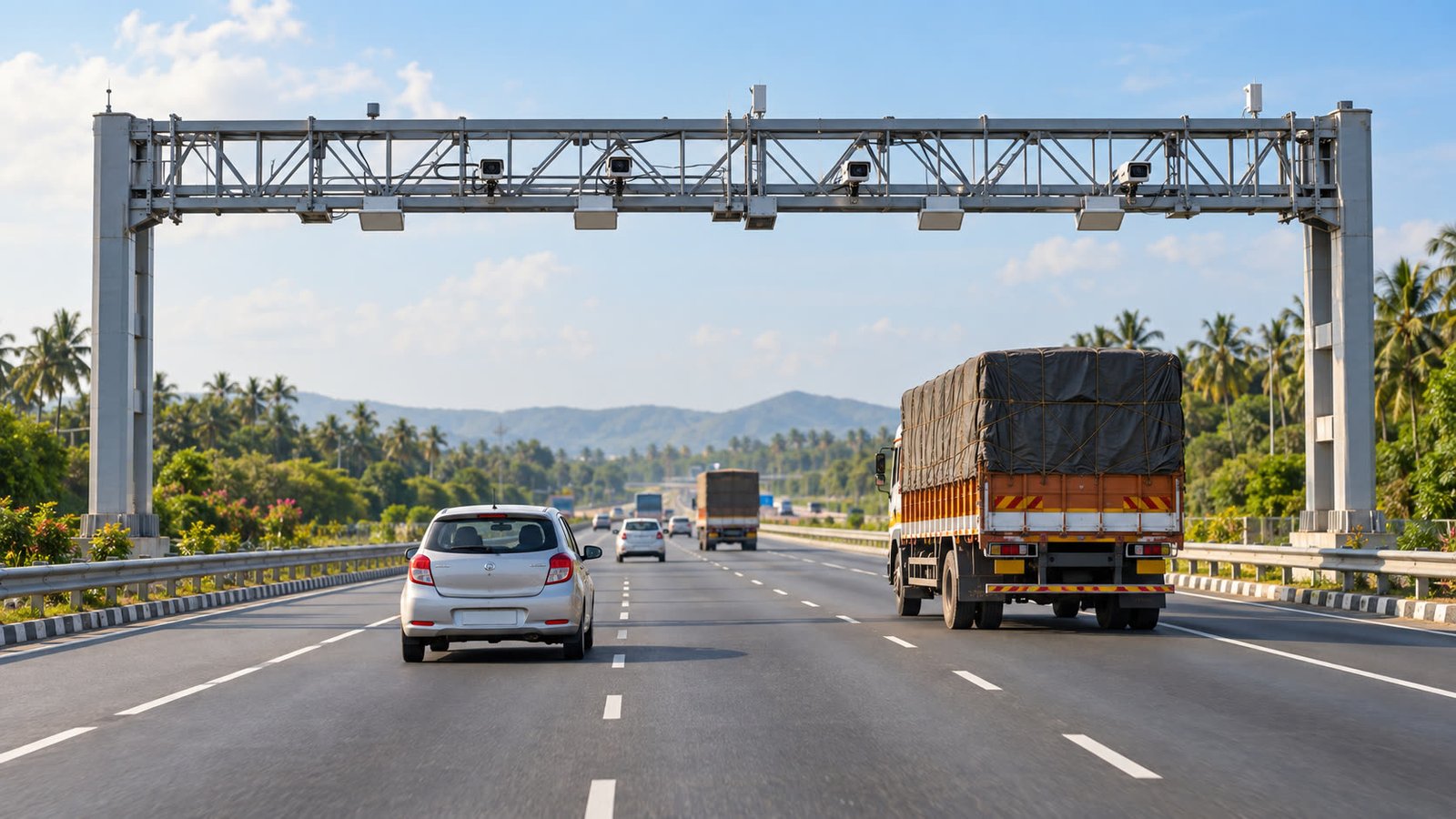
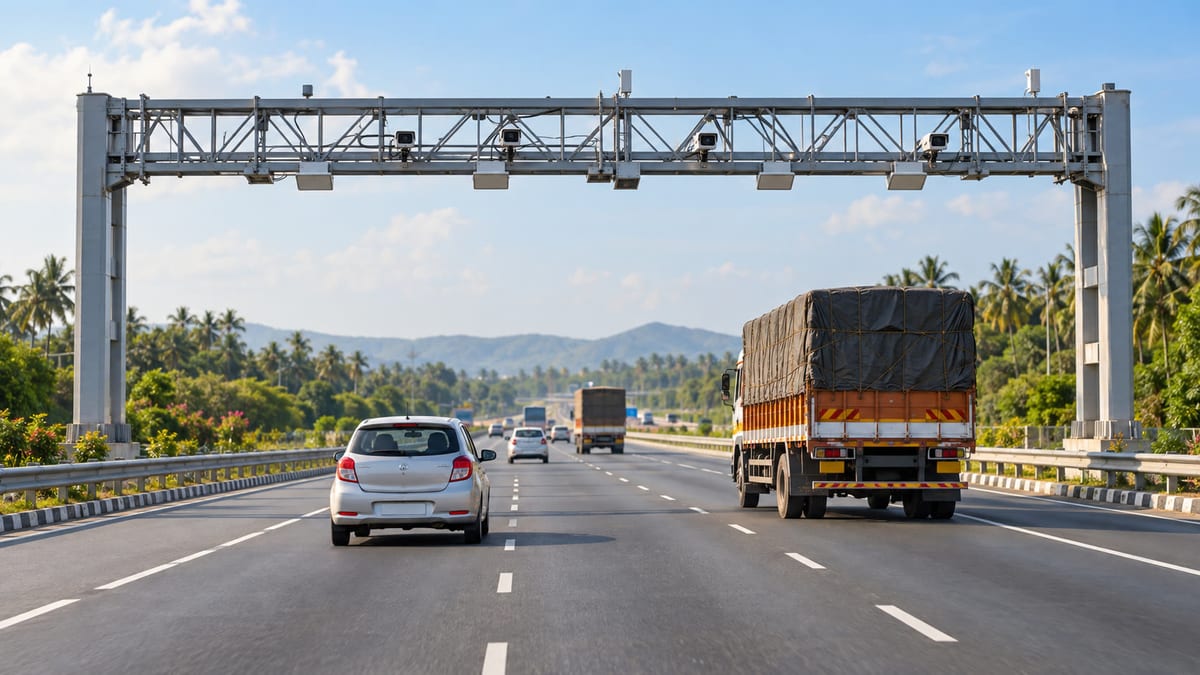 Illustrative image of barrier-free MLFF tolling with FASTag and ANPR; it is not a photograph of Paranur Toll Plaza. Credit: FuelPrice editorial illustration.
What changed at Paranur
In its 1 Oct release, the Ministry of Road Transport and Highways said NHAI had rolled out Tamil Nadu’s first MLFF system at Paranur on the Tambaram–Tindivanam section identified as NH-179B. The release described barrier-less tolling, allowing vehicles to move through the toll location without stopping. It also listed lower congestion, shorter travel time, improved fuel efficiency and lower emissions as intended benefits of the system.
DT Next reported that the shift was scheduled from zero hours on 1 Oct and described Paranur as a busy toll plaza near Chengalpattu on the GST Road. Malayala Manorama then reported on 3 Oct that the automated operation had begun, using FASTag and number-plate recognition to collect tolls online. That later operational report is the fresh development putting the rollout within the current news cycle.
The important distinction for motorists is that MLFF changes the way the fee is detected and collected. It does not make the route toll-free. Drivers should still budget the notified user fee for their vehicle category and check the deduction after crossing.
How the barrier-free system works
A conventional toll lane requires a vehicle to slow down or stop near a booth so the tag can be read and the barrier can open. MLFF moves the equipment above the carriageway. FASTag readers capture the RFID tag, while ANPR cameras read the registration number. The system then matches the vehicle details and processes the user-fee transaction through the electronic toll ecosystem.
The dual identification matters because a vehicle may still be recognised by its number plate if FASTag detection does not work as expected. It also means the electronic record becomes central to the trip. NHAI specifically advises highway users to maintain a functional FASTag and sufficient balance to avoid an electronic notice. A driver should not interpret the absence of a physical barrier as permission to pass without a valid payment path.
What it means for drivers and fleet operators
The clearest benefit is less stop-and-go movement. When traffic is heavy, removing a queue can save time and reduce the fuel burned while a vehicle idles or repeatedly accelerates. The actual saving will vary by traffic volume, vehicle type and the rest of the route; NHAI’s announcement does not promise a fixed number of minutes or rupees for every journey.
For a private car, the change is mainly about being ready for an electronic-only passage. For buses, trucks and other commercial vehicles, smoother movement can make arrival times more predictable, but operators should still reconcile FASTag messages and account statements with their trip records. Any unexpected deduction or electronic notice should be checked promptly against the vehicle number and crossing time.
Before departure, use the toll charge calculator to estimate the route’s user-fee budget. That helps separate a possible time saving from the toll amount that remains payable.
To estimate the wider trip cost, add distance, mileage and the current fuel rate in the fuel cost calculator. The MLFF rollout may reduce idling at Paranur, but it does not change how much fuel the vehicle needs for the full journey.
FASTag checks before crossing
- Check that the tag is active. A damaged, blocked or inactive FASTag can disrupt the expected automatic payment flow.
- Keep enough balance. NHAI’s release specifically links sufficient balance with avoiding an electronic notice.
- Confirm the tag and vehicle match. If a vehicle has changed hands or received a replacement tag, verify the linked registration details before travel.
- Review the transaction. Keep the SMS, app entry or account statement so a disputed deduction can be identified by time and vehicle.
- Plan the approach. The road-trip planner can help with route timing and stops, even though the plaza itself is designed for uninterrupted passage.
What to watch next
NHAI says MLFF is being implemented in phases at different national-highway locations. DT Next reported that Nemili near Sriperumbudur and Chennasamudram near Walajah could follow after trial operations. FuelPrice has separately covered the planned Nemili and Chennasamudram MLFF rollout, so drivers should expect the same basic lesson at future plazas: the physical stop may disappear, but FASTag readiness remains essential.
The next useful test will be how consistently the system matches tags, number plates and user-fee deductions during busy travel periods. Until more operating data is published, drivers should treat the time benefit as an expected convenience rather than a guaranteed saving.
Bottom line
Paranur’s barrier-free tolling gives Tamil Nadu drivers a faster-looking way through a busy toll point, with NHAI’s system using FASTag and ANPR instead of a conventional stopping lane. The new convenience also raises the importance of basic preparation: a valid tag, enough balance, correct vehicle linkage and a quick check of the transaction after the crossing.
Sources
- Ministry of Road Transport & Highways, “NHAI Rolls out Tamil Nadu’s First Barrierless Multi-Lane Free Flow Tolling System” (1 Oct 2026)
- DT Next, “Paranur toll plaza to go barrier-free from October 1” (1 Oct 2026)
- Malayala Manorama, “Paranur’s multi-lane free travel toll system begins operation” (3 Oct 2026)