Freight for Russian Urals crude shipped to India remains elevated. Reuters reported on 30 Oct 2026 that freight on some routes was around $30 per barrel or more, while Indian refiners are comparing nearer West Asian barrels as the shipping bill erodes the advantage of discounted Russian oil.
This is a supply-chain and refinery-margin story first, not an announcement of a retail petrol or diesel price change. For drivers, the useful question is whether higher landed crude costs persist and add to broader fuel-market pressure, rather than treating one tanker rate as a direct pump-price signal.
Key takeaways
- Reuters said on 30 Oct 2026 that Urals freight to India was around $30 per barrel or more on some routes, up from about $20 per barrel in Sep 2026.
- Around 100,000 metric tonnes on an Aframax tanker from Russia's Baltic ports to western India cost about $23 million for a one-way voyage, compared with roughly $13 million to $16 million in Sep 2026, according to the Reuters report.
- Business Standard reported on 31 Oct 2026 that freight and insurance still made up about one-quarter of a fully loaded very large crude carrier's cargo cost, against less than 5% before the war.
- Indian refiners are comparing delivered cost, not only the headline discount on Russian crude, with West Asian grades becoming more competitive on shorter routes.
What changed in the tanker market
Russian crude has to travel a long way to reach its biggest Asian buyers. Western sanctions have pushed much of the country's seaborne crude through western Russian ports towards India and China. That makes vessel availability, insurance, route risk and voyage time part of the crude price paid by a refinery.
| Route or measure | Reported late-Oct 2026 level | Earlier comparison |
|---|---|---|
| Urals freight to India | About $30 per barrel or more | About $20 per barrel in Sep 2026 |
| Baltic ports to western India, Aframax | About $23 million for a 100,000-tonne one-way cargo | About $13 million to $16 million in Sep 2026 |
| Black Sea to India, Suezmax | About $30 million for a 140,000-tonne one-way cargo | About $19 million in Sep 2026 |
All figures in the table were reported by Reuters on 30 Oct 2026; route, vessel class and cargo size differ between rows.
Independent market data points in the same direction. S&P Global reported on 9 Oct 2026 that the Black Sea-to-West Coast India Suezmax spread for Russia-linked tonnage widened to $83.36 per metric tonne on 8 Oct, from $47.22 per metric tonne on 29 Sep. The data is a market assessment, not an invoice for every cargo, but it shows how security, sanctions and insurance concerns can create a route-specific premium.
Why India is exposed to the freight squeeze
India is heavily dependent on imported crude. Business Standard reported on 31 Oct 2026 that the country has around 90% dependence on foreign oil and could import about 5.5 million barrels per day in Oct 2026 as refiners secure cargoes and run plants at high utilisation. Kpler data cited in the report put the average at 5.6 million barrels per day so far in Oct 2026.
High import volumes help explain why the freight bill matters beyond shipping companies. Business Standard said freight and insurance together accounted for about one-quarter of the cargo cost of a fully loaded very large crude carrier, which can carry around 2 million barrels, compared with less than 5% before the war. That does not mean every Indian cargo has the same cost structure; it shows that transport and risk have become a much larger part of delivered crude economics.
A refinery does not buy a barrel on its benchmark price alone. A useful way to read the reports is:
Landed crude cost = crude price + freight + insurance + port and handling costs.
When freight and insurance rise sharply, a cargo with a large headline discount can lose its advantage by the time it reaches the plant.
Why refiners are weighing West Asian grades
Financial Express reported on 27 Oct 2026 that Russian crude premiums for Dec 2026 cargoes had narrowed to about $1 to $2 per barrel from $12 to $13 per barrel under Oct 2026 contracts. The same report said Suezmax freight to India's west coast for Nov 2026 was about $29 per barrel from northern Baltic ports and $27 per barrel from Novorossiysk, while Aframax rates were about $30 to $32 per barrel on those routes.
The figures vary because the reports cover different dates, ports, vessel classes and contract terms. They should not be read as one single market quote. The consistent point is that the freight component is large enough to change which crude is commercially attractive after delivery.
Business Standard said Russia's share of India's crude imports had fallen to 35% in Oct 2026 from 56% in Jul 2026, with Russian inflows at about 2 million barrels per day in Oct 2026 compared with 2.83 million barrels per day in Jul 2026. The report also said Bharat Petroleum planned to significantly reduce Russian crude purchases in Nov 2026 because some West Asian grades were cheaper on a delivered basis. That is a sourcing decision by a refiner, not evidence that India is running out of fuel.
What this means for drivers and fleet operators
The reports used here do not announce a new domestic petrol or diesel price. Retail prices can reflect several variables, including global crude benchmarks, the rupee, taxes, refining margins, freight and the pricing decisions of oil marketing companies. The inference for motorists is that elevated tanker freight is an upstream warning signal, not a one-to-one instruction to expect a pump-price move.
Drivers who want the current number for their city can check FuelPrice's live fuel prices rather than rely on an international freight headline. For a longer journey, the fuel cost calculator can separate the fuel portion of a trip from tolls and other expenses.
Fleet operators and transport businesses have a wider exposure. Even when retail prices do not move immediately, a persistent freight shock can pressure refinery margins, alter sourcing patterns and raise uncertainty in budgeting. That is why landed-cost trends matter for diesel-dependent transport even before a visible change at the pump.
FuelPrice's earlier report on India's record October crude imports provides the supply-volume context. The two developments are related but not identical: high imports can protect availability, while high freight can make those imports more expensive.
What to watch in November
- Russian cargo economics: whether December crude discounts remain large enough to offset freight, insurance and route risk.
- West Asian supply: whether shorter voyages from Iraq, Saudi Arabia and the UAE continue to offer a lower delivered cost for Indian refiners.
- Tanker and Black Sea conditions: whether vessel availability, winter weather and security risks push freight still higher.
- Domestic fuel prices: whether broader crude and currency movements, rather than one route alone, show up in dated city-level petrol and diesel prices.
Bottom line: Russian crude is not necessarily expensive at the wellhead, but shipping it to India has become expensive enough to reshape refinery choices. For consumers, the immediate takeaway is to track actual local fuel prices and trip costs; for the market, the next signal will be whether freight and insurance remain high after refiners finalise Nov and Dec 2026 cargoes.
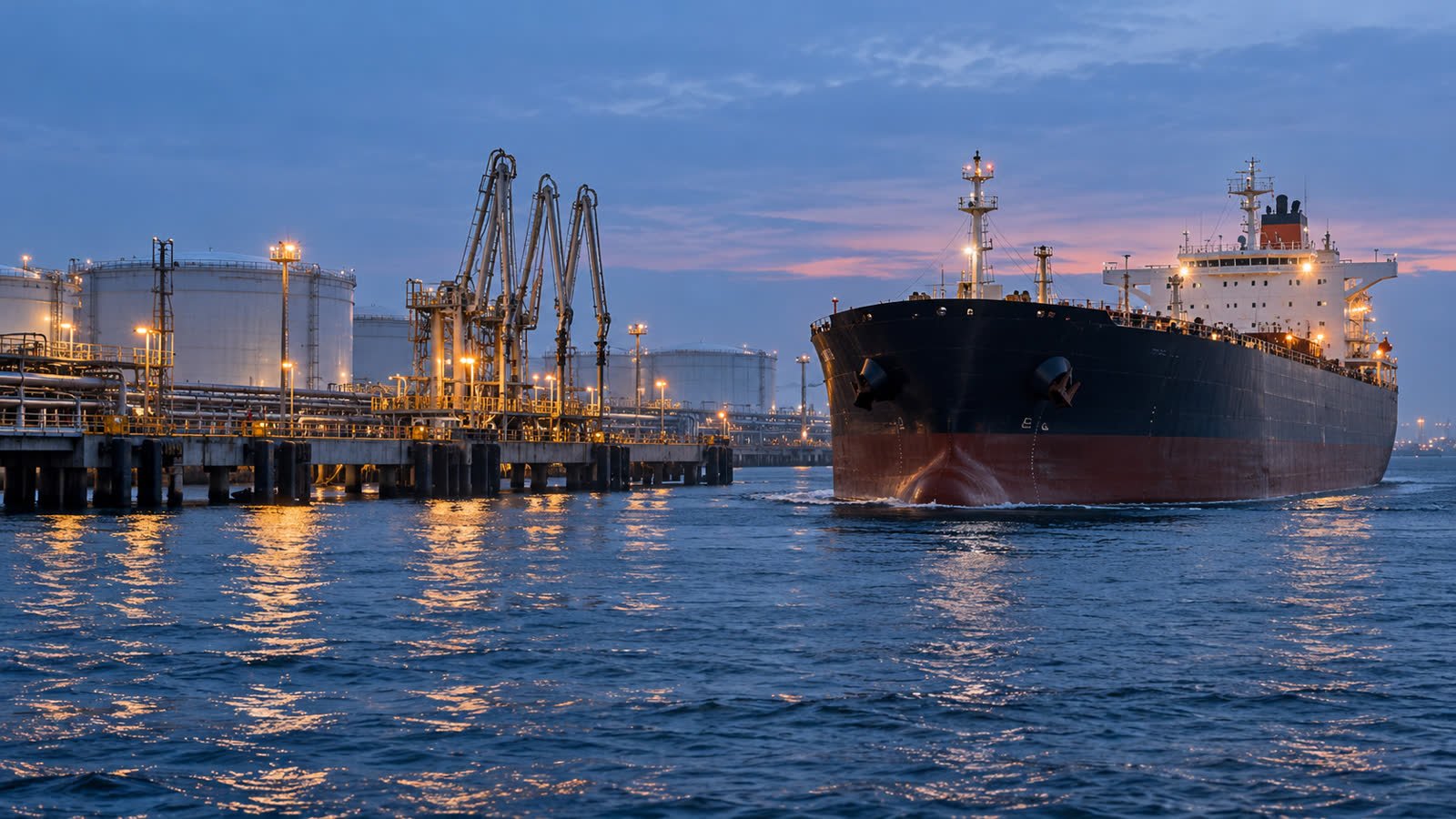
Image note: AI-generated illustrative depiction of an unbranded crude-oil tanker at a generic terminal; it does not show a specific vessel, company or voyage.
Sources
- Reuters — Freight rates for Russian oil stay at record highs amid tanker shortage, Black Sea risks, sources say — 30 Oct 2026
- Business Standard — India heads for record crude imports in October as refiners secure supplies — 31 Oct 2026
- S&P Global — Russia's shadow fleet freight rates fracture on Black Sea premiums — 9 Oct 2026
- Financial Express — Russian Urals premiums fall to a trickle, yet OMCs may stick with West Asia — 27 Oct 2026