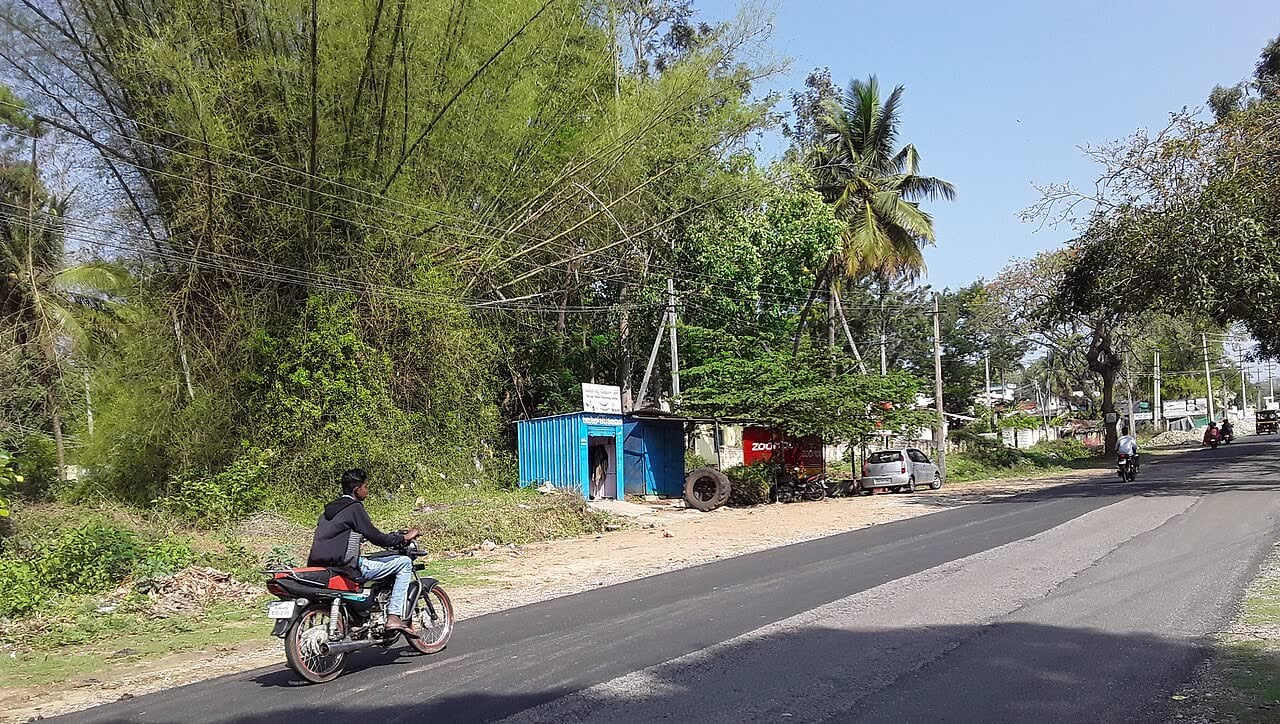
Bike insurance renewal is a two-part check: confirm the mandatory third-party (TP) cover date, then decide whether own-damage (OD) protection, IDV and add-ons still match the bike. As of October 2026, the basic TP rate is set by engine-capacity slabs, while OD premiums are insurer-priced and change with IDV, claims history, location and selected cover.
This guide explains what each section pays for, what a new two-wheeler’s five-year TP cover means, how the current rate bands work, how NCB changes the OD component, and what to do if a policy has already expired. Use the FuelPrice fuel-cost calculator alongside insurance when building a realistic annual riding budget.
Key takeaways
- TP insurance is the legal minimum for a two-wheeler used on public roads; it covers covered liability to other people and property, not repairs to your own bike.
- For a new two-wheeler, the long-term TP section is generally five years, while the bundled OD section is generally one year; check both dates on the policy schedule.
- As of October 2026, the annual base TP premium ranges from ₹538 for a bike up to 75cc to ₹2,804 for a bike above 350cc, before taxes and optional covers.
- NCB reduces only the OD premium. The standard claim-free progression runs from 20% after one year to a maximum 50% after five claim-free years.
- A missed expiry date is a coverage gap, not an automatic extension. New incidents during the gap are not backdated into a later renewal.
- Compare IDV, deductibles, exclusions and add-ons with the premium; a lower total can also mean lower protection.
Start with the policy schedule, not the renewal reminder
A bike policy may contain separate dates for TP liability and OD cover. This is common when a new two-wheeler was sold with long-term TP protection and one-year OD cover. The renewal message can be broad, so the policy schedule is the document to read first.
- Third-party liability: this responds to eligible legal liability when the insured bike causes injury, death or property damage to someone else, subject to the policy and law.
- Own damage: this responds, subject to exclusions and deductibles, to covered loss or damage to the insured bike, such as an accident, theft, fire or specified natural event.
- Personal accident and add-ons: these have their own limits, eligibility rules and effective dates. Do not treat them as automatically active just because a payment receipt exists.
IRDAI says a new two-wheeler can be sold with a bundled policy or a long-term liability-only policy. Its policyholder guidance states that TP cover in a bundled policy runs for five years for a new two-wheeler, while the OD section runs for one year. At renewal, confirm which section is ending rather than buying the same combination by habit.
Third-party, own-damage and comprehensive cover compared
| Cover type | What it responds to | What it does not replace | Key renewal check |
|---|---|---|---|
| Third-party only | Covered liability for injury, death or property damage caused to another party | Repair, theft or total loss of your own bike | Check the TP expiry and engine-capacity slab |
| Standalone OD | Covered damage or loss to your bike, subject to IDV, deductibles and exclusions | Mandatory TP liability | Confirm that a valid TP policy continues alongside it |
| Package or comprehensive | TP liability plus covered own-damage risks in one policy structure | Events excluded by the wording, and costs above limits or IDV | Compare IDV, deductibles, exclusions and add-ons |
TP is compulsory; OD is the part that protects the value of the bike itself. A policy can therefore be legally valid while still leaving the owner to pay for their own accident damage or theft. The precise scope depends on the issued wording, not the word “comprehensive” alone.
2026 third-party bike insurance rates by engine capacity
For renewal planning, the current base TP bands are useful because they are not individually priced by each insurer. MoRTH’s 14 June 2023 Gazette draft set the two-wheeler table for FY 2023–24 and beyond until new rates are notified; current 2026 rate tables from Policybazaar and BankBazaar show the same figures. Treat these as the base TP component as of October 2026, before applicable taxes, personal-accident cover, add-ons or other policy charges.
| Two-wheeler engine capacity | Annual TP rate for an existing vehicle | Five-year TP rate for a new vehicle |
|---|---|---|
| Up to 75cc | ₹538 | ₹2,901 |
| Above 75cc to 150cc | ₹714 | ₹3,851 |
| Above 150cc to 350cc | ₹1,366 | ₹7,365 |
| Above 350cc | ₹2,804 | ₹15,117 |
The table is a comparison anchor, not a full renewal quote. The annual TP figure for a 110cc scooter, for example, belongs to the 75cc-to-150cc band. The final payable amount can include taxes and other selected protection, while OD pricing is separately affected by the bike’s age, model, location, IDV, claim history and insurer’s filed rates.
NCB and IDV: the two renewal numbers that matter
NCB is a discount on OD, not TP
IRDAI describes No Claim Bonus as a benefit for an insured with no claim in the previous policy period. It applies to the own-damage premium, not the liability premium, and belongs to the insured person rather than the vehicle. IRDAI also says the benefit can be carried to another insurer at renewal when the required renewal notice, expiring policy or no-claim confirmation is produced.
| Consecutive claim-free period | NCB on OD premium | What to verify |
|---|---|---|
| One year | 20% | No claim made or pending for the relevant period |
| Two years | 25% | Previous claim-free record is documented |
| Three years | 35% | NCB appears correctly in the quote |
| Four years | 45% | The insurer has accepted the continuity proof |
| Five years or more | 50% | The maximum slab is applied only to the OD component |
Worked example: assume an illustrative renewal quote has an OD premium of ₹4,000 before NCB. At 25% NCB, the discount is ₹4,000 × 25% = ₹1,000, leaving ₹3,000 for that OD component. TP, taxes, add-ons and deductibles remain separate. This is a calculation example, not a market quote; actual premiums vary by bike, profile, insurer and policy wording.
IDV is not the resale price
Insured Declared Value is the sum insured used for the bike’s eligible total-loss or theft claim, subject to policy terms. Check whether the proposed IDV is realistic for the bike’s present condition and market value. A quote with a lower IDV may look cheaper but can reduce the amount available for a total-loss settlement. Also compare the compulsory or voluntary deductible: a higher amount paid by the owner at claim time can change the premium without changing the headline cover.
What changes when bike insurance expires?
The practical effect starts with the exact expiry time and the section that ended. Recent renewal coverage on 5 October 2026 highlighted the same risk for cars: paying later does not automatically send a new policy backwards to cover an accident that happened during the gap. The principle applies to two-wheelers as well.
- During the gap: do not assume the old policy covers a new accident, theft or fire after its expiry.
- TP risk: riding on a public road without active mandatory TP cover can create legal and financial exposure.
- Inspection: insurer policy material says even a one-day lapse can require vehicle inspection or photographs before fresh cover is issued.
- NCB: the benefit depends on continuity, claim history and proof. A long break can affect retention under the applicable terms.
- Effective date: a payment confirmation is not the same as an issued policy. Check the schedule’s start date and time before using the bike.
For the car-specific version of this situation, see FuelPrice’s guide to expired insurance, inspection and NCB. The same habit is useful for a bike: identify the expired section first, then read the new schedule.
Renewal checklist: what to check before paying
- Open the expiring policy and record the TP expiry, OD expiry, registration number, engine capacity and insurer.
- For a new bike, confirm whether the five-year TP section is still active and whether only one-year OD is due for renewal.
- Keep the RC, previous policy, renewal notice and NCB proof available. Check that the name, registration and chassis details match.
- Use the rate table as a base check for the TP line. Ask what taxes, owner-driver cover, add-ons or other charges make up the final amount.
- Compare OD quotes on the same IDV, deductible and add-on set. Comparing only the total premium can hide a scope difference.
- Read exclusions for riding without a valid licence, intoxication, unlawful use, wear and tear, and mechanical or consequential loss.
- If the policy has lapsed, complete the requested inspection or self-inspection and do not treat the bike as covered until the issued schedule confirms the effective date.
- After renewal, save the PDF, note the next TP and OD dates, and keep the insurer’s claim and roadside-assistance contact details accessible.
Budget insurance alongside the cost of riding
Insurance is only one line in a two-wheeler’s yearly cost. Fuel, service, tyres, parking, tolls and loan interest can be larger or smaller depending on use. Add the issued premium to a monthly estimate using the latest fuel-price pages and calculate a typical commute with the fuel-cost tool. For a longer ride, the road-trip planner can keep fuel and route costs separate from the insurance decision.
FAQ: bike insurance renewal in India
Is third-party insurance mandatory for a bike?
Yes. IRDAI’s motor-insurance guidance says third-party liability insurance is mandatory for vehicles plying on public roads. It protects against covered liabilities to others; it does not by itself pay for damage to the insured bike.
Does a new bike need five years of insurance?
A new two-wheeler is generally sold with five-year TP liability cover, either bundled with one-year OD or as a long-term liability-only policy. Read the schedule because the TP and OD end dates can be different.
Can NCB move when the insurer changes?
Yes, IRDAI says NCB can be availed when changing insurer at renewal if the policyholder provides acceptable proof from the previous insurer. The discount belongs to the insured, not the bike, and applies to OD premium.
Can I ride immediately after renewing a lapsed policy?
Use the issued policy schedule as the authority. A lapsed policy does not cover the days already passed, and a new policy may require inspection or have a defined start date; confirm active TP cover before riding on a public road.
Sources
- IRDAI — Motor Insurance: Policy Holder guidance (accessed 06 Oct 2026).
- Ministry of Road Transport and Highways — Motor Third Party Premium and Liability Rules, G.S.R. 441(E) (14 Jun 2023).
- Policybazaar — Bike Insurance: Buy Two Wheeler Insurance Online at ₹457* (last verified Sep 2026; accessed 06 Oct 2026).
- BankBazaar — Third-Party Two-Wheeler Insurance: Premiums and Coverage (accessed 06 Oct 2026).
- ICICI Lombard — Bike Insurance: Buy/Renew Two-Wheeler Insurance (accessed 06 Oct 2026).
- Business Standard — You Forgot to Renew Car Insurance Yesterday: What Changes Immediately? (05 Oct 2026).
- Wikimedia Commons — Handpost Junction, HD.Kote, Mysore, Prof tpms (17 Apr 2022; CC BY-SA 4.0 image credit).
This article is for general information only and is not financial, insurance or legal advice.