Car insurance that expired yesterday should be treated as a coverage gap, not a free extension. This guide explains what stops, whether you may drive, how inspection and the no-claim bonus work, and how to read a renewal quote before paying. The practical rule is to identify whether third-party and own-damage sections are still valid, avoid assuming that a new policy is backdated, and verify the effective date on the issued schedule.
Rules and figures below were checked against the cited sources as of October 2026; the issued policy schedule and applicable insurer terms govern the transaction.
Key takeaways
- Motor insurance has no general grace period for an expired policy; even a break of one day can trigger a vehicle inspection under the guidance cited below.
- Third-party motor insurance is mandatory for a vehicle used on public roads. Own-damage cover protects the insured car and can stop separately.
- An accident, theft or fire during the gap is not automatically covered by renewing later. Add-ons normally follow the base section to which they are attached.
- NCB is a discount on the own-damage premium, not on the third-party component. The standard grid runs from 20% to 50% for successive claim-free periods.
- A comprehensive policy allowed to lapse for more than 90 days can lose the accrued NCB, subject to the policy terms and proof required by the insurer.
What actually expires when car insurance ends?
Start with the policy schedule rather than the renewal reminder. A motor policy can show separate dates for third-party liability and own-damage cover, especially where a long-term liability section was combined with a one-year own-damage section. A reminder may say renewal is due, but the schedule tells you which risk sections have actually ended.
- Third-party liability: this responds to covered legal liability for injury or damage caused to another party. IRDAI and insurer policy material state that third-party motor insurance is mandatory for vehicles plying on public roads.
- Own damage: this is the section that responds, subject to exclusions and deductibles, to covered loss or damage to the insured car. If it has expired, the old policy should not be treated as active for a new accident, theft or fire.
- Add-ons: depreciation, engine-protection, roadside-assistance and similar features are linked to the base policy section and their own terms. Do not assume that an add-on survives after the section it extends has ended.
Business Standard’s 5 October 2026 explainer also cautioned that a later renewal does not automatically travel backwards to cover an incident that occurred during the gap. Treat the payment receipt as evidence of a transaction, not as proof that cover has started.
If the missed renewal has stopped your planned journey, you can still estimate the fuel budget separately with the FuelPrice fuel cost calculator; that calculation does not replace the insurance check.
What happens after a one-day or longer gap?
The immediate effect depends on which section expired, the length of the break and the insurer’s underwriting process. The sources used for this guide describe the following practical pattern as of October 2026:
| Renewal position | Cover during the gap | Inspection and NCB check | Reader takeaway |
|---|---|---|---|
| Renewed before expiry | Existing cover can continue without a break when the new schedule is issued correctly. | Normal renewal checks apply. | Check the new start date and the sections renewed. |
| One day after expiry | Do not assume the old policy covers a new incident after expiry. | Bajaj Allianz’s motor FAQ says even a one-day lapse requires vehicle inspection; NCB proof and policy terms still matter. | Do not drive until mandatory third-party cover is confirmed. |
| Within 90 days of expiry | There is still no cover for the days that have already passed. | Inspection or photographs may be required; NCB may be retained if eligibility and proof requirements are met. | Renew promptly and verify the issued effective date. |
| More than 90 days after expiry | The gap remains uninsured under the old policy. | IRDAI and insurer material state that an accrued NCB can be lost after a comprehensive-policy break beyond 90 days. | Recheck the premium, NCB and underwriting conditions rather than relying on the old quote. |
The 90-day reference is an NCB condition, not a grace period. It does not make the car insured for those 90 days, and it does not create permission to drive without valid third-party liability cover.
How NCB changes the renewal amount
No-claim bonus is attached to the insured policyholder, not permanently to the car. IRDAI describes NCB as a benefit for making no claims in the previous policy period and says it applies to the own-damage premium. The regulator also says NCB can be used when changing insurers at renewal if the policyholder produces a renewal notice or another certificate confirming eligibility.
The standard NCB grid cited by IRDAI and Bajaj Allianz is below. It is shown as of October 2026 and is a percentage of the own-damage premium, not the third-party premium:
| Successive claim-free periods | NCB on own-damage premium | What to verify |
|---|---|---|
| One period | 20% | No claim made or pending for the relevant period. |
| Two periods | 25% | Proof of the preceding claim-free periods. |
| Three periods | 35% | NCB shown correctly in the renewal quote. |
| Four periods | 45% | Break and claim history checked by the insurer. |
| Five or more periods | 50% | Maximum slab cited in the sources; policy terms still apply. |
Worked rupee example: suppose a renewal quote shows an own-damage premium of ₹20,000 before NCB. With a 35% NCB, the discount is ₹20,000 × 35% = ₹7,000, leaving ₹13,000 for that own-damage component. If the same illustrative quote had a 50% NCB, the discount would be ₹10,000 and the own-damage component would be ₹10,000. This is a calculation example, not a market quote; third-party premium, add-ons, deductibles, taxes and the vehicle’s actual IDV are separate.
That distinction matters when comparing a quote after a lapse. A lower total may reflect a lower IDV, fewer add-ons or a different deductible, not only a cheaper insurer. The Bajaj Allianz policy FAQ specifically notes that own-damage premiums, deductibles, coverage and IDV can differ between insurers for similar vehicles.
For a deeper explanation of how add-ons change the renewal trade-off, read the zero-depreciation versus regular insurance guide. The comparison is useful because an add-on can change claim treatment even when two headline premiums look similar.
For the separate question of lawful premium comparisons and owner-controlled cost factors, see the car insurance premium reduction guide; its scope is different from the expiry and break-in checks covered here.
How to compare a renewal quote after expiry
Comparison is about matching cover and conditions, not simply selecting the smallest displayed premium. Actual offers vary by vehicle, location, claim history, IDV, selected add-ons and the insurer’s underwriting requirements.
- Confirm the section: check whether the quote is third-party only, own-damage only or a package containing both. A third-party renewal does not repair damage to your own car.
- Check IDV: compare the insured declared value with the vehicle details and the stated policy terms. A lower IDV can reduce the premium while also changing the maximum payable for a total loss or theft claim.
- Read deductibles: record the compulsory and voluntary excess. A quote with a higher amount payable by the owner at claim time is not a like-for-like comparison with a quote carrying a lower excess.
- Match add-ons: list depreciation, engine protection, return-to-invoice, roadside assistance and other features separately. Confirm their exclusions and start date after a break.
- Validate NCB: use the renewal notice or NCB certificate. Do not select a higher slab simply because it was shown on an old reminder; the insurer may recover an incorrect discount later.
- Check vehicle details: registration number, make, model, fuel type, engine or chassis information and declared use should match the RC and proposal information.
- Confirm the start date: after inspection or video submission, wait for the issued policy schedule or certificate. Payment, inspection and issuance can be separate steps.
If the vehicle is also part of a monthly household budget, use current rates on the FuelPrice fuel-price page and keep insurance, fuel, toll and maintenance as separate line items. Combining them helps budget the car without confusing a running cost with a risk-transfer premium.
What to check and do today
- Open the last policy and note the expiry date, time and the end date of each section.
- Check whether valid third-party liability is still active before moving the car on a public road.
- Record any incident that happened before expiry separately from any event after expiry; do not describe a post-expiry event as an old claim.
- Keep the expiring policy, RC, PUC and other documents requested by the insurer ready for renewal or inspection.
- Complete the requested photographs, video or physical inspection and ask when the new cover becomes effective.
- Compare IDV, deductibles, third-party section, own-damage section, add-ons and NCB rather than only the total premium.
- Check the issued schedule for the vehicle number, policyholder name, start date, end date and selected covers.
- Save the policy certificate and set a reminder before the next expiry. For the next road trip, the FuelPrice road-trip planner can help separate route, fuel and toll planning from the insurance decision.
Frequently asked questions
Is there a grace period for car insurance renewal?
Do not assume there is one. The IRDAI motor-insurance material and Bajaj Allianz’s motor policy FAQ say that motor insurers do not offer a premium-payment grace period and that even a one-day lapse can require inspection. The insurer’s issued schedule and policy terms control the effective cover.
Can I drive after my car insurance expires?
Not if the legally required third-party cover has ended. Third-party motor insurance is mandatory for vehicles used on public roads; own-damage cover is a separate question, so check both sections before driving.
Will I lose NCB immediately after one missed day?
A one-day gap does not by itself mean that every NCB benefit disappears, but it can trigger inspection and a renewal review. The sources state that an accrued NCB can be lost when a comprehensive policy remains lapsed beyond 90 days, subject to the insurer’s terms and evidence of claims history.
Can I change insurers when I renew after a lapse?
IRDAI says NCB can be availed when changing insurers at renewal if the policyholder provides a renewal notice or another document confirming the earned NCB. The new insurer may still require inspection, photographs or other underwriting information after a break.
Sources
- IRDAI, Motor Insurance - Policy Holder (accessed 5 Oct 2026)
- IRDAI, Non-Life Insurance FAQ on motor-policy lapse and renewal (accessed 5 Oct 2026)
- Bajaj Allianz General Insurance, Motor Policy FAQ and Policy Wording (accessed 5 Oct 2026)
- Bajaj Allianz, What is NCB and How Does it Affect My Motor Insurance Premium? (14 Jul 2010)
- Business Standard, You Forgot to Renew Car Insurance Yesterday: What Changes Immediately? (5 Oct 2026)
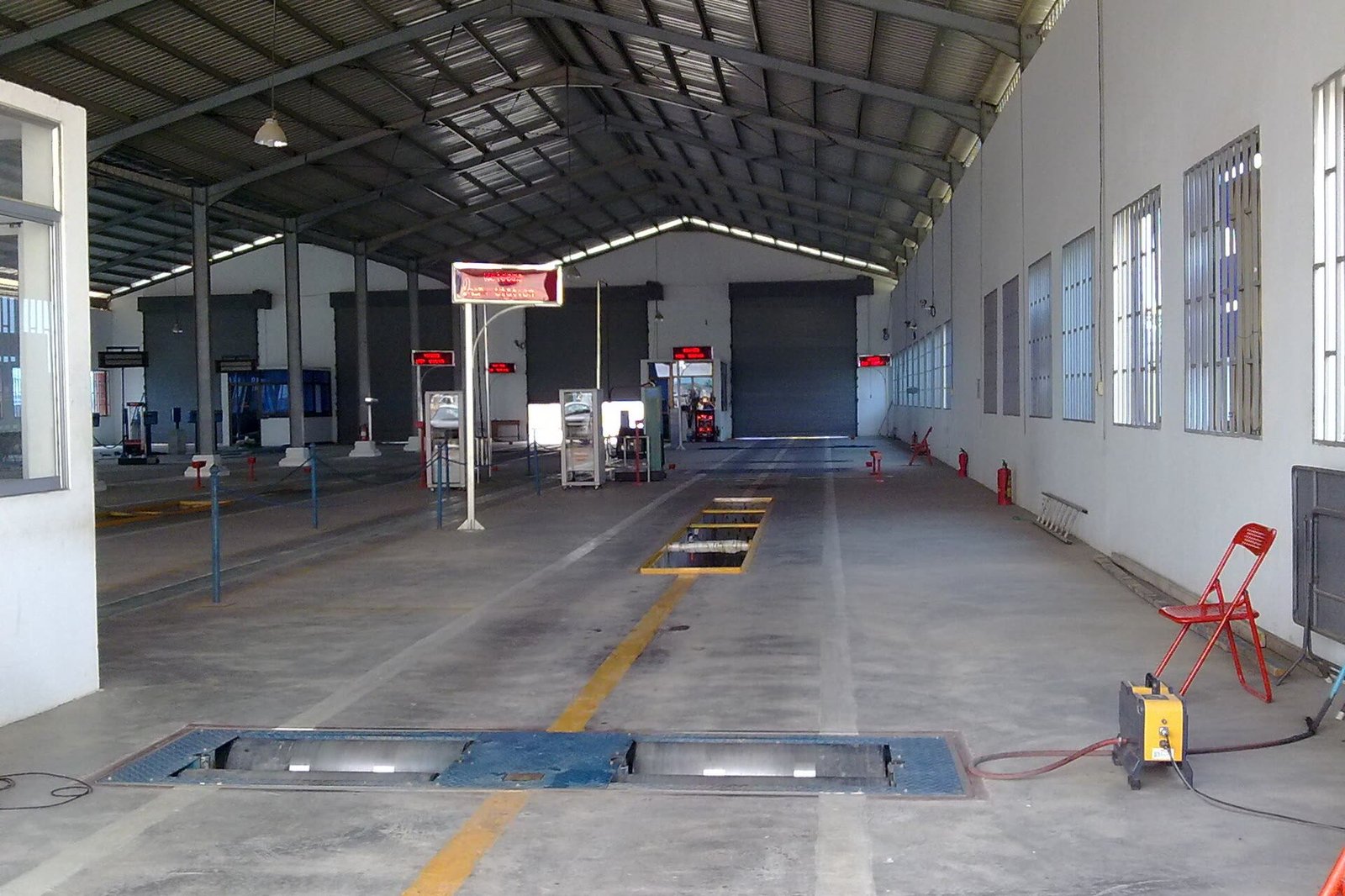
- Wikimedia Commons, Car inspection - panoramio.jpg, Vanna 0885599228, CC BY-SA 3.0 (accessed 5 Oct 2026)
This article is for general information only and is not financial, insurance or legal advice.