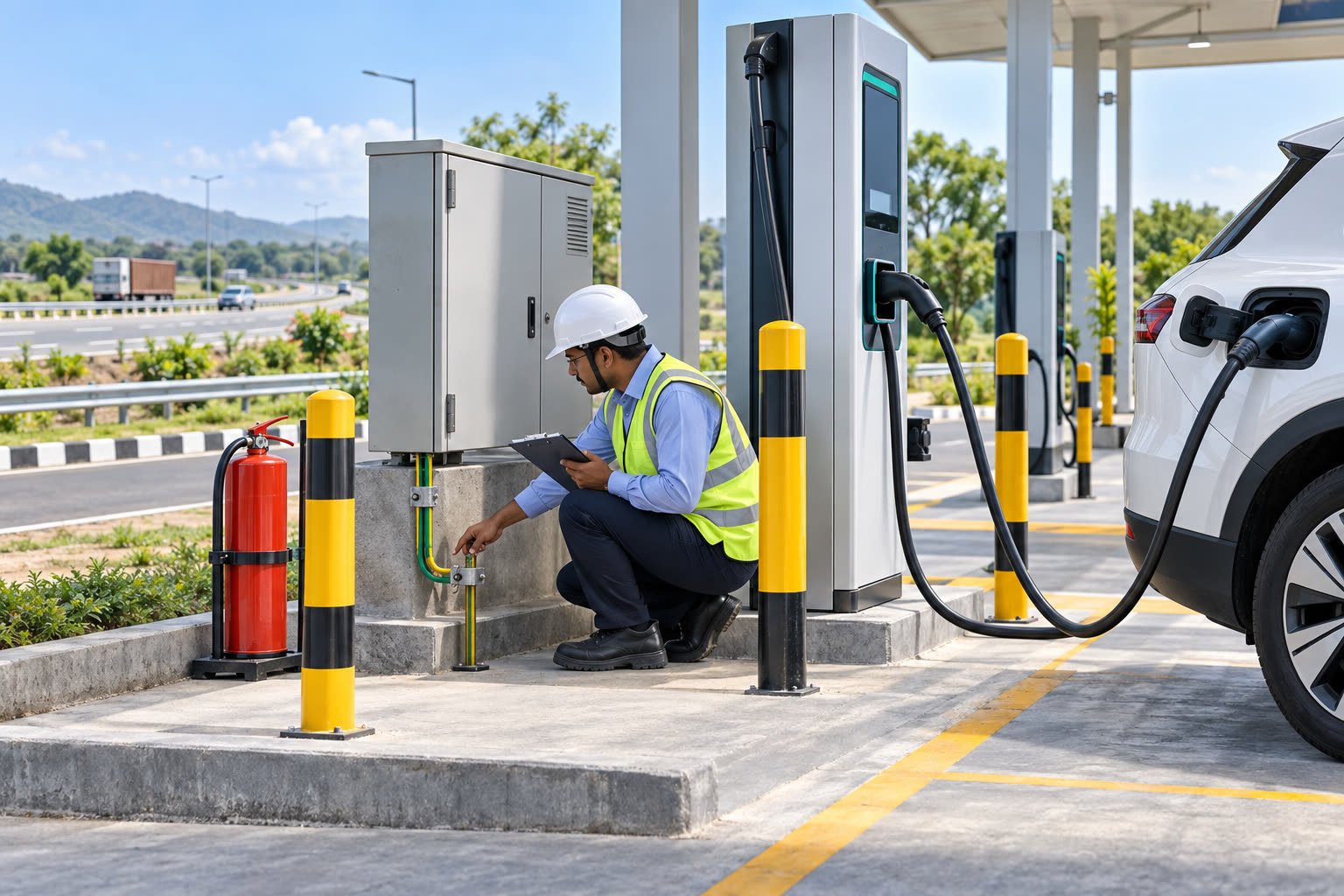
The Central Electricity Authority (CEA) has proposed electrical-safety and operating standards that include electric-vehicle charging infrastructure and battery energy storage systems (BESS). The proposal is still a draft as of 6 Oct 2026, so it does not create an immediate new compliance deadline for Indian EV owners; its practical effect would be on how charging sites are designed, inspected and operated.
Mercom India reported on 5 Oct 2026 that the CEA proposal covers EV charging stations along with solar, wind, storage and power infrastructure. The Battery Magazine reported on 6 Oct 2026 that the draft was issued through the Chief Electrical Inspectorate Division under Regulation 137 of the CEA's 2026 safety-and-supply amendment framework. The CEA's own regulations archive lists the 2026 amendment, while the two specialist reports provide the current detail on the draft standards.
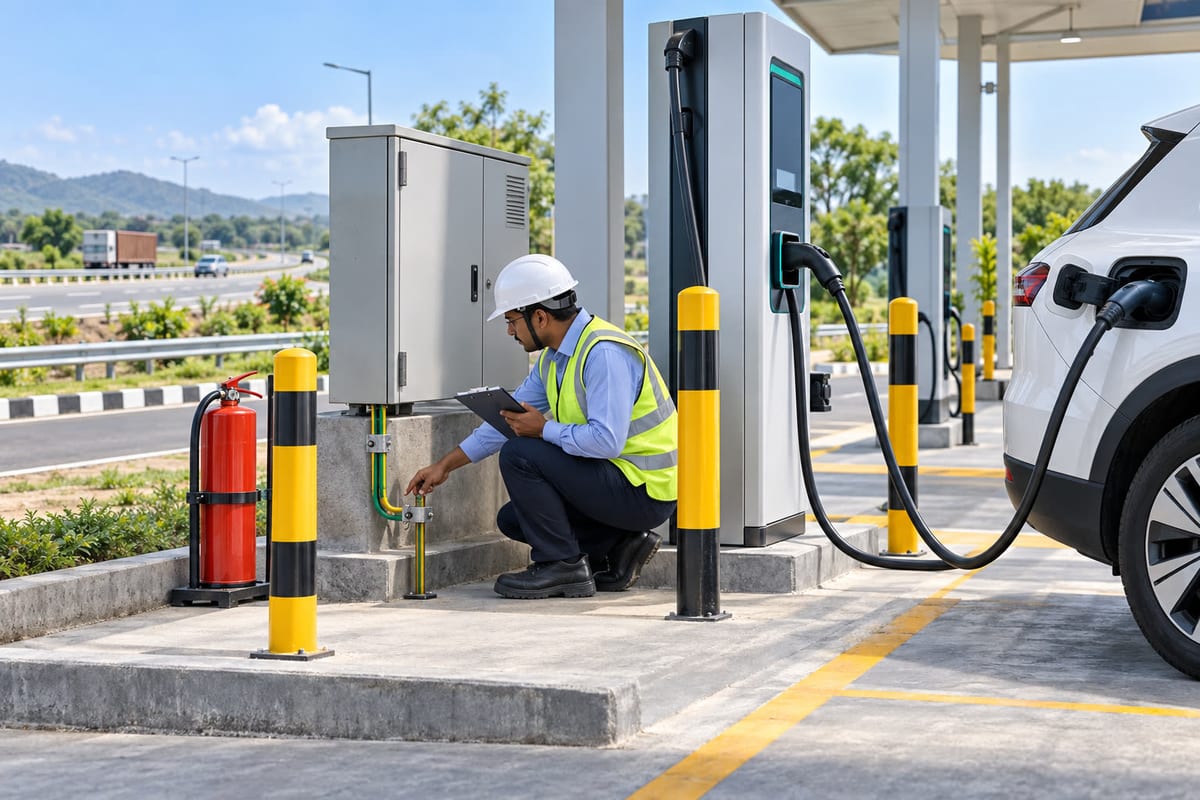 Illustrative EV charging-safety inspection visual; not a photograph of a specific CEA site. Credit: FuelPrice, AI-generated editorial illustration.
Key takeaways
- The CEA's draft framework includes EV charging infrastructure and BESS, alongside wider electrical installations.
- It is a proposed consultation framework, not a new driver-facing rule in force on 6 Oct 2026.
- Reported focus areas include earthing, insulation, equipment protection, fire safety and residual-current protection.
- Mercom India reported that comments on the draft are open until 15 Nov 2026.
- EV owners can continue to focus on charger availability, connector compatibility and safe site operation while the final scope is settled.
What the CEA proposal covers
The proposal is broader than a rule for the plug on an individual car. According to The Battery Magazine's 6 Oct 2026 report, it brings together Indian Standards and international standards from bodies such as the International Electrotechnical Commission, the National Fire Protection Association, the Institute of Electrical and Electronics Engineers and Underwriters Laboratories. The reported aim is to create a common safety reference for electrical equipment, workers and the public.
For charging infrastructure, that matters because a public charger is not only a vehicle accessory. It includes the supply connection, protection equipment, cable, earthing arrangement, enclosure, civil work and the process used to inspect and maintain the site. The reported framework identifies EV charging infrastructure as one of the areas for which additional standards are being set out, although the reports do not yet provide a final charger-by-charger compliance checklist.
The reported safety subjects include insulation, earthing, protective equipment, fire protection, danger notices and residual-current devices. The proposal also discusses safety clearances for high-voltage installations above 650 V, according to The Battery Magazine. That figure describes the scope of an electrical-installation standard; it is not a new voltage limit that EV owners must calculate before charging.
Why this matters to EV drivers
The immediate consumer impact is limited because the material is described as a draft. There is no new charging fee, vehicle inspection requirement or owner retrofit deadline announced in the cited reports as of 6 Oct 2026. Existing charging guidance and site-level safety requirements continue to matter while the consultation process runs.
The longer-term impact could be more visible at the charging point. If the standards are finalised, operators may have to document inspections, upgrade protection equipment, improve earthing and fire-safety arrangements, or change maintenance procedures. Those changes could improve consistency and reduce avoidable charging interruptions, but the final cost, implementation date and any effect on public charging prices cannot be known from a proposal.
That distinction is important for drivers comparing EV running costs. A safer or more heavily maintained charging network may improve reliability, but it does not automatically mean every site will be available, every charger will deliver its advertised output, or public charging will cost the same in every state. Drivers should treat the draft as an infrastructure-quality development, not as an immediate subsidy or price change.
What changes now, and what does not
For EV owners
Nothing in the cited reports asks private EV owners to replace a cable, re-register a car or obtain a new certificate immediately. Before a long journey, the useful checks remain practical: confirm the connector type, check whether the station is currently listed as available, and keep a second charging option on the route. FuelPrice's state-wise EV charging station directory can help with the first stage of route planning.
At a charging site, drivers should avoid using visibly damaged cables or wet, obstructed equipment and should follow the operator's instructions. These are safety habits, not new CEA mandates created by the draft. If a charger fails, save the transaction reference and report the fault through the operator's support channel so the site can be inspected.
For charging operators and trip planners
Operators, fleet managers and developers are the groups most likely to follow the consultation closely. They will need to wait for the final text before treating any proposed item as a compulsory upgrade. The key questions will be which installations are covered, which Indian or international standard applies to each component, who certifies compliance, how existing sites are treated and when any final requirement takes effect.
For fleet and road-trip planning, a safety standard is only one part of the operating calculation. A route still needs realistic charging stops, time buffers and a backup plan. The road-trip planner can be used alongside the charger directory to review the route, while the fuel-cost calculator is useful for comparing the energy cost of an EV trip with a petrol or diesel alternative when the vehicle inputs are available.
What to watch next
Mercom India reported that stakeholders can submit comments on the draft standards until 15 Nov 2026. The next meaningful milestone is the publication of the final standard or a formal CEA notice explaining which suggestions were accepted. Until then, headlines about new EV charging rules should be read as proposals unless the CEA or another authorised government body confirms that a specific requirement has taken effect.
For drivers, the practical takeaway is straightforward: the CEA proposal points to tighter attention on the safety of the charging environment, not an immediate change to the car in the driveway. Check the charger and route before travelling, use established safety procedures at the site, and wait for a final notification before assuming that a new compliance cost or deadline applies.
Sources
- Central Electricity Authority — Measures Relating to Safety and Electric Supply archive, updated 5 Oct 2026
- Central Electricity Authority — EV Charging Standards page, accessed 6 Oct 2026
- Mercom India — CEA Proposes Safety Standards for Solar, Wind and Battery Storage Projects, 5 Oct 2026
- The Battery Magazine — CEA Proposes New Electrical Safety Standards for Solar, BESS and EV Charging, 6 Oct 2026