EV repair claims in India cost 14% more on average than comparable petrol and diesel car claims, according to Policybazaar data reported by Mint on 12 Oct 2026 and by Business Standard and Financial Express on 9 Oct 2026. The result is a claim-cost warning, not proof that every EV policy premium is 14% higher: owners need to examine battery, water-ingress and repair-network terms when comparing cover.
Key takeaways
- The gap is in claim severity. The reported average was ₹41,543 for an EV versus ₹36,185 for a comparable petrol/diesel car, not a blanket 14% premium increase.
- The comparison is limited. It covers cars priced at ₹10 lakh–₹15 lakh in their first three years, with large-loss claims excluded.
- Monsoon costs are higher. Average EV claim severity reached nearly ₹65,000 during the monsoon versus ₹52,000 in the rest of the year, a reported 25% rise.
- Battery protection is gaining attention. Adoption rose from 51% to 70% over six months in the Policybazaar data.
These figures come from the same Policybazaar dataset covered independently by the three business and auto reports cited above. They are useful for understanding the direction of repair costs, but they are not a quotation for any particular vehicle, insurer or policyholder.
What the claim-cost gap actually measures
Claim severity is the average amount paid or assessed when an insured vehicle is repaired after a covered loss. It is different from claim frequency, which measures how often claims occur, and from the premium charged before a policy starts. Keeping those measures separate matters because a 14% difference in the reported repair-claim average cannot be read as a universal 14% increase in the premium for every EV.
The comparison reported on 9–12 Oct 2026 is also narrower than the headline may suggest. It covers electric and internal-combustion cars in the ₹10 lakh–₹15 lakh price band, during the first three years of ownership, and excludes large-loss claims. Vehicle model, insured declared value, location, usage, repair availability and the policy terms can all change the amount involved in an actual claim.
Why an EV repair can become expensive
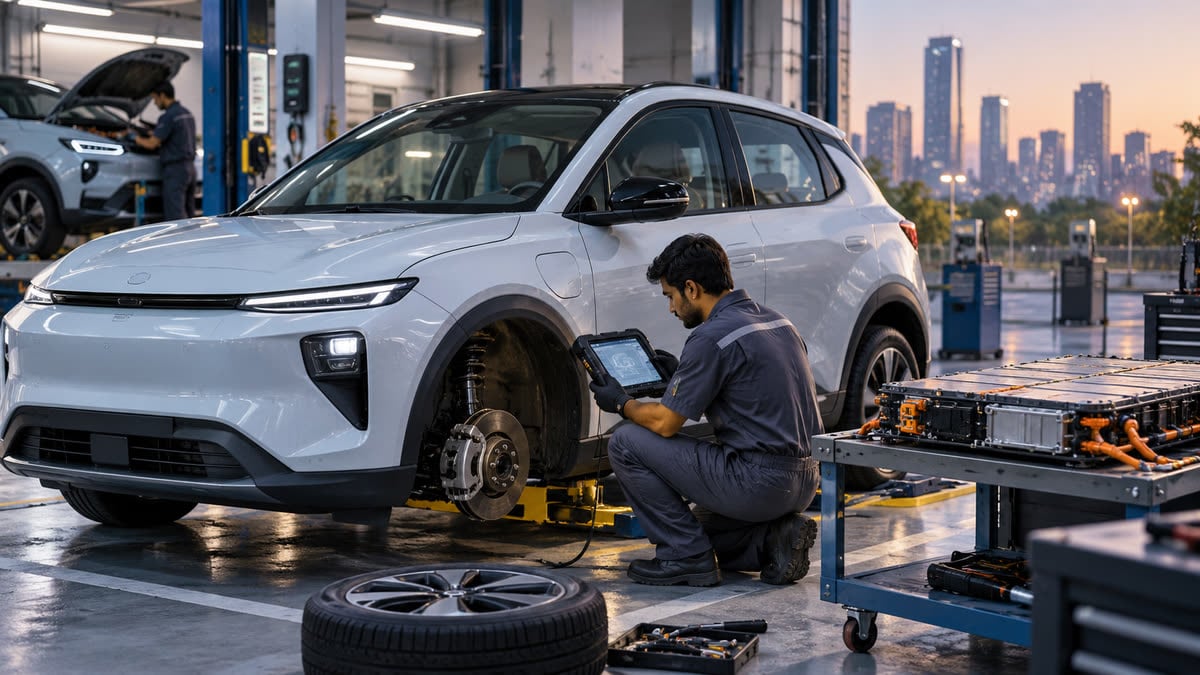
Battery packs, high-voltage systems, cooling equipment and electronic controls add components that may require specialist diagnosis and repair. The reports also point to imported components and a still-developing network of EV-capable repair facilities. A damaged bumper or suspension part may therefore be only one part of the assessment when an impact reaches the underbody or battery enclosure.
Policybazaar's public electric-car coverage reference describes battery protection for risks such as specified accident damage, short circuit, water ingress, theft and charging-equipment damage. That is a coverage explanation from a marketplace, not a universal policy rule. The exact scope, exclusions, deductibles and claim conditions depend on the insurer and product wording. The earlier EV versus petrol insurance guide explains why battery cover and the headline premium need to be assessed separately.
Monsoon and city conditions change the risk
Policybazaar data reported by Mint and Business Standard put average EV claim severity at nearly ₹65,000 during the monsoon, compared with ₹52,000 during the rest of the year. That is a reported 25% increase. Flooding, waterlogging and adverse weather can expose the battery enclosure, electrical systems and underbody to damage, but the data do not mean that every water-related incident will be accepted as a claim.
Claim frequency also varied by city category. The reports put Tier-II cities at 33 claims per 100 insured EVs, compared with 30 per 100 in Tier-I cities and 27 per 100 in Tier-III cities. This is a frequency measure, not the average repair bill. The reports do not establish one cause for the difference; road conditions, weather and how vehicles are used are possible factors, not conclusions.
What EV owners can check now
- Battery and water-related wording. Look for the policy's treatment of water ingress, underbody impact, short circuit, battery damage and charging equipment. Note exclusions and deductibles instead of assuming that comprehensive cover handles every battery-related loss.
- Repair and inspection process. Check whether the insurer has an authorised EV repair network near the vehicle's usual location and how battery-related inspection is handled after an accident. A network garage and a specialist assessment can affect how quickly a claim moves.
- Add-on differences. Battery protection, zero depreciation, roadside assistance and consumables cover are separate features. Around 80% of EV owners in the reported data selected at least two key add-ons, compared with 75% of petrol-car owners and 77% of diesel-car owners. Popularity does not make an add-on suitable for every vehicle; compare what each one actually pays for.
- Renewal and claim documents. Keep the policy schedule, exclusions, invoices and inspection records together. The vehicle-insurance validity and fraud-check guide covers the basic record checks, while the car-insurance claim process guide explains the documents and timeline commonly involved.
What this means for EV buyers
Lower energy and maintenance costs can remain part of an EV ownership calculation, but insurance is a separate cost line. A useful comparison pairs the actual policy premium with the protection offered for the battery, electronics, charging equipment and repair process. For the petrol or diesel side of a running-cost comparison, the fuel-cost calculator can estimate the fuel portion for a typical trip or commute; it does not replace a policy comparison.
The most important boundary is the one in the data itself: the figures describe a selected class of insured cars and reported claims. They do not show that every EV is costlier to insure, that every battery claim will reach the reported average, or that an EV owner will receive a particular settlement. Actual terms and prices vary by vehicle, location, insurer, coverage and claim history.
What to watch next
As EVs spread beyond large metros, insurers and repair networks will build a larger claims record. That may make future pricing and coverage comparisons more vehicle-specific. For now, the latest data give owners a practical checklist: read the battery and water-damage terms, verify the repair pathway, and compare claim protection rather than looking only at the lowest premium.
Sources
- Mint — EV owners alert! Insurance claims for repairs may cost more than for petrol, diesel cars — here's how — 12 Oct 2026
- Business Standard — EV insurance claims cost 14% more, battery cover adoption hits 70%: Report — 9 Oct 2026
- Financial Express — EV claims 14% costlier than ICE cars: Policybazaar study — 9 Oct 2026
- Policybazaar — Electric Car Insurance, battery-protection and coverage reference — accessed 12 Oct 2026
This article is for general information only and is not financial, insurance or legal advice.