The National Highways Authority of India (NHAI) said on 28 Sep 2026 that the FASTag Annual Pass has crossed the one-crore landmark, just over a month after the facility completed its first year. For private car, jeep and van owners, the practical terms remain unchanged: the FY 2026–27 pass costs ₹3,075 and covers eligible National Highway and National Expressway crossings for one year or 200 crossings, whichever comes first.
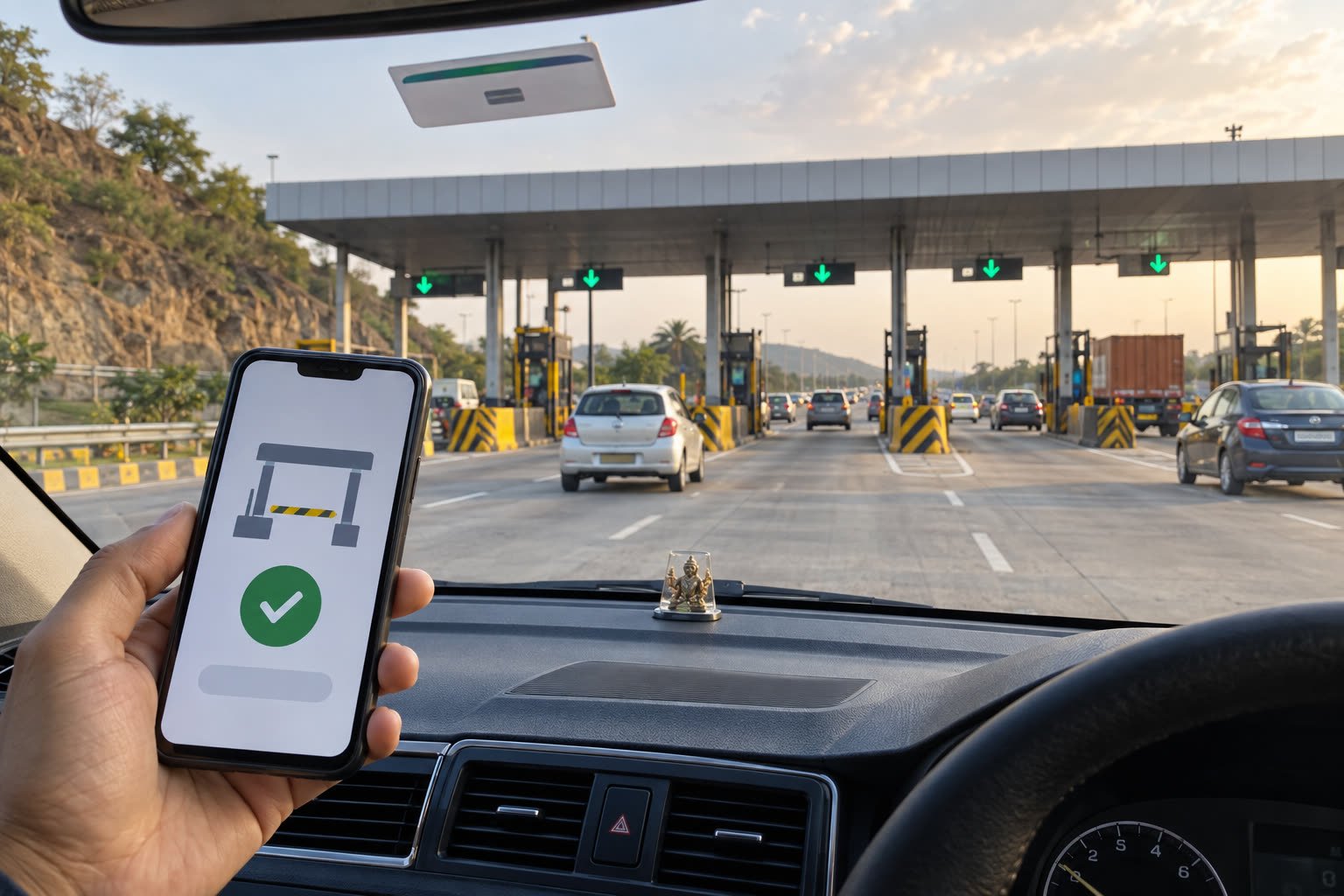
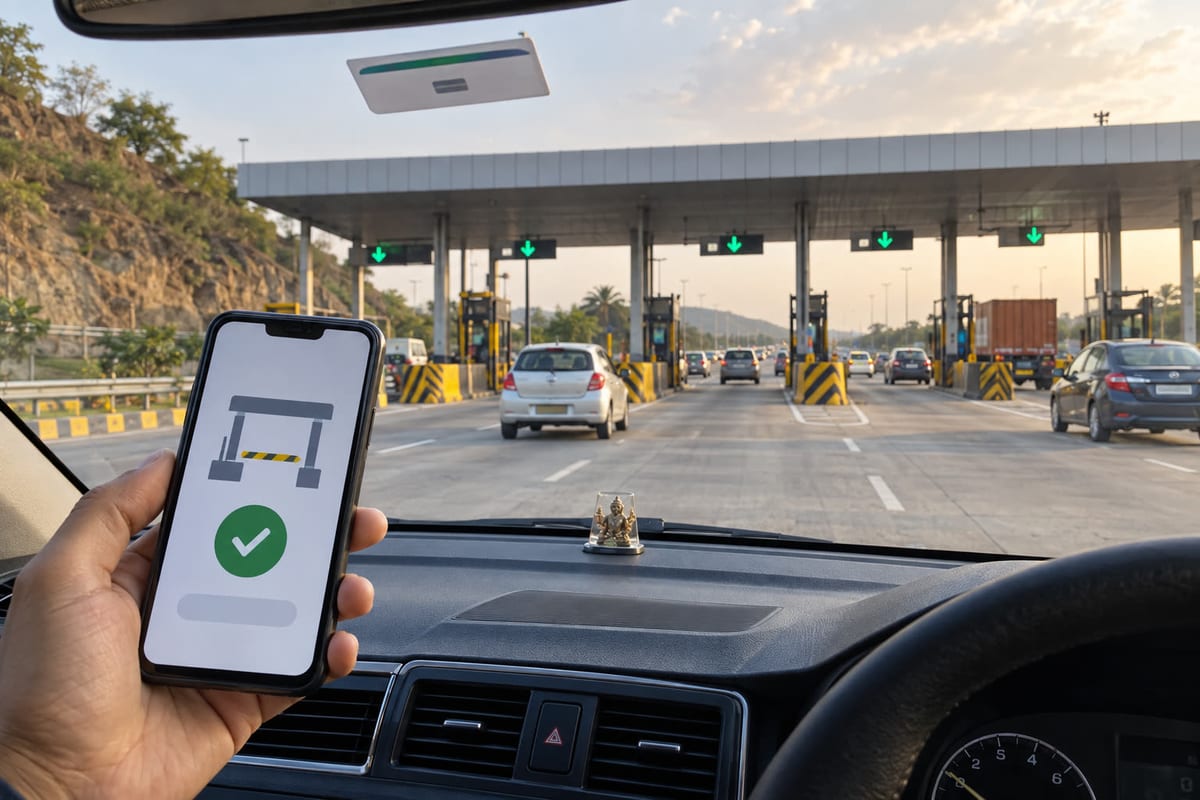 Representational image of a FASTag-enabled car approaching a national-highway toll plaza. Credit: FuelPrice editorial illustration, AI-generated.
Key takeaways
- NHAI has announced a usage milestone, not a new toll fee or a new pass category.
- The current fee for the 2026–27 financial year is ₹3,075.
- The pass is for eligible non-commercial cars, jeeps and vans and ends after one year or 200 eligible crossings, whichever comes first.
- The one-crore announcement does not, by itself, explain whether the measure is unique vehicles, pass activations or crossings.
What NHAI announced
NHAI’s 28 Sep update described the milestone as a sign of wider adoption of a cashless tolling option for National Highway users. It did not announce a price revision, extend the scheme to commercial vehicles or change the validity rule. That makes the immediate reader question less about a new application process and more about what the existing pass actually covers.
The wording also needs care. The official post calls the achievement a “one crore” landmark but does not publish a separate breakdown for unique vehicle owners, activated passes or toll crossings. FuelPrice is therefore reporting the announcement as an NHAI milestone rather than converting it into a new user count or a savings claim.
The last detailed government update provides useful context. In a Ministry of Road Transport and Highways release published by the Press Information Bureau on 22 Jul 2026, the government said more than 77 lakh Annual Passes had been issued as of June 2026, with 63 crore transactions recorded at National Highway fee plazas. It also said Annual Pass transactions represented about 33% of electronic toll-collection transactions by cars, jeeps and vans. These are different measures and reporting dates, so they should not be added to or directly compared with the new one-crore wording.
What the ₹3,075 pass covers
The Annual Pass is priced at ₹3,075 for financial year 2026–27. It is linked to an eligible non-commercial car, jeep or van with a valid FASTag and covers travel through National Highway and National Expressway fee plazas for one year or 200 crossings, whichever comes first. NHAI says activation is available through the Rajmargyatra app or its website; the pass is applied to the existing FASTag after the existing FASTag linked to the vehicle.
The pass is not a blanket waiver for every toll road in India. Coverage is tied to the fee plazas included in the National Highway and National Expressway system. Toll roads managed by state governments, local bodies or other operators can continue to charge the normal fee, as the Indian Express explained when the FY 2026–27 price was announced. The ordinary FASTag system continues for people who do not use the Annual Pass.
At the full 200-crossing limit, ₹3,075 works out to about ₹15.38 per eligible crossing. That is a simple calculation, not a guaranteed saving: the actual value depends on the number of covered crossings, the tolls on the routes used and whether a trip includes roads outside the scheme.
What drivers should check
- Vehicle category: confirm that the vehicle is registered as a non-commercial car, jeep or van and that the FASTag is active and linked to the correct vehicle registration number.
- Route coverage: separate National Highway or National Expressway toll plazas from state, city or privately operated roads before estimating the benefit.
- Pass status: check the activation message and remaining crossings in the Rajmargyatra app. After the one-year or 200-crossing limit, the tag returns to ordinary pay-per-use FASTag operation.
- Balance and records: keep enough balance for tolls outside the pass and retain transaction messages. NHAI lists the 1033 highway helpline, the issuer bank and Rajmargyatra as complaint channels for deduction or activation issues.
For a planned road trip, drivers can first compare the route’s likely toll total in the toll-charge calculator. The pass only answers the toll part of the budget; a separate estimate in the fuel-cost calculator helps show how fuel and tolls combine.
For multi-stop journeys, the road-trip planner can help separate covered National Highway sections from local or state-managed links. The Annual Pass milestone is also separate from the government’s barrier-free tolling programme; the earlier barrier-free FASTag tolling explainer covers that technology and its driver checks.
What changes now?
Based on NHAI’s current announcement, nothing changes immediately for a pass holder: the price, vehicle eligibility and one-year-or-200-crossing limit remain the relevant rules for 2026–27. The milestone does show that the product has reached a large stated adoption milestone, but adoption does not make the pass compulsory and does not make every Indian toll road eligible.
The next useful update would be a date-stamped official breakdown explaining exactly what the one-crore measure counts. Until then, drivers should treat the announcement as evidence of adoption, check the route before assuming coverage and use the official NHAI or Rajmargyatra channels for activation and complaints.
Sources
- National Highways Authority of India — “FASTag Annual Pass Crosses One Crore Landmark!!” — 28 Sep 2026
- Indian Highways Management Company Ltd — NHAI milestone repost, “FASTag Annual Pass Crosses One Crore Landmark!!” — 28 Sep 2026
- Press Information Bureau / Ministry of Road Transport and Highways — “FASTAG BASED TOLL COLLECTION AND DIGITAL TOLLING SYSTEM” — 22 Jul 2026
- National Highways Authority of India — “NHAI to Revise FASTag Annual Pass Fee from 1st April 2026 for FY 2026–27” — 15 Mar 2026
- The Indian Express — “NHAI increases rate of the FASTag Annual pass: What has changed?” — 15 Mar 2026