A Hyderabad District Consumer Disputes Redressal Commission has ordered an insurer to pay ₹5.60 lakh after rejecting a businesswoman’s claim for accident damage on the grounds of prior damage and non-disclosure. The 18 Aug 2026 ruling matters to Indian car owners because it shows that a claim-rejection reason still has to be supported by documentary evidence.
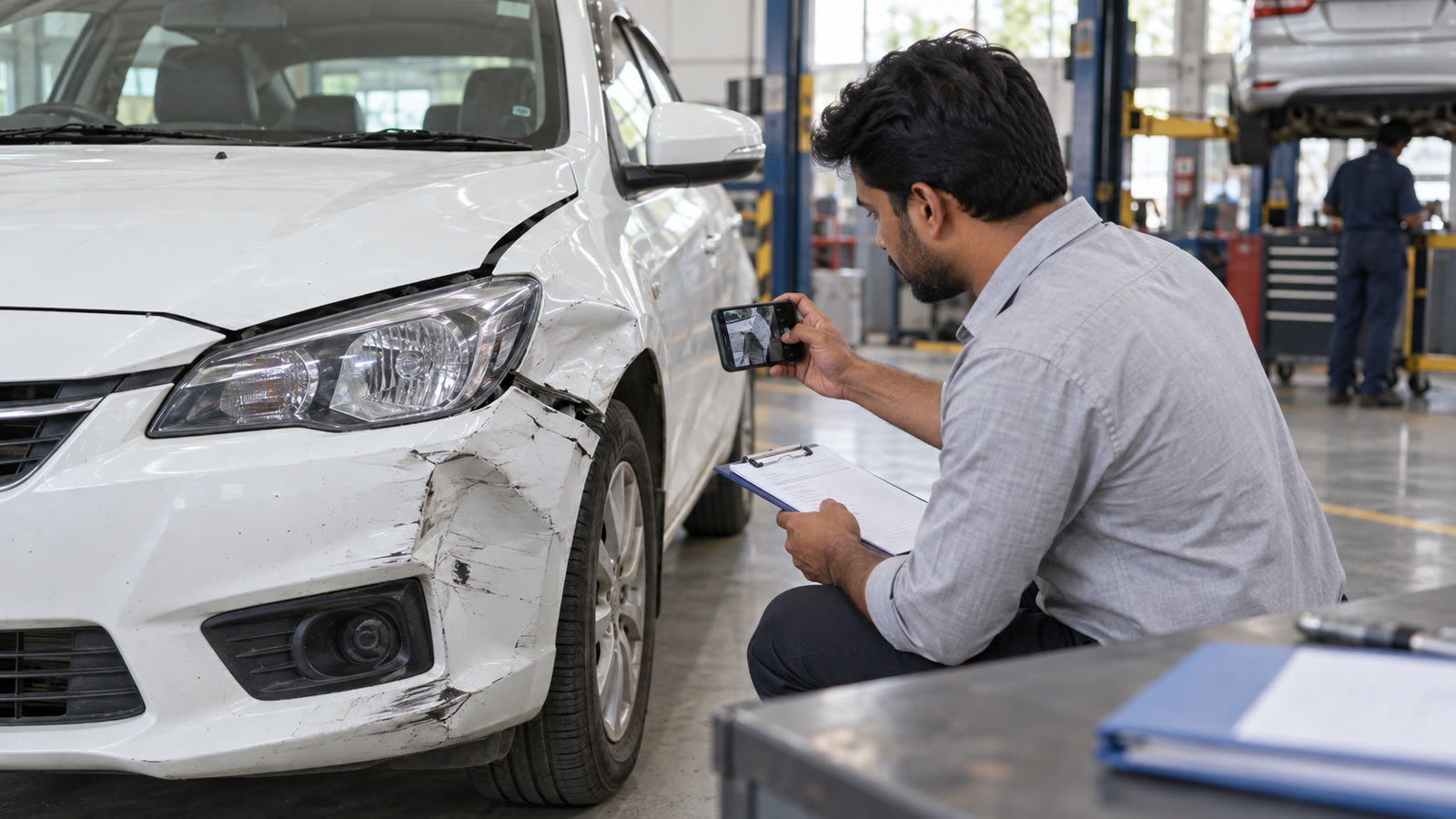
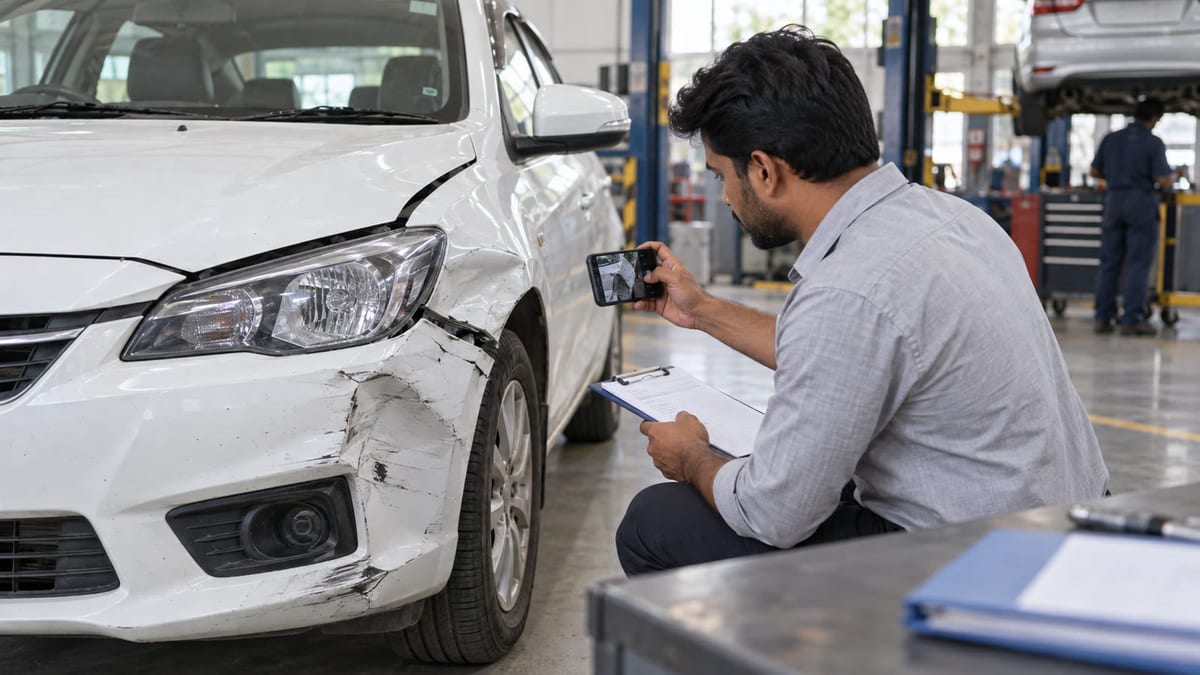 Representative vehicle-inspection image; it is an AI-generated illustration and not the actual claimant, vehicle or insurer. Credit: FuelPrice.
Key takeaways
- The Hyderabad commission’s order dated 18 Aug 2026 awarded ₹5 lakh under the motor policy, ₹50,000 for mental agony and physical trauma, and ₹10,000 towards litigation costs.
- The insurer had alleged that the vehicle was already damaged, that ownership had changed shortly before the accident and that the condition had not been disclosed.
- The commission found that those allegations were not proved with substantial documentary evidence, according to reports by The Indian Express and Law Trend dated 28 Sep 2026.
- The ruling is case-specific. It does not mean every rejected motor claim must be paid, or that policy conditions no longer apply.
What the Hyderabad commission found
The case concerned a four-wheeler that the complainant said was damaged in an accident at Narsingi at about 10 pm on 21 Jul 2021. The front portion was damaged, and the policyholder informed the insurer by letter dated 20 Aug 2021. The Indian Express reported that the insurer rejected the claim on 8 Oct 2021, saying the damage pre-dated the reported accident and raising questions about a recent ownership transfer and non-disclosure of the vehicle’s condition.
The insurer’s defence, as reported by both outlets, was that the loss was reported eight days after the incident and that an investigator and surveyor had been appointed. The insurer relied on a forensic report that it said showed the damage was older than the accident date. It also argued that the policyholder had not complied with the policy terms or supplied the documents needed for assessment.
The commission did not accept those allegations as established. It found that the claims about pre-existing damage, ownership change and non-disclosure were not supported by substantial documentary evidence. The commission noted that the insurer’s surveyor had assessed the estimated loss at ₹6.21 lakh, while the complainant had restricted her policy claim to ₹5 lakh. The award was therefore limited to the amount claimed under the policy.
The resulting order directed the insurer to pay ₹5 lakh towards the rejected claim, ₹50,000 as compensation for mental agony and physical trauma, and ₹10,000 as litigation costs. The amount was to be paid within 45 days of the order. The combined amount is ₹5.60 lakh, but the split matters: only ₹5 lakh was the policy claim, while the balance was compensation and costs.
Why the ruling matters to car owners
A motor claim can turn on the difference between damage caused by the reported accident and damage that existed before the policy or before the incident. That makes dated photographs, inspection records, repair estimates and the written claim trail important evidence when the facts are disputed. The case also shows why a rejection letter should be read alongside the policy wording and the surveyor’s assessment instead of being treated as a complete explanation by itself.
The order does not create an automatic payout rule. A consumer commission decides the dispute on the evidence before it, and a different case can have a different result if the insurer can substantiate a policy breach or an excluded loss. For a plain-language comparison of the protection that different motor policies provide, readers can use FuelPrice’s guide to third-party and comprehensive car insurance.
Documents that can clarify a disputed claim
The reported dispute points to a practical record-keeping checklist for anyone dealing with accident damage:
- Keep the policy schedule, renewal papers, registration certificate and ownership-transfer documents together.
- Preserve dated photographs or video of the vehicle, the accident location and the damage before repairs begin, where it is safe and lawful to do so.
- Retain the claim-intimation message, call reference, surveyor visit details, repair estimate and every written response from the insurer.
- Ask for the rejection reason and the evidence relied on in writing, particularly where the allegation is prior damage, non-disclosure or delayed intimation.
- Compare the surveyor’s assessment with the policy claim amount and the repair estimate; these figures may not be identical for the reasons shown in this case.
FuelPrice’s explainer on common reasons a car insurance claim is rejected can help readers organise those records and understand the usual stages of a dispute. It is a general guide, not a prediction of how a particular claim will be decided.
What to do if the dispute remains unresolved
IRDAI’s published grievance guidance says policyholders should first approach the insurer’s grievance channel. If the response is unsatisfactory, the regulator provides the Bima Bharosa route and lists the Insurance Grievance Call Centre on 155255. The regulator also directs claim-related disputes to the Insurance Ombudsman where that route applies.
The National Consumer Helpline is a separate pre-litigation channel run by the Department of Consumer Affairs. Its official portal lists 1915 and 1800-11-4000 as toll-free numbers and allows consumers to submit documents with a grievance. A helpline or grievance registration does not guarantee payment; it creates a documented route for seeking a response before a consumer commission or another appropriate forum is considered.
Reader takeaway
The Hyderabad order is a reminder that a motor-insurance claim dispute is decided through the policy wording, the facts of the incident and the evidence supporting each side. For policyholders, the useful lesson is to keep a clear record from accident intimation through survey and rejection, and to separate the amount claimed under the policy from any compensation or legal costs awarded later.
Sources
- The Indian Express — “Insurer rejects car claim over prior damage, businesswoman wins Rs 5.60 lakh payout” — 28 Sep 2026
- Law Trend — “Consumer Commission Orders Insurer to Pay Rs 5.60 Lakh for Unjustified Claim Rejection” — 28 Sep 2026
- IRDAI — “Policyholders’ Protection & Grievance Redressal” — accessed 28 Sep 2026
- National Consumer Helpline — “About this portal” — accessed 28 Sep 2026
This article is for general information only and is not financial, insurance or legal advice.