Hyundai Motor Group confirmed on 13 Oct 2026 that it plans to invest USD 15.5 billion in India from 2026 through 2032. The commitment covers manufacturing, research and development, local suppliers and future mobility, but it does not change a car's showroom price or create a new buyer benefit today.
Key takeaways
- The seven-year plan covers Hyundai Motor India and Kia India production capacity, R&D infrastructure, parts localisation and future technology.
- About USD 700 million is earmarked for the Indian R&D centre, including a vehicle testing track, according to the company.
- The group says its existing India manufacturing capacity is more than 1.4 million vehicles a year across facilities in Chennai, Pune and Anantapur.
- EV charging, end-of-life vehicle recycling and specialised automotive financing are areas the group says it will explore; they are not announced as nationwide customer services yet.
What Hyundai announced on 13 Oct
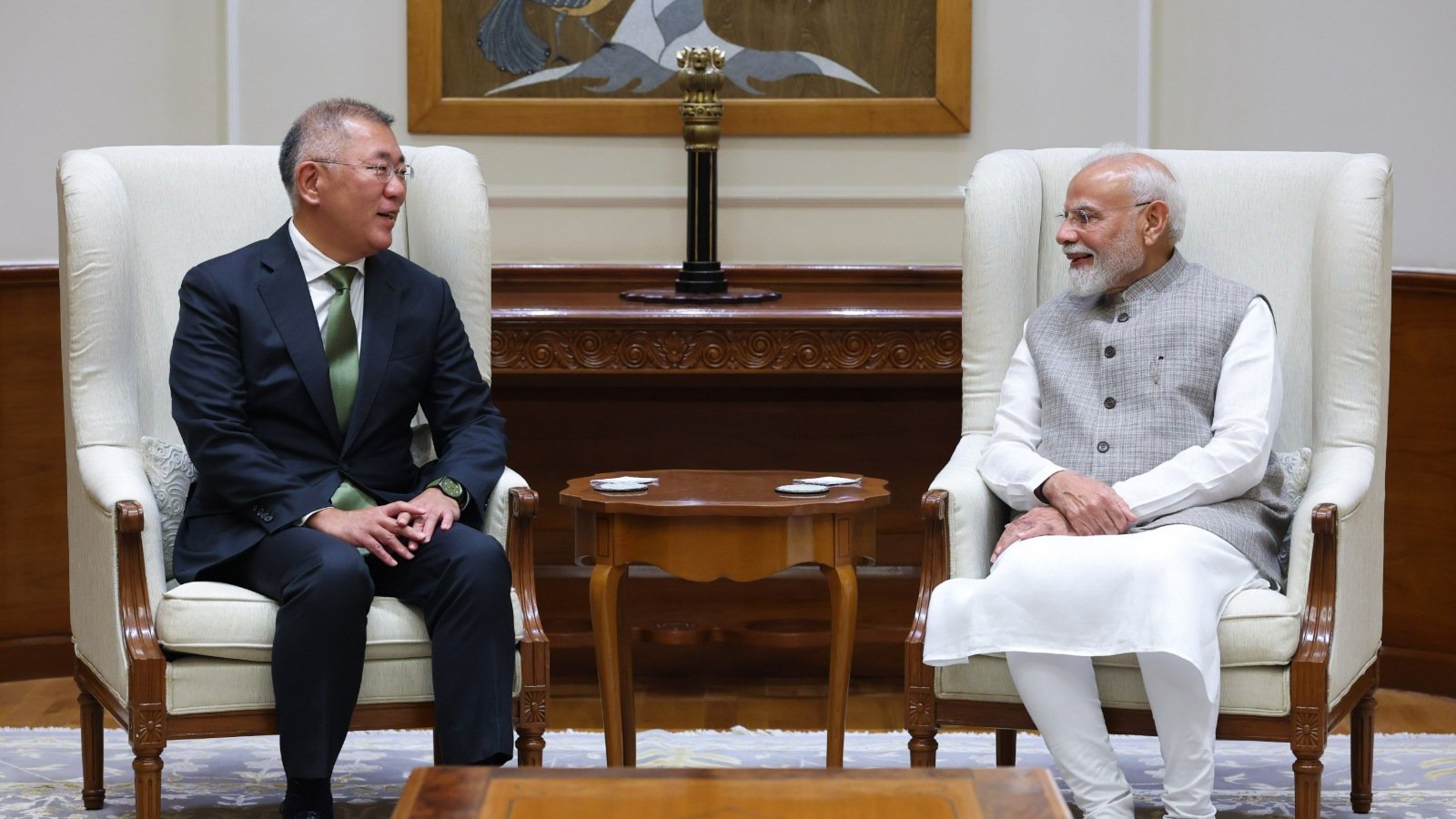
Hyundai Motor Group made the announcement after Executive Chair Euisun Chung met Prime Minister Narendra Modi in New Delhi. In its release, the group described India as a strategic market and said the USD 15.5 billion programme will run from 2026 through 2032. The plan includes expansion at Hyundai Motor India and Kia India, stronger local supplier development, new R&D infrastructure and future technology work.
The group also plans to establish a dedicated investment entity in India. Its stated role will be to coordinate capital deployment, identify local partners and support collaborations across the automotive ecosystem. That structure matters because the headline figure is a multi-year commitment rather than a single factory cheque or an immediate vehicle launch announcement.
Hyundai said approximately USD 700 million of the plan is intended for its Indian R&D centre, including a vehicle testing track. The company also reported more than 1.4 million vehicles of annual production capacity in India: 824,000 units at its Chennai facilities, 170,000 units at its Pune plant and 431,000 units at Kia's Anantapur facility. These are current capacity figures, not a promise that production will rise by the same amount immediately.
Why the investment matters for India's vehicle market
More local production could widen future choice
Manufacturing expansion at Hyundai and Kia can give the group more room to add models, refresh existing vehicles and serve export markets from India. A stronger local supplier network can also reduce dependence on imported components for some programmes. Those are possible medium-term effects, not confirmed price cuts or guaranteed delivery improvements.
For someone comparing a car today, the announcement is background rather than a purchase offer. Existing ex-showroom prices, waiting periods, insurance quotes and service terms still depend on the specific model, variant, city and dealer. A buyer assessing petrol, diesel, CNG or hybrid running costs can use the fuel cost calculator with the vehicle's quoted efficiency and the current fuel rate.
R&D spending may affect future India-specific models
The planned testing track and expanded engineering capability could help the group develop vehicles calibrated for Indian roads, weather, traffic and ownership patterns. It could also support faster validation of safety, connected features and different powertrains. The release does not name specific future models, launch dates or prices, so those details should be treated as open until Hyundai or Kia announces them separately.
Fuel costs will remain part of the ownership decision while the market contains several powertrain types. Readers checking the cost of a future model should use live fuel prices for the relevant city or state instead of relying on an old price quoted in a launch article.
EV infrastructure is a plan to watch, not a rollout already completed
Hyundai's release says the group will explore opportunities in EV charging infrastructure, end-of-life vehicle recycling, specialised automotive financing and new mobility services. The wording is important: it signals areas of interest, not a confirmed network size, tariff, subsidy or customer launch date.
For an EV buyer, charging access remains a practical check independent of this announcement. The existing state-wise EV charging directory can help with current public charging availability; any Hyundai-linked charging programme would need separate details on locations, operators, pricing and compatibility.
What changes now for buyers and operators
There is no immediate change to a Hyundai or Kia vehicle's listed price, registration cost, fuel rate or insurance premium because of this investment announcement. The useful near-term takeaway is that the group is committing capital to the supply chain and engineering base that may shape future products and availability.
- If you are buying now: ask for the exact variant price, delivery estimate, warranty, service schedule and on-road cost. Do not infer any of these from the USD 15.5 billion headline.
- If you are considering an EV: check the charging points you can actually use on regular routes, along with battery warranty and service coverage.
- If you operate a fleet or supply business: watch for supplier tenders, localisation announcements and plant-level capacity updates rather than assuming that the entire commitment will arrive at once.
What to watch through 2032
The next useful evidence will be execution: the formation and activity of the dedicated investment entity, plant expansion milestones, R&D facility work, supplier partnerships and model-specific announcements. It will also be worth watching whether charging, recycling and financing initiatives move from exploration to a named programme with locations, eligibility and pricing.
Financial Express reported that the company has not yet provided a year-by-year investment schedule, additional capacity target or job-count target for this commitment. That makes implementation updates more important than the headline total. The group already has a large manufacturing footprint, so the reader benefit will depend on what is actually built, localised and offered in India.
Reader takeaway
Hyundai Motor Group's USD 15.5 billion commitment is a significant long-term signal for India's auto manufacturing and technology ecosystem. It may support more local production, engineering and mobility services over time, but it is not a same-day price or product announcement. Buyers should make decisions using the specific vehicle's current price, running cost, charging access and ownership terms, then track the group's project updates for what changes next.
Sources
- Hyundai Motor Group to Accelerate India Growth with USD 15.5 Billion Automotive Ecosystem Investment — Hyundai Motor Group, 13 Oct 2026.
- Hyundai Motor Group bets $15.5 billion on India as global auto hub — CNA, carrying Reuters reporting, 13 Oct 2026.
- Hyundai Motor Group to invest $15.5 billion in India by 2032 — Financial Express, 13 Oct 2026.