India and Nepal are moving towards online vehicle permits for private and non-regular passenger vehicles, according to reports published on 5 Oct 2026 after the countries' latest transport-facilitation discussions. For drivers crossing the border, the immediate takeaway is that the proposed portal is not live: existing permits, checks and fees continue to apply.
Key takeaways
- India is developing a Cross Border Vehicle Permit System, while Nepal has started work on a digital portal, but neither report gives a live launch date.
- Indian-registered vehicles travelling beyond Nepal's nearest municipal area or staying overnight still need a day pass or challan, registration and applicable charges.
- Indian reports say Nepali vehicles entering India continue to use the manual permit process, with embassy or consulate formalities and a bank guarantee where required.
- FASTag access for Nepali vehicles and possible FASTag-NTag interoperability are proposals under discussion, not a new toll rule for Indian motorists.
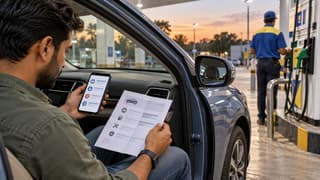
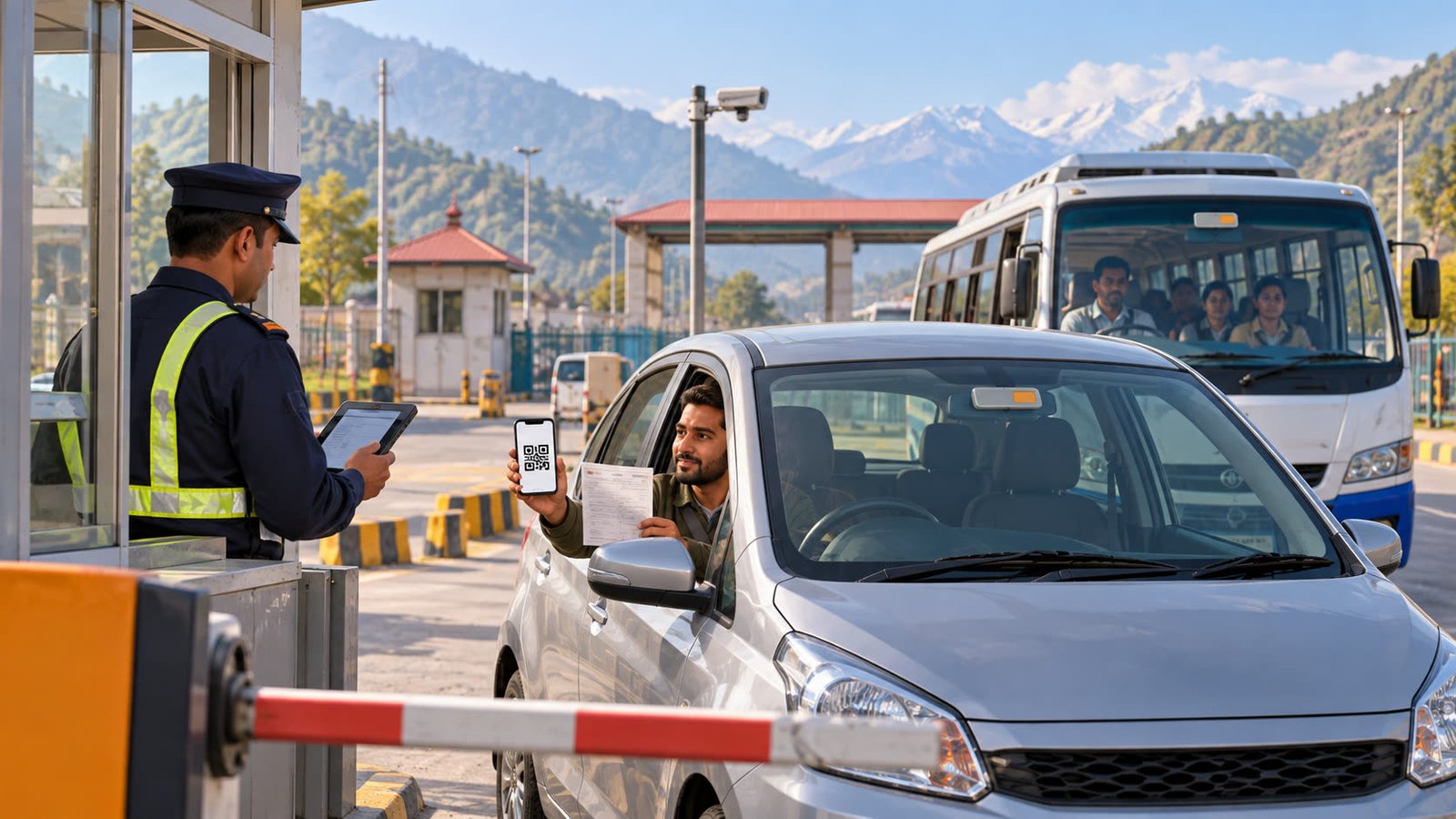
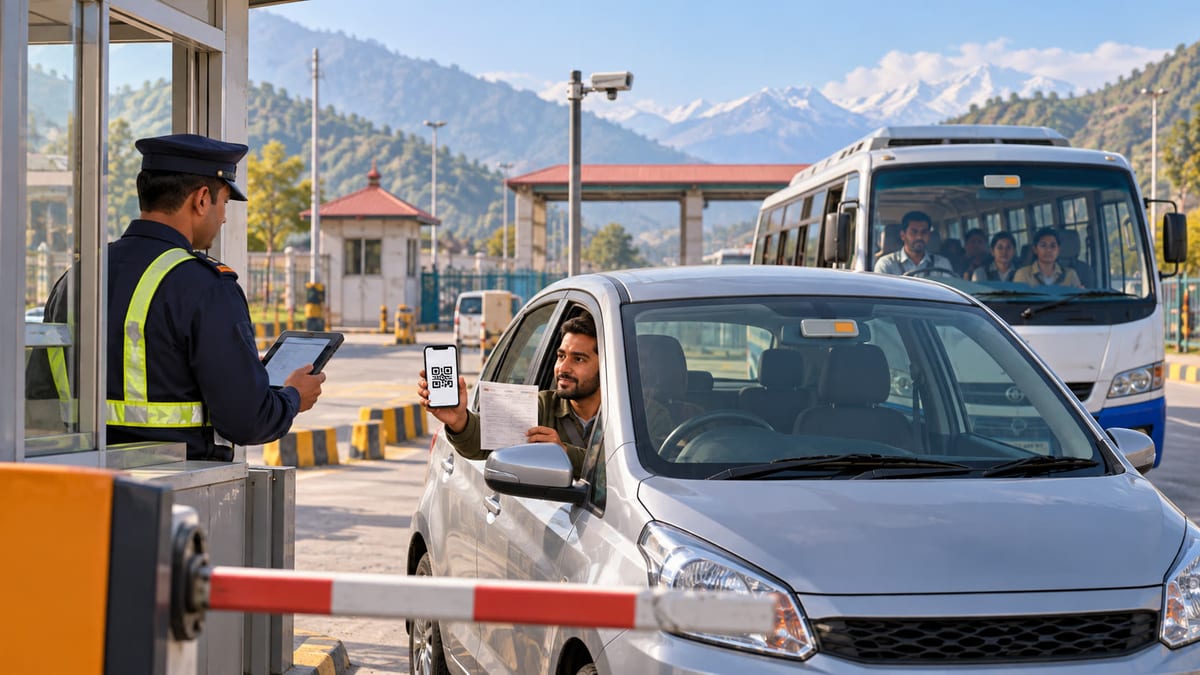 Illustrative graphic of a paper-to-digital vehicle permit check; this is not a photograph of a specific India-Nepal border or a live government portal. Credit: FuelPrice editorial illustration.
What the August meeting changed
The update follows the fourth India-Nepal Cross Border Transport Facilitation Joint Working Group meeting, held in Kathmandu on 20–21 Aug 2026. The Kathmandu Post and RNA reported that the mechanism reviewed permit delays, passenger-bus routes, border infrastructure, fees, FASTag, road safety and coordination after an eight-year gap.
According to minutes reported by The Kathmandu Post, India informed Nepal that it was developing a Cross Border Vehicle Permit System to digitise permit issuance, while Nepal had begun work on a digital portal. RNA reported that the proposed procedure could take around seven months to prepare. That is a development timeline for the mechanism, not a confirmed date when travellers can stop using the current process.
The two sides also agreed to establish a Joint Technical Committee involving transport and other relevant agencies. It is expected to work on digitalisation, revised protocols and the separation of rules for private vehicles and non-regular passenger transport. Existing permit and countersignature fees are reported to remain unchanged for now. The reports also say an interim 45-day processing period was agreed for route-permit countersignatures under the manual system, with operators advised to apply for renewal at least two months before expiry. Those timelines mainly affect passenger-transport operators, not a new same-day requirement for a private tourist car.
What Indian vehicle owners should know now
For an Indian-registered car entering Nepal, the current process remains important. The Kathmandu Post and RNA report that a vehicle can visit the nearest municipal area or market on a day pass, or challan. A vehicle travelling farther or staying overnight must be registered for the required period and pay charges ranging from NPR100 to NPR500 per day, depending on the vehicle type. The same reports put the overall stay limit for Indian vehicles at 30 days in a calendar year.
For Nepali vehicles entering India, current reporting says the vehicle needs a valid permit and other formalities, including payment and a bank guarantee through the Embassy of India in Kathmandu or the Consulate General of India in Birgunj. The official Embassy page confirms that applications require the prescribed form, a bank guarantee, the registration book and the vehicle's insurance policy; it lists a maximum three-month permit period for cars, jeeps and two-wheelers.
Because the official Embassy page carries a fee schedule dated 1 Apr 2023 while the 5 Oct 2026 reports say charges vary by vehicle type and duration, travellers should confirm the payable amount and document list with the relevant embassy, consulate or border authority before departure. The online-permit proposal does not cancel today's paperwork.
For an Indian road trip that includes a border crossing, the road-trip planner can help organise the route, stops and timing before the permit process begins.
Fuel is a separate part of that budget. Use the fuel cost calculator with the vehicle's mileage and the latest applicable fuel rate rather than assuming that a digital permit will reduce the trip's running cost.
Toll payments also need their own check. The toll charge calculator can keep the Indian-side user fee in the plan, while border queues and customs or permit checks remain separate time costs.
FASTag is part of the discussion, not a live change
The meeting also examined whether Nepali vehicles could use India's electronic toll collection system. The Kathmandu Post reported that India presented FASTag and proposed that Nepali banks could partner with Indian issuing banks. Nepal, in turn, proposed examining interoperability between FASTag and its NTag system.
RNA explicitly reported that no such arrangement has been implemented. The Kathmandu Post said India warned that Nepali vehicles without FASTag could end up paying double the toll in cash. That is a position reported from the bilateral discussion; it is not an announcement of a new India-wide toll tariff or a newly effective penalty for Indian vehicles.
Indian motorists should therefore keep following the current FASTag process until an official notification changes it. Before a long cross-border drive, check that the tag is active, the vehicle details match and the account has enough balance. The existing FASTag recharge, KYC and balance guide covers those checks, but it cannot substitute for a border authority's permit instructions.
What to watch next
The next meaningful milestone is the publication of draft protocols, an official portal address, a confirmed implementation schedule and a fee table that clearly covers private cars, two-wheelers, buses and other vehicle categories. RNA reported that India is to share draft protocols for personal and non-regular passenger vehicles within two months, with Nepal expected to respond within two months of receiving them. Until those documents are published, the proposal should be treated as expected or proposed, not as an operational rule.
The talks also produced an agreement to operationalise the Kathmandu-Sunauli-Gorakhpur-Jaipur and Pokhara-Sunauli-Gorakhpur-Jaipur passenger routes, while other proposed routes remain under consideration or need consultations with Indian state governments. That may matter to bus operators and passengers, but it does not itself remove private-vehicle permit requirements.
Reader takeaway
A digital India-Nepal permit system could reduce repeated visits, manual payments and uncertainty at the border, but the benefit will arrive only after both governments publish and activate the process. For now, Indian vehicle owners should plan around the existing day-pass, registration, fee and stay rules in Nepal, keep vehicle and insurance documents ready, and treat FASTag interoperability as a future possibility. The practical change to watch is not the announcement alone; it is the official operating notice that says when a digital permit is accepted at a named border point.
Sources
- The Kathmandu Post — Nepal, India move to digitise cross-border vehicle permits — 5 Oct 2026
- RNA — India, Nepal move to digitize cross-border vehicle permits, ease travel formalities — 5 Oct 2026
- Embassy of India, Kathmandu — Vehicle Permit and NOC fee schedule effective 1 Apr 2023 — accessed 5 Oct 2026
- Land Ports Authority of India — Roadmap for the Facilitation of Vehicular Passenger Traffic between India and Nepal — May 2024