Maruti Suzuki India commissioned a 300 kW green-hydrogen electrolyser pilot at its Manesar facility in Haryana on 24 Sep 2026. The system is meant for factory operations: it will use surplus solar power to produce and store hydrogen, then blend it with natural gas as process fuel; it is not a new retail fuel or a hydrogen-powered car launch.
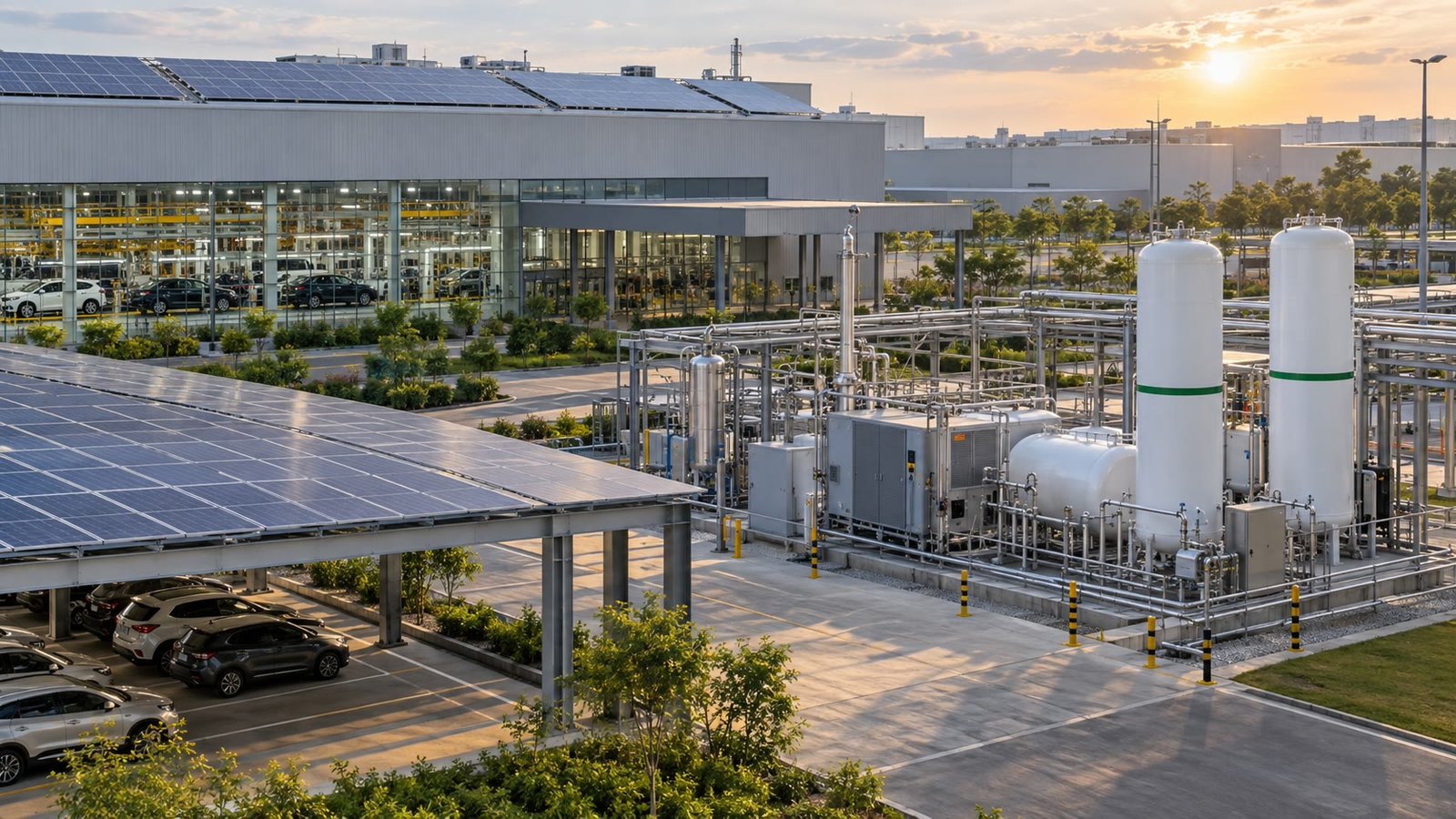
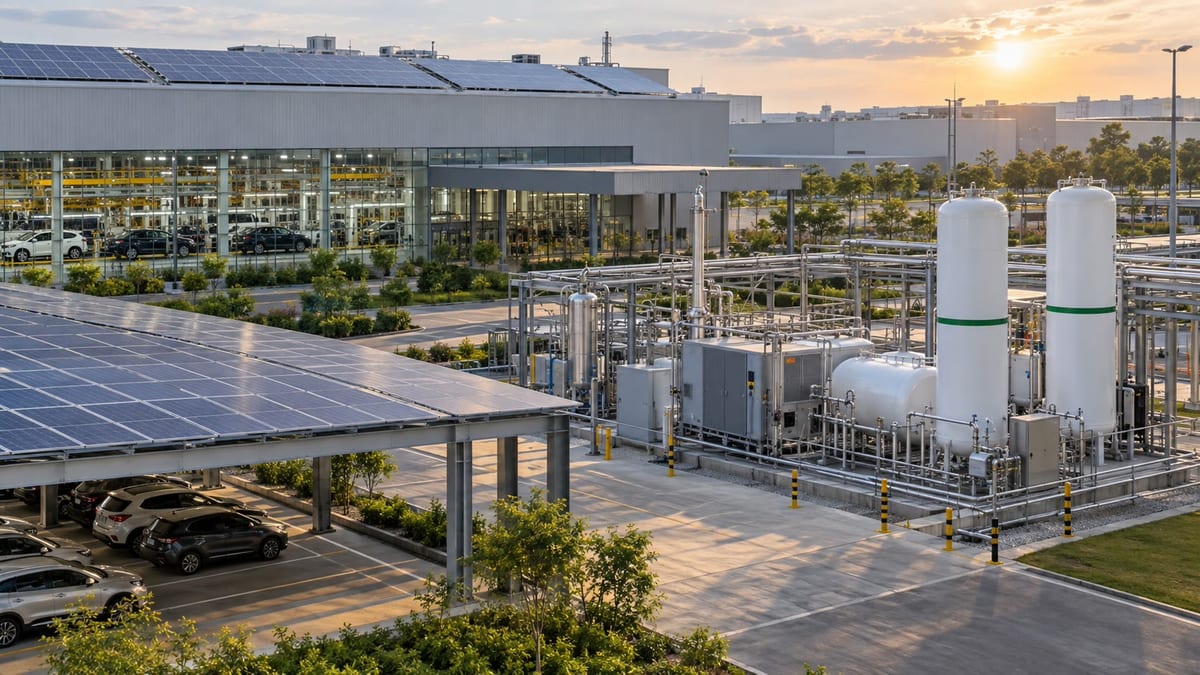 AI-generated editorial illustration of a solar-powered hydrogen system at an automotive factory; not an official Maruti Suzuki photograph.
Key takeaways
- Maruti Suzuki has commissioned a 300 kW pilot electrolyser at Manesar, Haryana.
- Surplus solar power generated when the facility is not operating at normal demand will be used to make hydrogen.
- The hydrogen will be stored and blended with natural gas for manufacturing operations.
- Maruti says the pilot will guide any wider adoption across its Haryana and Gujarat facilities.
What Maruti has commissioned
The announcement is a manufacturing-energy development, not a change to the cars Maruti sells. The company said on 24 Sep 2026 that the 300 kW electrolyser at Manesar is a pilot project. Business Standard and The Economic Times separately reported the commissioning and the company’s description of how the system will be used.
The 300 kW figure describes the electrolyser’s electrical capacity. It should not be read as a promised hydrogen production volume, a fuel-economy figure for a Maruti vehicle or a new public refuelling standard. The company has presented the project as a way to learn how hydrogen can fit into an existing industrial fuel system.
How the solar-to-hydrogen system works
Maruti says solar power produced at the Manesar facility during holidays, when the factory’s usual electricity demand is lower, can be directed to the electrolyser instead of remaining unused. The electrolyser uses electricity to split treated water and produce hydrogen. That hydrogen is then stored for use when the manufacturing process needs it.
In the final step described by the company, the stored hydrogen is blended with natural gas and used as process fuel. In practical terms, this is an industrial fuel-mix test: hydrogen is being introduced into factory operations alongside an existing fuel, rather than replacing every gas-fired process from day one. The release does not claim that the pilot alone will deliver a measured reduction in vehicle prices, retail fuel demand or factory emissions.
Why the pilot matters for India’s auto sector
Vehicle manufacturing is energy-intensive, so the energy used before a car reaches a showroom is part of the auto sector’s wider fuel and emissions story. Using surplus on-site solar power to make a storable fuel could help a factory use more of its renewable generation across different operating periods. It also gives Maruti operating experience with hydrogen storage, handling and blending before any decision on a larger rollout.
Maruti has linked the pilot to a broader manufacturing target: reducing its carbon footprint from 6,15,000 tonnes currently to 2,66,000 tonnes in FY 2030-31. That is a company-wide target across several technologies, not a saving attributed solely to this electrolyser. The difference between the two stated figures is 3,49,000 tonnes, or about 57% of the current level, if achieved.
The company has said the lessons from the Manesar pilot will inform possible adoption at its manufacturing facilities in Haryana and Gujarat. That is a proposed next step, not a confirmed timetable or a guarantee that every plant will receive the same equipment.
How it fits with Maruti’s other clean-energy projects
The hydrogen pilot sits alongside other initiatives described in the company’s announcement. Maruti is in the advanced stage of setting up a biogas plant with a capacity of 10 tonnes per day at Kharkhoda, and it has commissioned a 1 MWh battery energy-storage system at that facility. The company’s board has also approved four compressed-biogas projects with a combined budget allocation of ₹561 crore.
These projects point to a multi-fuel manufacturing strategy rather than a single replacement technology. Solar power, batteries, biogas, compressed biogas, natural gas and green hydrogen can serve different parts of a factory’s energy demand. Their eventual value will depend on operating performance, fuel availability, infrastructure and the emissions achieved in normal production.
What this means for drivers and car buyers
There is no immediate change to petrol, diesel or CNG prices for drivers because of this announcement. The pilot does not put hydrogen on sale at Maruti dealerships, does not change the certified mileage of a Maruti car and does not announce a consumer subsidy. Readers checking today’s retail rates should continue to use the live fuel-price directory, which is separate from the energy used inside a factory.
The useful consumer distinction is between a car’s running cost and its manufacturing footprint. A vehicle can still use petrol, CNG or electricity on the road even if the factory that made it adopts cleaner process fuel. Buyers comparing those running costs can use the petrol, diesel, CNG and electric cost comparison, while a particular journey can be estimated with the fuel-cost calculator.
What to watch next
- Whether Maruti publishes operating data such as hydrogen output, natural-gas displacement or measured emissions from the pilot.
- Whether the company confirms a scale-up decision or a timetable for additional Haryana and Gujarat facilities.
- How the project performs when solar generation, factory demand and hydrogen storage are managed together in routine production.
For now, the confirmed development is limited but meaningful: Maruti has started testing green hydrogen as a process fuel at Manesar. It is an industrial decarbonisation step to monitor, not an immediate change to what Indian motorists pay at the pump or how their cars are fuelled.
Sources
- Maruti Suzuki India, “Press Releases”, 24 Sep 2026
- Business Standard, “Maruti Suzuki commissions first green hydrogen plant at Manesar facility”, 24 Sep 2026
- The Economic Times, “Maruti Suzuki India commissions 300 kW Green Hydrogen electrolyzer plant”, 24 Sep 2026
- The Telegraph, “Maruti Suzuki commissions 300kW green hydrogen plant at Manesar, plans Haryana, Gujarat rollout”, 24 Sep 2026