NHAI has ordered special quality inspections of 17 under-construction National Highway projects whose bids were more than 15% below the estimated project cost. For drivers and transport operators, the immediate effect is not a new toll or route closure: the exercise is meant to catch construction, safety and traffic-management problems early, with the first inspection round due by December 2026.
Key takeaways
- NHAI is screening 17 projects with construction costs above ₹500 crore, tender discounts above 15% and physical progress between 35% and 80%.
- The projects cover greenfield and access-controlled corridors, bypasses, and four- and six-laning works across nine states.
- Teams will examine construction quality, materials, workmanship, safety measures, traffic management and environmental safeguards.
- The first round is scheduled to finish by December 2026, followed by a re-inspection six months later by a different expert team.
- The announcement does not change toll rates or FASTag rules; any driver impact will come through project-level repairs, diversions or traffic management if corrective work is needed.
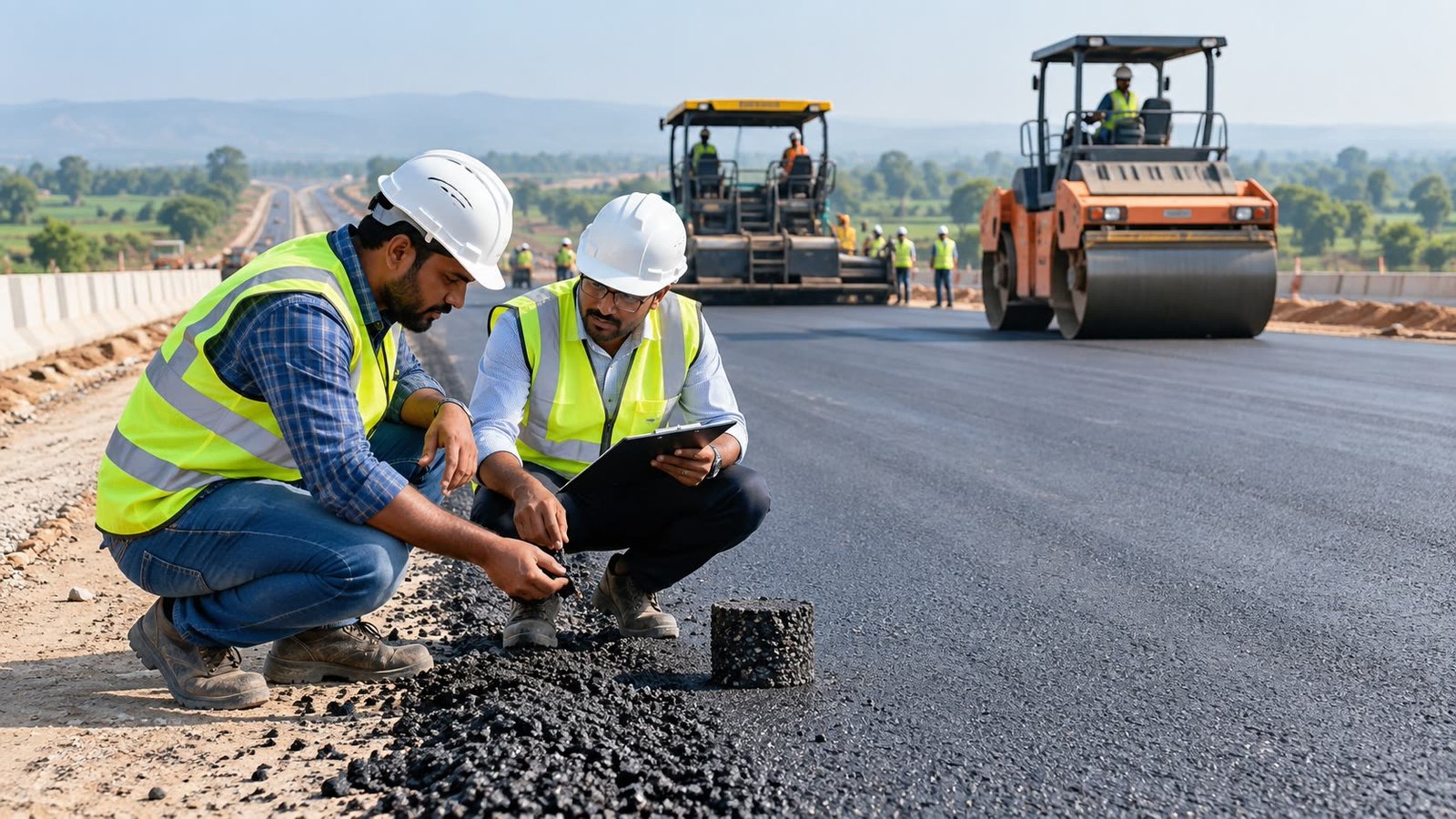
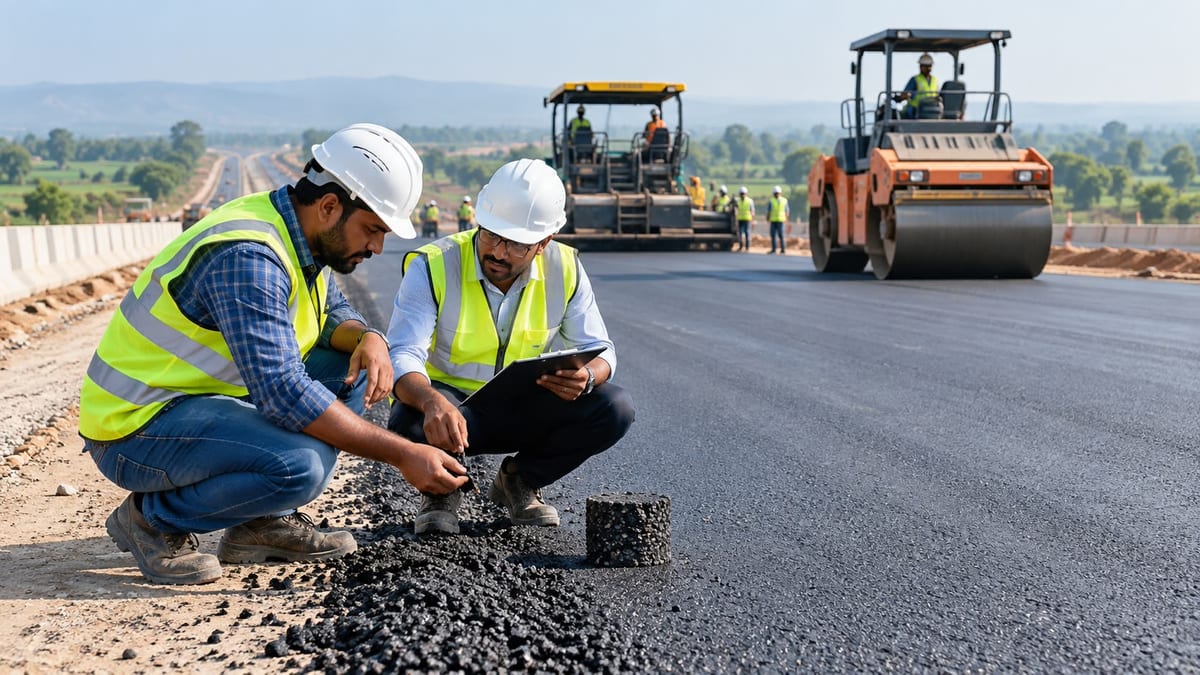 Illustrative image: engineers checking road construction quality at a highway work site. Credit: FuelPrice; AI-generated illustration, not an official project photograph.
What NHAI has confirmed
In its 30 Sep 2026 release, the Ministry of Road Transport and Highways said NHAI is adding special inspections to its regular quality checks. The trigger is a tender discount of more than 15% against the estimated cost, but the agency is also limiting the first exercise to projects costing more than ₹500 crore and already 35% to 80% complete. That combination is intended to focus on projects where defects can still be corrected during construction rather than after opening.
The selected works include greenfield and access-controlled corridors, bypasses, and four- and six-laning projects in Karnataka, Madhya Pradesh, Chhattisgarh, Andhra Pradesh, Tamil Nadu, Punjab, Haryana, Gujarat and Uttar Pradesh. The release does not say that all 17 projects have failed quality tests. It says they were selected using objective bid-value and construction-progress criteria, so a low bid is a screening trigger, not a finding of unsafe work.
NHAI has created an expert pool led by 39 experienced and retired engineers from government organisations including the road transport, railways, defence and state public works departments. The first inspection round is due by December 2026. NHAI then plans to revisit the identified projects after six months with a different team, creating a second check on whether any corrective action has been completed.
Why low bids are getting extra scrutiny
A contractor quoting below an authority estimate is not automatically cutting corners. Bidders may have different financing costs, construction methods, material access or expectations about future costs. But an unusually low quote can also create pressure during execution, especially if the original estimate, cash flow or work programme proves difficult to sustain.
A Rajya Sabha answer dated 11 Mar 2026 on low bids said the government had received bids well below estimated project costs in some cases and relied on additional performance security, independent engineers, regular field inspections and independent quality audits where required. The government’s position was that competitive pricing should not compromise highway quality. The latest NHAI exercise makes that assurance more visible by putting a defined group of ongoing projects under additional inspection.
This quality check is also separate from the financial safeguard reported by The Economic Times on 1 Jul 2026. That report said a 30 Jun ministry circular required higher additional performance security for bids 30% or more below the project cost. In other words, the 15% threshold in the latest announcement is an inspection filter for selected works; it should not be read as a new toll charge, a ban on low bids or proof that every shortlisted project is defective.
What the inspection teams will check
NHAI says the teams will compare work on the ground with approved drawings, technical specifications, contract conditions and project-specific quality plans. They will review the quality of construction materials, workmanship, construction methods and records showing that samples were taken and tested.
The review goes beyond the pavement surface. It will also cover road-safety measures, traffic-management arrangements and environmental safeguards wherever those apply. If work does not meet the required standard, NHAI says the issue will be recorded and followed up for corrective action under the applicable contract provisions. The exercise may also identify recurring construction practices or gaps in accountability involving contractors, consultants and other project stakeholders.
That matters because a road can be technically open while still creating avoidable costs for users. A poorly managed work zone can slow buses and trucks, increase stop-start fuel use, complicate access to service roads and make a familiar journey less predictable. Early correction is therefore relevant to both road safety and the reliability of trips, even though the latest announcement does not promise a particular travel-time saving.
What this means for drivers and transport operators
There is no announced nationwide toll revision, FASTag change or blanket closure linked to the inspections. The immediate policy change is an oversight step for projects under construction. If a corridor needs repairs, lane shifts or extra traffic control, the effect will be local and should come through a project or regional advisory rather than through a change in the toll system.
For a planned highway journey, users should treat the announcement as a reason to check the route’s work-zone status closer to departure. The road-trip planner can help compare route options and timing, while the toll-charge calculator can keep the fee estimate separate from any possible delay caused by construction.
Fleet operators and regular intercity drivers may also want to compare the cost of a diversion or slower work zone with the original trip plan. A longer route can affect fuel, driver hours, delivery windows and tolls at the same time. The fuel-cost calculator is useful for estimating the fuel part of that comparison, but it cannot predict an inspection outcome or a road closure.
What to watch next
The key near-term milestone is December 2026, when NHAI says the first round should be complete. The follow-up inspection six months later will show whether the exercise is being used as a continuing quality-control loop or only as a one-time review. More useful for travellers will be corridor-specific notices explaining any remedial work, lane restrictions or changes to traffic management.
The official release identifies the states and types of projects involved, but it does not publish a project-by-project inspection schedule. Until such details are issued, drivers should not assume that every highway project in one of the nine states is part of the exercise. They should follow signed diversions and local authority advisories at the work site.
Reader takeaway
NHAI’s 17-project inspection programme is a confirmed quality-control measure aimed at catching construction and safety problems before projects are finished. It is useful news for highway users because better checks can reduce the chance that defects become expensive repairs or disruptive closures later. For now, however, it does not alter the toll amount, FASTag balance or a driver’s fuel price. The practical action is to monitor route-level advisories and budget for the possibility of construction-related delay while the inspections proceed.
Sources
- Press Information Bureau: “NHAI to Conduct Special Quality Checks on Projects with Abnormally Low Quoted Bids” — 30 Sep 2026
- Rajya Sabha: “Contractors Quoting Low Bids for NHAI Projects” — 11 Mar 2026
- The Economic Times: “Higher performance guarantees from lower bids in highway projects” — 1 Jul 2026
- Hindustan Times: “NHAI orders audits, inspections for new national highways inaugurated by PM Modi” — 22 Aug 2026