India’s electric passenger-car registrations rose sharply in September 2026, with two Vahan-based reports putting the month’s total at 34,894 to 35,948 units, up about 94–95% from a year earlier. That matters for buyers because an EV is becoming a bigger part of the new-car market, but the useful comparison is now charging access, insurance terms and running cost—not registration growth alone.
Key takeaways
- Reuters, published by The Economic Times on 2 Oct 2026, reported 34,894 electric-car registrations in September, up 95% year on year, with EVs at 8.2% of passenger-vehicle registrations.
- Autocar Professional, citing Vahan data compiled by Nuvama on 1 Oct 2026, reported 35,948 registrations, up 94%, and an 8.3% EV share.
- The two reports use the same government Vahan registration system but give different final counts, so the safe conclusion is that September registrations were around 35,000 and nearly doubled from the year-earlier level.
- For a potential buyer, the next checks are home or workplace charging, public charging on regular routes, insurance coverage and the vehicle’s real-world running cost.
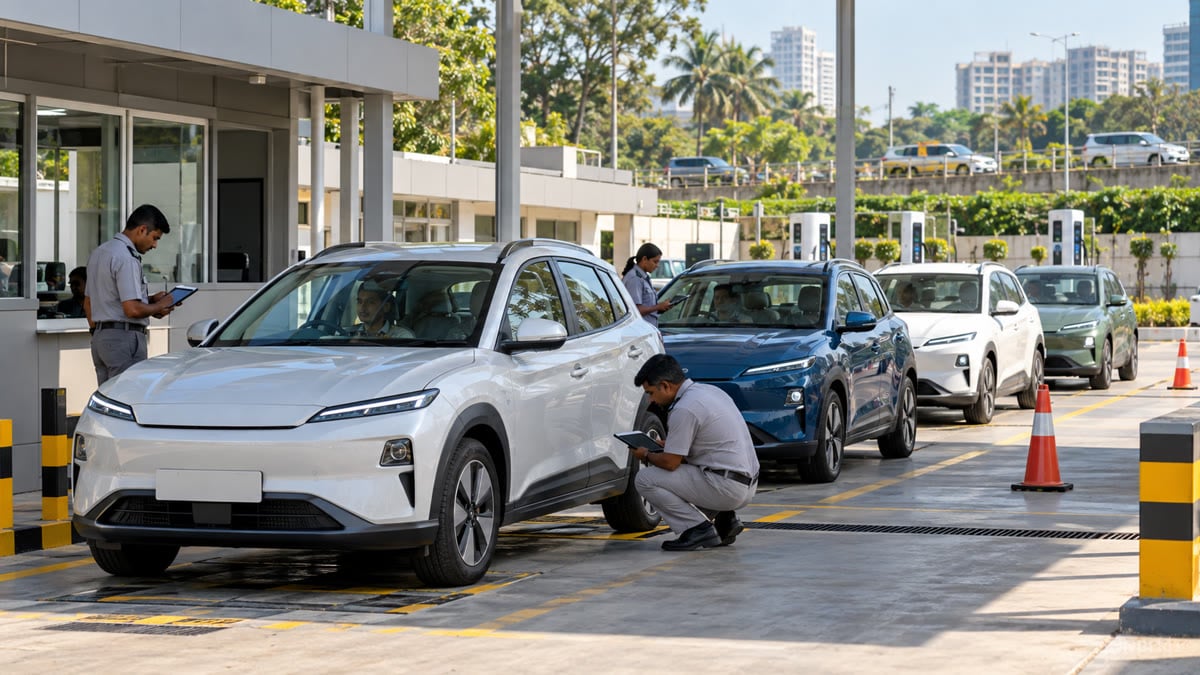
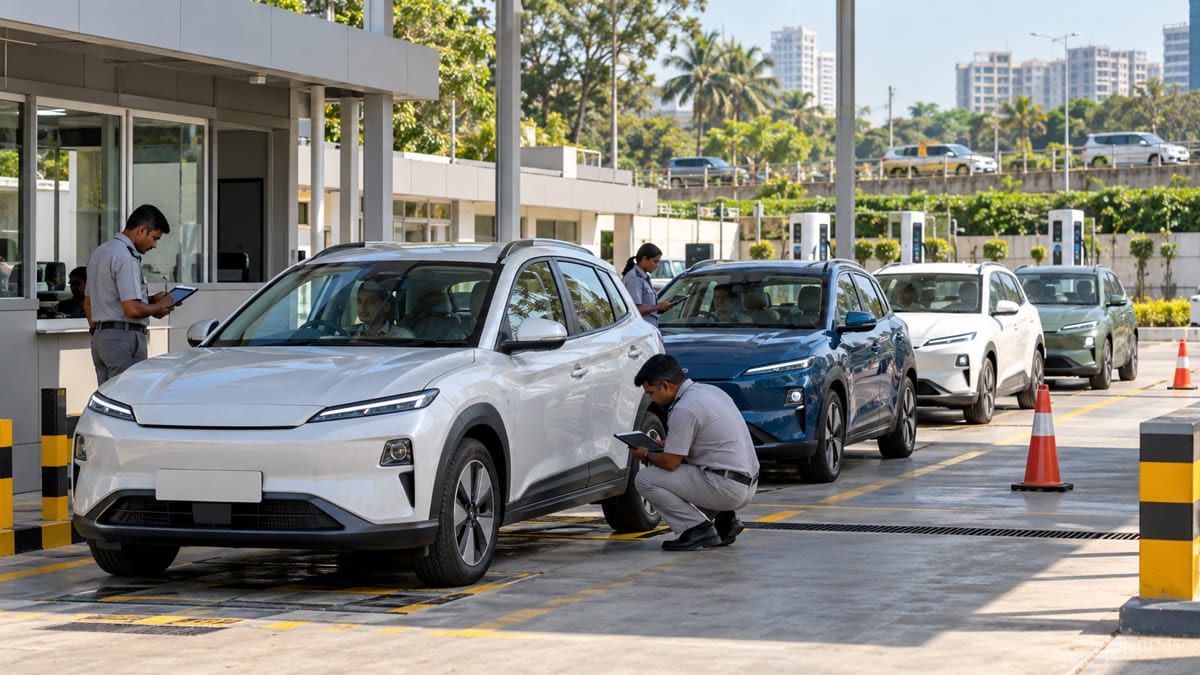 Illustrative image: generic electric cars at a public charging hub; not a photograph of the reported registrations. Credit: FuelPrice editorial illustration.
What changed in September
The headline signal is not just a larger number of EVs on the road. Electric cars also took a larger share of the passenger-vehicle market. The Reuters report said the share rose to 8.2% in September 2026 from 5.7% in September 2025. Autocar Professional’s Vahan-based compilation put the September share at 8.3% and described the month’s 35,948 registrations as a record. The small difference between the reports is a reminder that Vahan data can be compiled at different times or with different coverage, but both show the same direction of travel.
Autocar Professional reported 1,91,751 electric passenger-vehicle registrations from April to September 2026, up 89% from 1,01,546 in the same period a year earlier. Its September figure also means roughly one in every 12 passenger vehicles registered during the month was electric. These are registrations, not factory dispatches or bookings: they show vehicles that reached the registration stage, which is the more useful measure of completed retail demand.
Why the market is moving faster
Reuters, in the Economic Times report, linked September’s increase to higher fuel prices, improving charging infrastructure and a wider choice of new models. That combination is important for Indian drivers. A buyer who previously saw an EV as a limited-choice product may now find more body styles and price points, while a petrol or diesel owner who drives frequently has a clearer reason to compare running costs.
The competitive picture is also widening. Autocar Professional reported that Tata Motors remained the largest electric-car brand in September with 14,722 registrations, while Mahindra recorded 7,741. Together, the two accounted for nearly 63% of the month’s electric passenger-vehicle registrations. Reuters separately reported Tata at 42.2% and Mahindra at 22.2% of September sales, while also noting that VinFast and Maruti Suzuki had gained a foothold. The exact shares vary with the source’s compilation, but the broader point is consistent: established leaders still dominate, and newer entrants are taking visible positions.
What the September data mean for buyers
Charging is a practical ownership question
Registration growth does not remove the need to plan where the car will charge. Before comparing models, map the places where the vehicle will spend most of its time: home, workplace, regular inter-city routes and overnight stops. A public charger that exists on a map may still be inconvenient if it is frequently occupied, has a connector mismatch or is too far off the route. FuelPrice’s state-wise EV charging directory can help with the first part of that check.
Compare energy cost with actual driving
EV running cost depends on the vehicle’s usable efficiency, the electricity tariff and how much charging happens at home versus at public stations. Petrol and diesel costs also vary by city and date. A route-based comparison through the fuel cost calculator, alongside the latest fuel prices, gives a more realistic baseline than comparing a claimed range figure with a fuel economy number.
Read the insurance and battery terms
Battery, charger, roadside assistance, water damage and accidental-damage terms can differ across policies. Buyers should read what is covered, what is excluded and how a battery-related claim is assessed rather than assuming that every EV policy works like a petrol-car policy. FuelPrice’s earlier EV insurance checklist explains the main cover points to verify.
What to watch next
The next test is whether registrations stay elevated through October and November, when India’s festive buying period is usually stronger. Both the market reports attributed part of September’s strength to model availability and festive-season preparation, so one month should not be treated as a permanent demand forecast. The cleaner signal will be whether EV share holds above 8% while the overall passenger-vehicle market moves through the festive period.
It is also worth watching whether the wider field changes pricing, delivery times and charging support. A larger number of brands can improve choice, but it can also make after-sales reach, spare-parts support and charger compatibility more important in the purchase decision. For fleet and high-mileage users, downtime and route charging can matter as much as the headline energy cost.
Reader takeaway
September’s Vahan-based data show that electric cars are no longer a marginal part of India’s new-car market: roughly 35,000 registrations in one month and an EV share of about 8.2–8.3% are meaningful milestones. They do not, by themselves, prove that an EV is the right choice for every driver. The practical next step is to compare the charging plan, insurance wording, usable range and route-specific running cost against the vehicle you would otherwise buy.
Sources
- Vahan Public Dashboard, Ministry of Road Transport & Highways — vehicle registration data, accessed 2 Oct 2026
- Reuters / The Economic Times, “EV boom gathers pace as electric car sales jump 95% on fuel prices, new models” — 2 Oct 2026
- Autocar Professional, “Electric Car Registrations Hit Record 35,948 in September; EV Share Rises to 8.3%” — 1 Oct 2026