Tata Motors Passenger Vehicles (TMPV) expects to cross a 15% share of India’s domestic passenger-vehicle market “very soon” and retains a 20% target by FY31, according to managing director and CEO Shailesh Chandra’s 27 Sep 2026 interview with PTI. For Indian car buyers, the plan points to more Tata offerings across price bands and body styles, along with a larger EV and CNG mix; it does not confirm a launch date or price for any upcoming model.
The figures are management expectations, not a new government or regulator announcement. The useful question for buyers is what the strategy could change in the showroom: model choice, powertrain choice and the pace at which refreshed vehicles arrive.
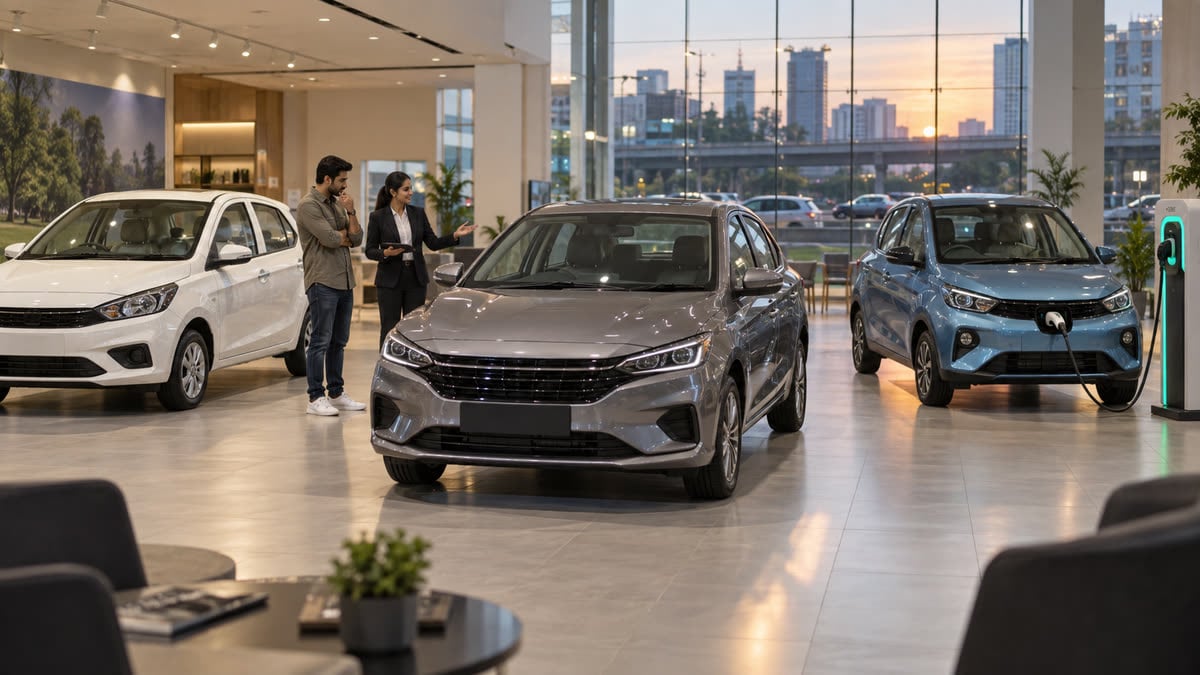
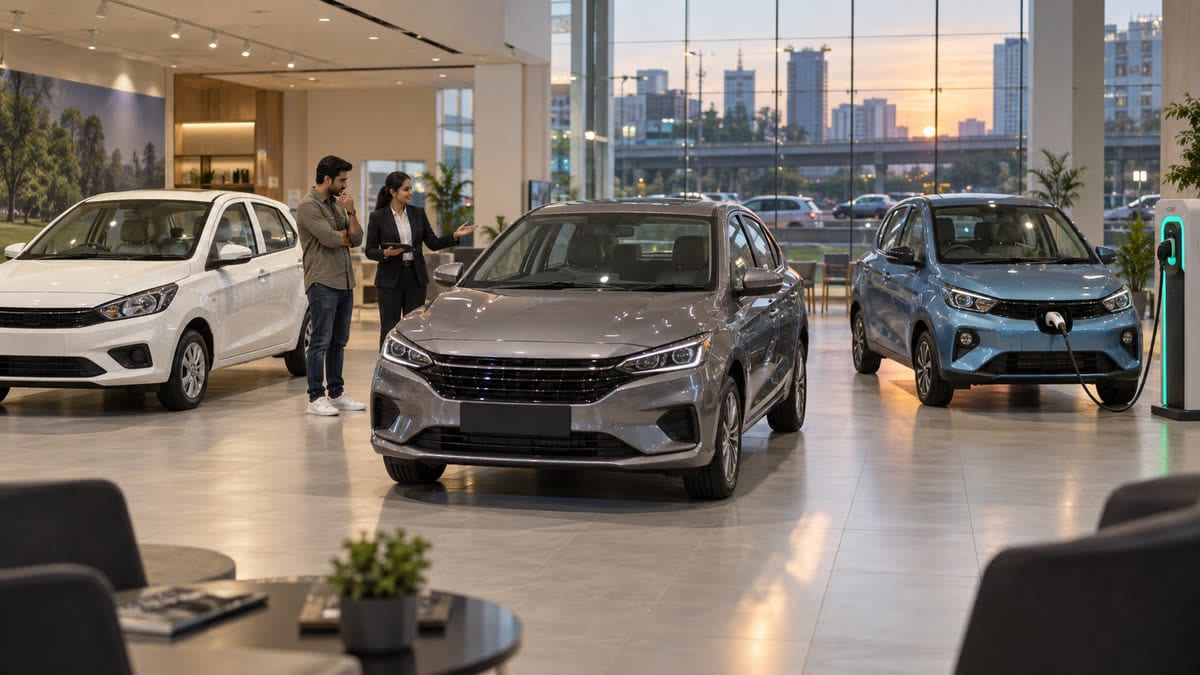 FuelPrice editorial illustration, generated for this report; it is not an official Tata Motors product image.
Key takeaways
- TMPV says it is close to a 15% domestic passenger-vehicle share and expects to cross that mark soon, but it has not given a date.
- The longer-term plan is 20% market share and 1.2 million annual vehicle sales by FY31.
- Chandra said EVs could account for more than 25% of TMPV sales as September 2026 closes.
- The stated growth levers are new vehicle categories, faster product refreshes and EV/CNG powertrains.
What Tata Motors has said
Business Standard and The Economic Times reported on 27 Sep 2026 that Chandra described the passenger-vehicle business as close to the 15% mark. He said TMPV could finish the year ending September 2026 with nearly 7.5 lakh vehicles sold, after growing nearly 40% over the preceding year. He also said EVs were expected to contribute more than 25% of sales as September ended.
The context matters. Tata Motors’ strategic demerger took effect on 1 Oct 2025, separating its commercial-vehicle and passenger-vehicle operations into independently listed entities. The current update is therefore about the growth plan of the passenger-vehicle business, not a change to tolls, fuel prices or a government incentive.
The 20% goal is not a new near-term promise. At its June 2026 Investor Day, the company outlined a plan to move from about 6.4 lakh passenger vehicles in FY26 to more than 12 lakh vehicles by 2030–31, alongside a 20% domestic market share. Those are company targets and should not be read as guaranteed sales or market outcomes.
Where the growth is expected to come from
New segments and faster refreshes
Chandra said the company wants to enter categories where it is not currently present and respond to demand at different price points. He cited multi-purpose vehicles and some lifestyle SUVs as examples of gaps, but did not announce a model, price or launch date for either category.
He also pointed to the recent run of facelifts, refreshes and new launches. For a buyer, that could mean more frequent changes to familiar nameplates and more alternatives within a similar budget. It also means that an introductory announcement is not the same as a confirmed delivery schedule: the variant list, waiting period and final on-road cost still need to be checked when a model is officially announced.
EV and CNG as the second growth axis
The company says EV and CNG vehicles should grow faster than the overall passenger-vehicle industry and that it has a higher share in both powertrains than its overall passenger-vehicle share. That points to a portfolio strategy built around different ways of reducing running costs, rather than a plan based only on petrol cars.
For an EV buyer, the practical follow-up is to check charging access on regular routes and at home. FuelPrice’s state-wise EV charging directory can help with the availability question, but a directory listing is not a promise that every charger is open or compatible at a particular time.
What this means for Indian buyers and drivers
A wider portfolio can improve choice, but the company’s market-share target does not make one future car the best or cheapest option. Buyers can compare the complete price, variant equipment, warranty, delivery timing and expected use instead of relying on the headline target.
- For petrol and CNG users: compare the fuel used on your normal route and the local availability of CNG. The state-wise CNG price page provides a starting point for checking current prices.
- For EV users: check charging time, route coverage, home electrical readiness and battery warranty alongside the vehicle’s claimed range.
- For monthly budgeting: put the expected distance, vehicle efficiency and current fuel price into the fuel cost calculator rather than treating a company-wide powertrain claim as an individual running-cost estimate.
Because fuel prices can change by city and date, readers comparing a new petrol, CNG or EV model should also check the latest figures on FuelPrice’s live fuel prices hub. The result will still be an estimate: traffic, driving style, charging tariffs and maintenance are separate costs.
What to watch next
- Official announcements that identify the model, segment, powertrain, variant range and launch or delivery date.
- Variant-wise prices and on-road costs, because the market-share plan does not set the price of any individual vehicle.
- Monthly retail or registration data showing whether the near-term 15% expectation becomes a measured result.
- Whether EV and CNG availability expands quickly enough for buyers outside the largest urban markets to use those options conveniently.
Until those details arrive, the clearest confirmed takeaway is the direction of TMPV’s strategy: more body styles, more powertrain choices and faster product intervention, with the 15% and 20% figures remaining company targets rather than completed milestones.
Sources
- Business Standard — Tata Motors PV eyes 15% market share soon, targets 20% by FY31: MD — 27 Sep 2026
- The Economic Times — Tata Motors PV eyes 15% market share soon, targets 20% by FY31, says MD Shailesh Chandra — 27 Sep 2026
- Business Today — Tata Motors Passenger Vehicles eyes 20% market share by FY31 — 23 Jun 2026